← The Global Intelligence Brief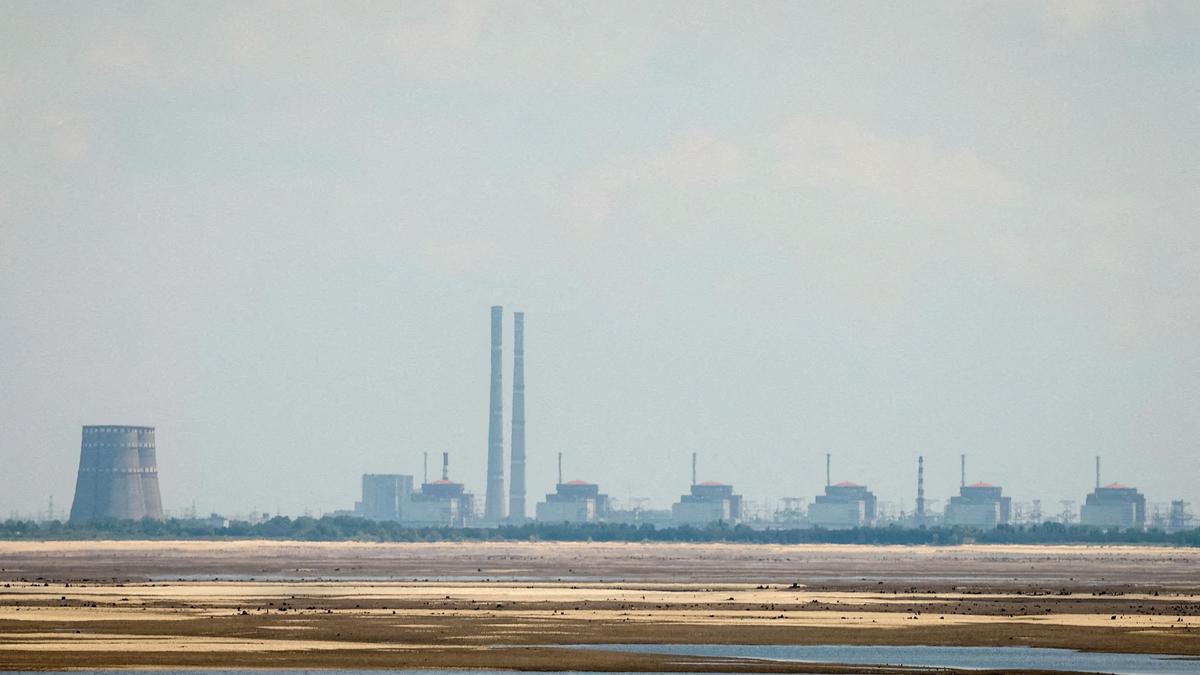


 3 sources
Evening Edition · Saturday, May 30, 2026Published at 8:05 PM EDT · New York
Drone Strikes Zaporizhzhia Nuclear Plant as Russia and Ukraine Trade Blame
The United Nations nuclear agency demands access to a damaged turbine building at one of Europe's largest nuclear stations and warns again of the dangers of fighting near reactors.
A drone struck a turbine building at the Zaporizhzhia nuclear power plant in southern Ukraine on Saturday, the International Atomic Energy Agency said. It is the latest incident at a site whose safety has become a recurring concern during the war. The International Atomic Energy Agency is the United Nations body that monitors civilian nuclear facilities.
Its director general, Rafael Grossi, expressed serious concern and warned that attacking nuclear sites is extremely dangerous, according to The Hindu. The agency said the strike left a hole in a building wall and that its on-site team had requested access to assess the damage directly.
The two sides describe the event differently. Russia's state nuclear company, Rosatom, said a Ukrainian drone hit the Russian-controlled plant but caused no damage to key equipment, the South China Morning Post reported, while the Ukrainian military denied striking the facility's sixth power unit. The Russian business daily Kommersant reported that the agency had been formally notified of the attack on the turbine hall of that unit and had requested entry. The plant, one of Europe's largest, has been under Russian control for much of the war, and its six reactors are in shutdown.
The dispute over who fired fits a wider pattern in a conflict that has increasingly targeted energy infrastructure on both sides. With each side denying responsibility, the verifiable facts for now are the reported damage and the agency's request for access.
Veracity: Corroborated
80/100- If true, who benefits
Each side gains from the other being blamed, Russia frames Ukraine as reckless near reactors, Ukraine frames Russia as militarizing the plant it occupies.
- The nuance
The verified facts are the wall damage and the IAEA access request, the disputed nuance is who launched the drone and toward what, which neither the agency nor independent monitors have yet confirmed.
An open-source-intelligence read of how likely this story is true with its real nuance, not a judgment of any outlet. It assesses the claim, weighing independent and adversarial reporting. How we label confidence.
What this means
A nuclear plant inside a war zone is a low-probability, high-severity risk that markets find difficult to price. Each strike near the reactors raises the chance of an accident that would carry consequences far beyond Ukraine, and it underscores how the energy dimension of this war keeps widening.
What to watch
Synthesized from: The Hindu · South China Morning Post · Kommersant
Townsquare
Start a discussion in Townsquare.
More from this edition
- Wealthy Families Pull Back From the Dollar as US Markets Set Records and War Debt Climbs
- Oil Holds Near $92 as US-Iran Ceasefire Stays Unsigned and Hormuz Reopens Slowly
- China and Japan Stop Talking, and Their Rare-Earth Trade Faces a Test
- Israel Pushes Across the Litani as Lebanon Calls for an Urgent Ceasefire
- NATO Says It Is Ready to Defend Its Territory as the Ukraine War Spreads at the Edges
- Venezuela's Opposition Demands Elections Five Months After a US-Backed Removal of Maduro
- US Defense Bill Would Bind American and Israeli Arms Industries More Closely
- Paris Saint-Germain Retains the Champions League in a Win for Gulf Capital Over US Money
Comments
0No comments yet.