← The Global Intelligence Brief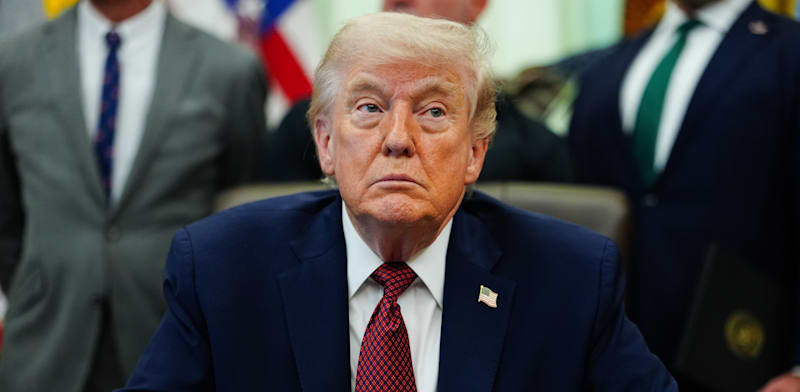

 2 sources
Morning Edition · Thursday, June 4, 2026Published at 7:13 AM EDT · New York
House Rebukes Trump on Iran as Compensation Demand Stalls Talks
Lawmakers passed a war-powers resolution while Tehran's demand for financial compensation remains a central obstacle to any deal.
The House of Representatives passed a war-powers resolution directing President Donald Trump to end hostilities with Iran, by a vote of 215 to 208, as reported across United States outlets. Four Republicans, Thomas Massie, Brian Fitzpatrick, Tom Barrett and Warren Davidson, joined Democrats. The measure is largely symbolic, since it would need Senate passage and two-thirds majorities to survive a veto.
A central obstacle in the negotiations is financial. According to the Israeli business daily Globes, Tehran is demanding monetary compensation as part of any agreement, and Trump is reluctant to give up economic leverage in exchange. Iran's Foreign Minister Abbas Araghchi has said there has been no significant recent progress, even as Trump described the talks as going well.
Iranian state media presented the House vote as a sign of widening opposition to the war, reporting that the defection of four Republicans, political deadlock and the economic costs of the conflict reflect deepening fractures inside the United States. Israeli coverage cited by Tehran repeated that characterization.
In financial terms, the compensation dispute is central. Sanctions, frozen assets and the threat of further enforcement are the main instruments of pressure, and any easing of them has a direct fiscal and monetary value that both sides are negotiating over explicitly.
Veracity: Corroborated
83/100- If true, who benefits
Iranian state media, which frames the symbolic House vote and four Republican defections as proof of fracturing United States resolve, and anti-war lawmakers seeking to constrain Trump.
- The nuance
The 215-208 vote is confirmed, but the claim that Tehran's compensation demand is the central obstacle rests on a single Israeli outlet (Globes) and is not independently corroborated.
An open-source-intelligence read of how likely this story is true with its real nuance, not a judgment of any outlet. It assesses the claim, weighing independent and adversarial reporting. How we label confidence.
What this means
The combination of congressional pressure and an unresolved compensation question indicates that ending the conflict depends as much on money and sanctions relief as on military terms. Oil and regional risk premiums remain connected to whether a deal holds.
What to watch
Synthesized from: Globes (Hebrew) · IRNA
Townsquare
Start a discussion in Townsquare.
More from this edition
- Washington Proposes Forced-Labor Tariffs on 60 Economies, Reviving a Broad Duty Regime
- Broadcom Revenue Miss Drags Technology Shares and the S&P 500 Lower
- Israel and Lebanon Agree to Renew Ceasefire, Conditioned on Hezbollah Pullback
- Bitcoin Falls Near $63,000 as a Long-Term Holder Metric Tests Bear-Market Support
- Russia Opens St. Petersburg Forum With Saudi Arabia as Guest of Honor
- Beijing Bars Four New Zealand Lawmakers Over Taiwan Visit
- Armenia Caught Between Brussels and Moscow's Trade Bloc
- Ireland Moves to Close Defense Gaps as Europe Confronts Russian Threat
Comments
0No comments yet.