← The Global Intelligence Brief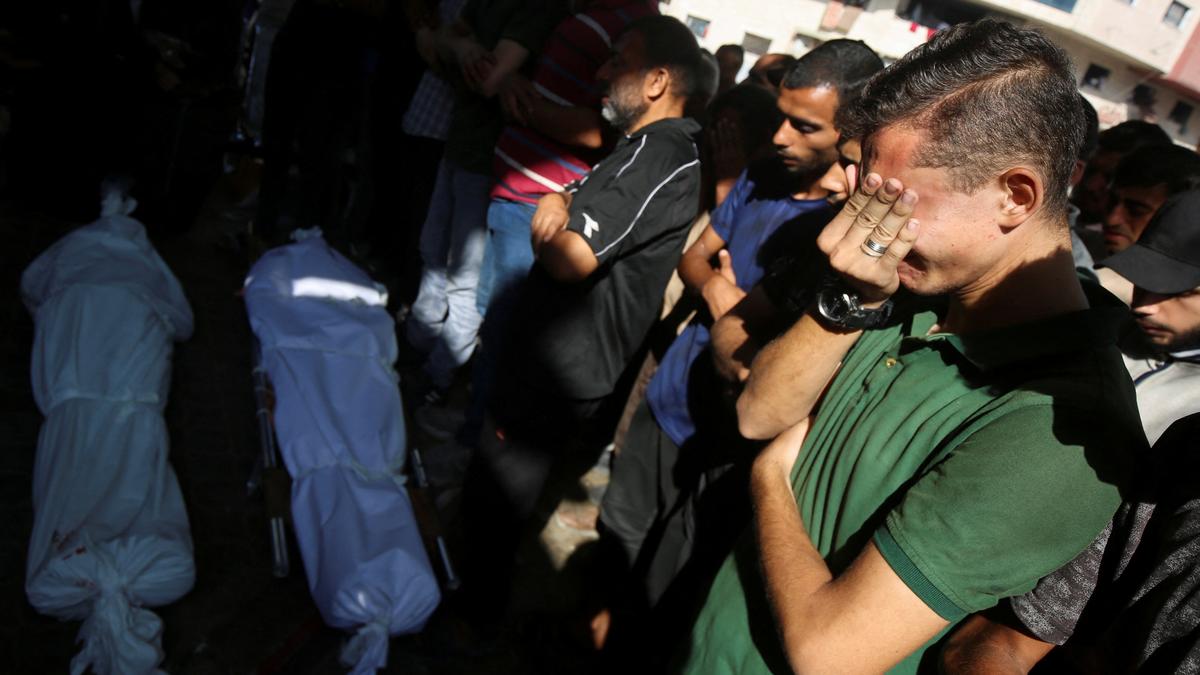

 2 sources
Morning Edition · Friday, June 5, 2026Published at 7:16 AM EDT · New York
Hunger Deepens in Gaza as Strikes Kill Civilians Seeking Aid
Hunger experts describe a worst-case famine scenario, while Israeli fire continues to kill people near aid distribution sites.
At least 18 people were killed by Israeli fire in Gaza, The Hindu reported, as the danger facing those seeking aid adds to what international hunger experts this week described as a worst-case scenario of famine in the besieged territory. A United States envoy visited a protest by families of hostages held in Gaza.
Al Jazeera documented the human cost directly, reporting on a mother whose children were killed in Israeli strikes and describing the deaths as a failure of the international community to act. The two accounts, one from an Indian outlet and one from a Qatari broadcaster, agree on the same facts of rising civilian deaths and worsening hunger, while differing in emphasis and tone.
The humanitarian crisis continues even as diplomacy over the wider Iran war advances, a reminder that the regional conflict has several fronts that are not being resolved at the same pace.
Veracity: Corroborated
77/100- If true, who benefits
Documented famine and civilian deaths sustain international pressure on Israel and strengthen the diplomatic and political position of those seeking to constrain its military operations.
- The nuance
The Integrated Food Security Phase Classification worst-case famine alert is well established, but specific daily casualty counts near aid sites originate largely with Gaza authorities and Israel disputes both the figures and responsibility for individual incidents.
An open-source-intelligence read of how likely this story is true with its real nuance, not a judgment of any outlet. It assesses the claim, weighing independent and adversarial reporting. How we label confidence.
What this means
The famine designation and continued civilian deaths sustain international pressure on Israel and its allies, and they complicate the diplomacy aimed at reducing the broader regional war. A humanitarian catastrophe of this scale shapes the political constraints on any settlement, and it contributes to the instability that maintains a risk premium in regional energy and shipping markets.
Synthesized from: The Hindu · Al Jazeera
Townsquare
Start a discussion in Townsquare.
More from this edition
- Bitcoin, Gold and Silver Fall Together as the Debasement Trade Unwinds
- Euro Area Economy Contracts 0.2% as the Iran War Drains Energy and Confidence
- United States and Iran Near a Hormuz Deal as Israel Strikes Lebanon
- Japan Approves a 3.1 Trillion Yen Budget to Cushion the Energy Shock
- Italy Urges a New European Defense Bloc as the United States Pulls Back
- Putin Calls China a Natural Ally as a Chinese Inspection Team Tours Russian Bases
- Russia Courts the Global South in St. Petersburg as a United States Delegation Returns
- A Stray Naval Drone Explodes at Romania's Constanta Port
Comments
0No comments yet.