← The Global Intelligence Brief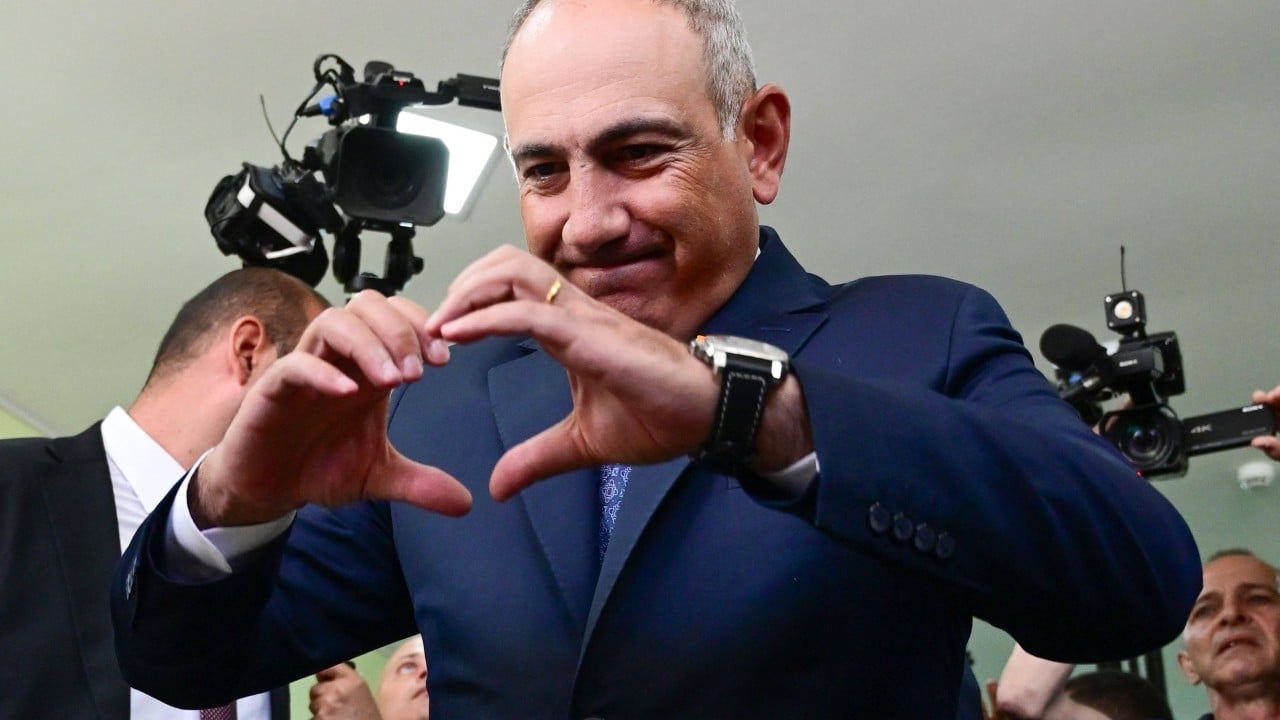


 3 sources
Morning Edition · Sunday, June 7, 2026UpdatedPublished at 4:34 PM EDT · New York
Armenia Votes as Pashinyan Tilts Toward Europe and Away From Moscow
A parliamentary election becomes a contest over whether the country loosens its historic ties to Russia, with both the European Union and Russia seeking to influence its direction.
Updated at 4:34 PM EDT
Voting concluded with turnout near 59 percent, and exit polls were contradictory, ranging from a Civil Contract outright majority to a close race against the pro-Russian Strong Armenia bloc, with official results not yet released.
Armenians voted in parliamentary elections on Sunday as Prime Minister Nikol Pashinyan, under pressure from Moscow, sought to loosen ties with Russia and deepen cooperation with the West, the South China Morning Post reported, which said the European Union and Russia have openly clashed over the country's direction. Polls closed with turnout near 59 percent, high by the standard of recent Armenian elections. Exit polls were contradictory, with Pashinyan's Civil Contract party claiming an outright majority while other surveys showed a far closer race against the pro-Russian Strong Armenia bloc led by businessman Samvel Karapetyan. Official results from the Central Election Commission were not yet available.
Pashinyan has tried to balance the pivot. He told reporters that Yerevan will continue moving toward European Union standards while preserving strategic relations with China and mutual respect with Russia, the Iranian state agency IRNA reported, a careful formulation aimed at avoiding a full rupture with Moscow.
Inside Armenia, the campaign has merged with a confrontation between Pashinyan's government and the Armenian Apostolic Church. Russian state broadcaster RT framed the dispute as a struggle over national identity and the country's future, while other Russian outlets reported tensions and incidents at opposition offices. Each side accuses the other of using state power against rivals.
For Russia, Armenia's drift is part of a broader erosion of influence along its periphery, from the South Caucasus to Central Asia. For the multipolar story, it shows that realignment runs in more than one direction. As some states move closer to Russia and China, others move toward Europe, and the result is a more fragmented order rather than a clean division into blocs.
Veracity: Corroborated
85/100- If true, who benefits
Pashinyan and the European Union, whose "drift from Moscow" framing legitimizes the pivot, and the Kremlin and Armenian Apostolic Church, whose RT-amplified "identity struggle" framing casts the government as the aggressor.
- The nuance
The election is real, but the "tilt to Europe" is contested by documented heavy Russian interference and by Pashinyan's own hedging language that preserves ties with Russia and China.
An open-source-intelligence read of how likely this story is true with its real nuance, not a judgment of any outlet. It assesses the claim, weighing independent and adversarial reporting. How we label confidence.
What this means
Armenia's vote is a marker of how far Russia's influence has eroded in its traditional sphere since the wars of recent years. A government that openly seeks closer ties with the European Union while a treaty ally of Moscow signals that the post-Soviet order is loosening, with consequences for energy routes and security arrangements across the South Caucasus.
What to watch
Synthesized from: South China Morning Post · IRNA (Farsi) · RT
Townsquare
Start a discussion in Townsquare.
More from this edition
- OPEC+ Approves Fourth Output Increase, but Hormuz Closure Keeps Oil Near 100 Dollars
- Strong US Jobs Report Lifts Rate Fears, and Gold, Silver and Bitcoin All Retreat
- On the War's 100th Day, Washington Weighs Seizing Iran's Frozen Billions
- India's Most Valuable Companies Shed Value as Central Bank Cuts Growth Outlook
- European Leaders Gather With Zelenskyy in London as Russian Strikes Continue
- Russian Drone Strikes Nuclear-Fuel Storage Site Near Chornobyl, Ukraine Says
- Shooting Attack in Central Israel Kills One as Lebanon Front Stays Tense
- Indonesia Pursues Tariff Relief From Washington and a Trade Pact With Europe
Comments
0No comments yet.