← The Global Intelligence Brief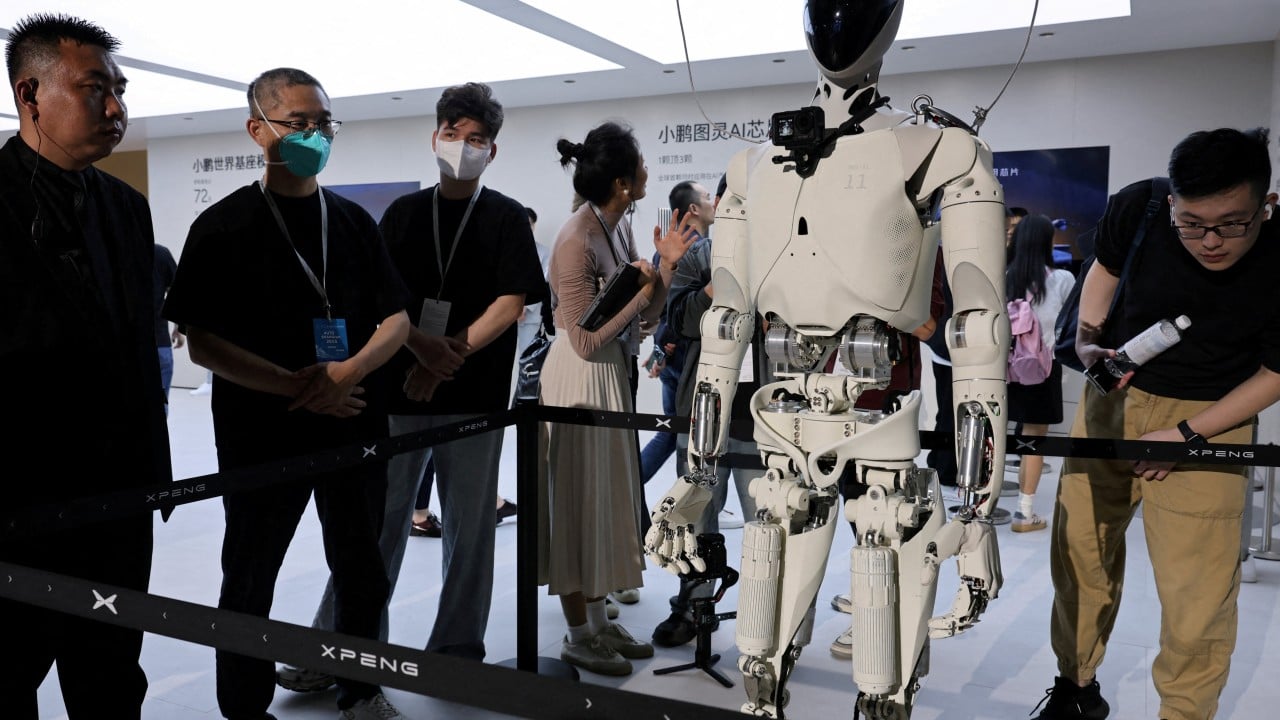
 2 sources
Morning Edition · Wednesday, June 10, 2026Published at 6:11 AM EDT · New York
China Launches National Program to Push Humanoid Robots Into Factories
Beijing wants to move humanoid robots from marathons and stage shows onto production lines, as Hong Kong expands its own technology hub ambitions.
China is launching a nationwide training program to move humanoid robots from dance performances and marathon races into factories, warehouses and hospitals, the South China Morning Post reported. The goal is to accelerate the commercial deployment of robots and embodied artificial intelligence, the term for artificial-intelligence systems that operate in physical machines rather than only on screens.
The program is part of a broader state effort to lead in advanced manufacturing automation, a field Beijing views as central to its industrial competitiveness as labor costs rise and the working-age population shrinks. By coordinating training and standards at the national level, the government aims to compress the timeline from prototype to factory floor.
The push is matched by infrastructure spending. Hong Kong authorities have proposed doubling the size of a planned digital-technology hub at Lau Fau Shan under the city's Northern Metropolis project, with landmark buildings permitted to reach about 250 meters in height, the South China Morning Post reported separately. The two moves reflect a coordinated strategy of automation and digital industry as sources of future growth.
The strategy unfolds as Washington tightens restrictions on Chinese technology firms, giving Beijing added reason to build domestic capability in robotics and artificial intelligence rather than depend on imported systems.
What this means
China is treating humanoid robotics and embodied artificial intelligence as a national industrial priority, not a research curiosity. Combined with United States efforts to restrict Chinese access to advanced technology, the program signals a future in which the two largest economies build parallel automation supply chains, deepening the commercial and technological split already under way.
What to watch
- Concrete deployment targets and which industries adopt the robots first.
- Whether United States export controls slow China's access to the chips these systems require.
- Progress and financing for the expanded Lau Fau Shan technology hub.
Observations to monitor, not financial advice.
Synthesized from: South China Morning Post · South China Morning Post
Townsquare
Start a discussion in Townsquare.
More from this edition
- War-Driven Oil Costs Lift China's Factory Prices to a Near Four-Year High
- United States and Iran Trade Strikes, Straining a Fragile Cease-Fire
- Hormuz Shipping Risk Climbs as Tanker Burns Off Oman
- Ukraine's Upgraded Drones Squeeze Russian Fuel and Logistics
- European Union Prepares 21st Sanctions Package Targeting Russian Banks and Officials
- Thousands of Iranians Lose Water After United States Strikes Hit Reservoirs
- Japan's Three Largest Banks Plan a Joint Stablecoin by March
- Tel Aviv Stocks Slip as Data-Center Tax Fears and a Teva Retreat Weigh
Comments
0No comments yet.