← The Global Intelligence Brief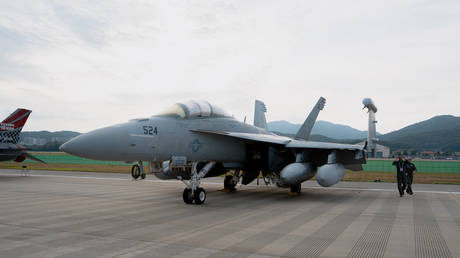
Morning Edition · Saturday, June 13, 2026Published at 7:12 AM EDT · New York
North Korea Condemns United States Missile Sale to South Korea as War Exports
Pyongyang denounced a roughly 300 million dollar arms package and vowed to expand its own deterrent.
North Korea has condemned a United States decision to approve the sale of advanced air-to-air missiles to South Korea, calling Washington's arms sales to the region "war exports," according to RT citing North Korean state media.
The package, valued at nearly 300 million dollars, includes 70 AIM-120 advanced medium-range air-to-air missiles meant to strengthen South Korea's defenses, as reported by Iran's Press TV. North Korea's foreign ministry said United States and South Korean military cooperation was being systematically strengthened despite concern over tensions on the peninsula, and warned it would keep building its self-defensive deterrent.
The statement adds the Korean peninsula to a widening pattern of arms transfers and counter-buildups across the Indo-Pacific. Each new Western sale draws a matching pledge from the other side, reinforcing a regional cycle of rearmament rather than restraining it.
Veracity: Corroborated
88/100- If true, who benefits
Pyongyang, which uses the routine sale to justify expanding its own arsenal, and the propaganda outlets amplifying the "war exports" framing.
- The nuance
The roughly 300 million dollar sale of 70 AIM-120 missiles and the condemnation are confirmed by wire reporting, but "war exports" is North Korea's characterization of what is a standard defensive foreign military sale, and the article relies on state outlets RT and Press TV.
An open-source-intelligence read of how likely this story is true with its real nuance, not a judgment of any outlet. It assesses the claim, weighing independent and adversarial reporting. How we label confidence.
What this means
The exchange shows how arms sales now function as both deterrence and provocation, locking the region into a cycle that is difficult to reverse. For markets, a steady Indo-Pacific arms race supports defense demand while raising the background level of geopolitical risk in a zone central to global trade. Pyongyang's pledge to expand its deterrent keeps nuclear and missile dynamics in play.
Townsquare
Start a discussion in Townsquare.
More from this edition
- Oil Slides Toward 86 Dollars as Washington and Tehran Signal a Deal, While Drones Still Fly in Hormuz
- SpaceX Raises 75 Billion Dollars in the Largest Public Listing on Record
- Washington Orders Anthropic to Cut Off Foreign Access to Its Top AI Models
- Investment Firms Line Up for Trump's 100 Billion Dollar Venezuela Oil Push
- Ukraine Runs Short of Patriot Interceptors as Russian Missile Output Climbs
- Ukraine's Long-Range Strikes Keep Pressure on Russian Ports and Energy Sites
- New Studies Question Whether the United States Could Sustain a War With China
- India Turns to German Submarines in a Push for Military Self-Reliance
Comments
0No comments yet.