← The Global Intelligence Brief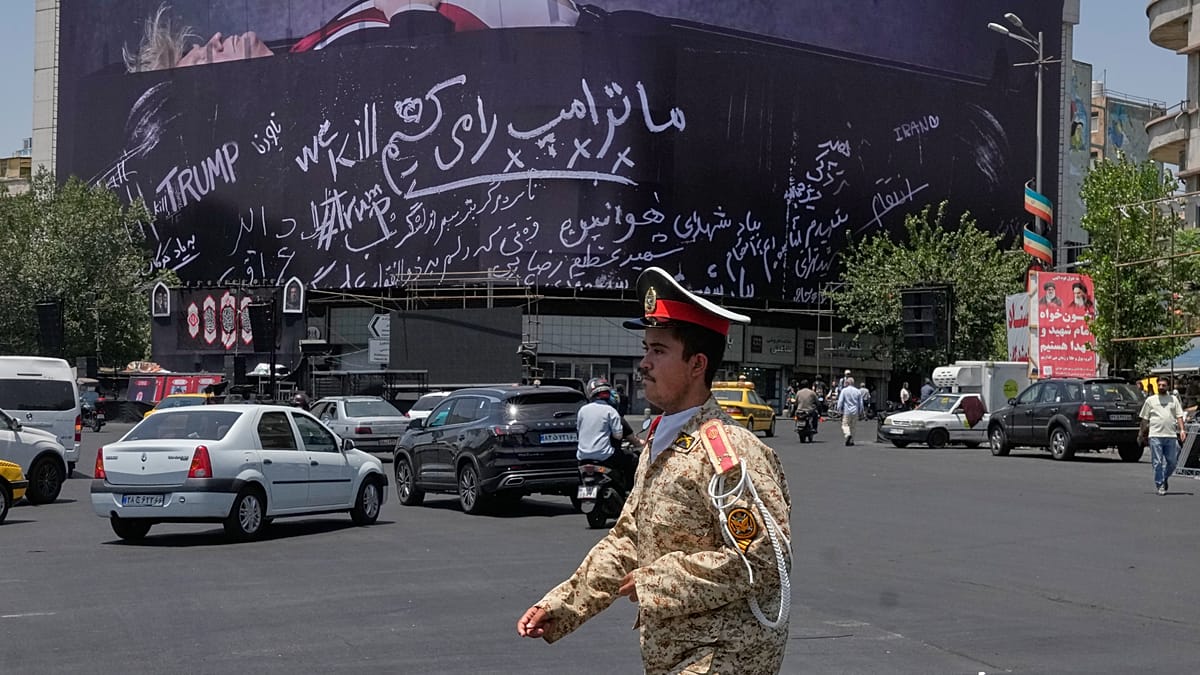


 3 sources
Morning Edition · Thursday, July 16, 2026Published at 1:15 AM EDT · New York
United States Disables Tanker Near Kharg Island as Oil Passes 85 Dollars on Fifth Day of Iran Strikes
Strait of Hormuz transits have fallen more than 50 percent as Washington reimposes a naval blockade and Brent trades near 85 dollars a barrel.
The military confrontation between the United States and Iran moved directly onto Iran's oil-export infrastructure, the channel through which the conflict most immediately reaches world markets. Iranian state media said American forces struck the area around Tehran for the first time in the current wave of attacks. The United States said it fired a missile into the funnel of a Curaçao-flagged tanker sailing toward Kharg Island, Iran's principal crude-loading terminal in the Persian Gulf, after the vessel ignored what it called multiple warnings.
Washington paired the strikes with a reimposed naval blockade of Iranian ports near the Strait of Hormuz, and the two sides give sharply different accounts of the damage. Iranian outlets reported that air defenses were activated over Tehran and that Iran's army targeted United States facilities in Jordan and disabled a ship attempting to run the blockade. The New York Times reported that both governments appeared to be hardening their positions, even as a senior Iranian official said Tehran should fear neither war nor negotiations, language that suggests openness to a settlement.
The market response has been concentrated in crude. Brent has risen more than 10 percent since Sunday to trade near 85 dollars a barrel, touching as high as 87. Hormuz transits fell by more than half over one recent weekend as shippers avoided the waterway. Roughly a fifth of the world's seaborne oil moves through that strait.
Part of a tracked trend
Middle East War Premium Returns to Oil
Renewed US-Iran conflict reinstates a geopolitical risk premium in crude that reverses the earlier de-escalation slide, feeding energy-driven inflation and redistributing income toward oil producers each time brinkmanship flares.
Veracity: Corroborated
80/100- If true, who benefits
Oil producers outside the Gulf and United States energy exporters gain from a higher war premium, and the blockade framing legitimizes Washington's move to control Hormuz shipping.
- The nuance
The tanker strike is confirmed by United States Central Command, but the claim the vessel ignored warnings and each side's battle-damage counts come from the party making them, and the blockade's legality is disputed.
An open-source-intelligence read of how likely this story is true with its real nuance, not a judgment of any outlet. It assesses the claim, weighing independent and adversarial reporting. How we label confidence.
What this means
The premium is being priced through the physical supply channel, not sentiment. Every barrel that transits Hormuz now carries higher war-risk insurance and rerouting cost, which raises expenses for refiners and for import-dependent economies in Asia and Europe, and eventually lifts food and transport prices, while it redistributes income toward producers outside the Gulf. A blockade that removes Iranian barrels tightens supply directly rather than through fear alone, so the move is more durable than the earlier price decline that followed de-escalation.
Synthesized from: Euronews · The Hindu · The New York Times
Townsquare
Start a discussion in Townsquare.
More from this edition
- Bitcoin Nears 65,000 Dollars After United States Inflation Cools to 3.5 Percent
- United States and Iran Trade Strikes for a Fifth Day as Tehran Is Hit and a Detainee Is Freed
- Russia Strikes Kyiv Arms Plants and Odesa Ports as Ukraine Hits Russian Territory
- Trump Orders 25 Percent Tariff on Most Brazilian Imports as Washington's Trade Pressure Widens
- Goldman Sachs and Mainland Funds Back Hong Kong as Beijing Steps Up Market Support
- Nvidia Extends Toyota Partnership as Artificial Intelligence Moves Off the Data Center Floor
- Energy Companies Rush to Public Markets as Investors Seek a Way to Play the Artificial Intelligence Boom
Comments
0No comments yet.