← The Polylog Crypto Intelligence Brief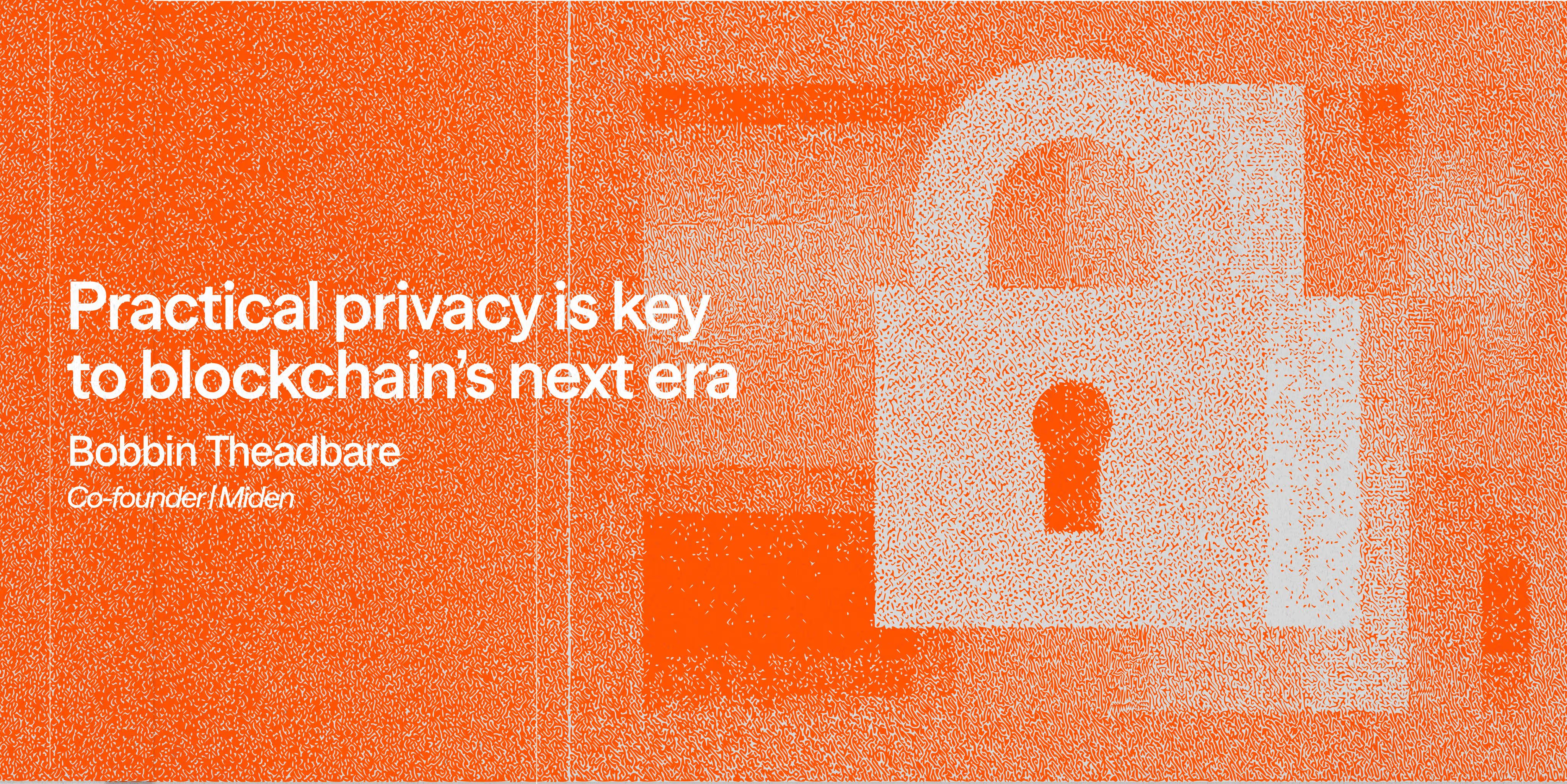
Morning Edition · Saturday, June 20, 2026Published at 6:26 AM EDT · New York
Privacy Layer-2s Move From Experiment to Institutional Pitch as the Confidentiality Contest Sharpens
Aztec and Miden now present on-chain confidentiality as a requirement for serious use, and the current debate is over who controls the mechanism that can reveal an otherwise private transaction.
A group of privacy-focused teams is making the same argument at the same time. Confidential execution, they say, is no longer a feature only for dissidents and hobbyists. They argue it is a precondition for banks, asset managers, and ordinary businesses to put anything meaningful on a public ledger, where today every balance and counterparty is visible by default.
Aztec, an Ethereum layer-2 network that settles to the base chain, launched its Alpha Network on March 31 as a chain where private data, private identity, and private computation are built into the contract layer rather than added later. Contracts are written in a Rust-style language and run privacy logic on the user's own device to produce zero-knowledge proofs, which are cryptographic attestations that a statement is true without revealing the underlying data. Miden, a separate project, makes a parallel case that "practical privacy" and tools such as its Guardian recovery and policy system are what blockchains need to reach mainstream users.
The harder question is governance, not cryptography. Aztec's own essay asks who controls the privacy "off-switch", meaning the selective-disclosure mechanism that lets a user or a regulator reveal an otherwise private transaction. Whoever holds that key holds the real power in a confidential system. That design choice separates genuine self-custody of privacy from a permissioned arrangement that a single operator or government can override.
These networks remain early and risky. Aztec disclosed a critical vulnerability in its Alpha proving code in late March, with a patch scheduled for a later release, and has told users not to deposit more than they can afford to lose. The base layer they settle to still holds most of the money. Ethereum holds about $38.89 billion of decentralized-finance value locked according to DeFiLlama, the largest of any chain. The contest over privacy is about how much of that activity can move out of public view without giving control of that view to a gatekeeper.
Veracity: Plausible
72/100Townsquare
Start a discussion in Townsquare.
More from this edition
- Changpeng Zhao Floats Freezing Satoshi's Bitcoin to Blunt a Future Quantum Theft
- Ethereum Researchers Sketch Post-Glamsterdam Scaling and Forced-Inclusion Plumbing
- Microsoft Flags Self-Spreading Malware That Harvests Crypto Keys From Windows Clipboards
- Strategy's Preferred-Stock Discount Tests the Leveraged Bitcoin Treasury Model
- Franklin Templeton Files ETFs That Route Stock Dividends Into Bitcoin
- Security Roundup: Texas Brothers Admit $8 Million Coerced Crypto Heist as Enforcement Posture Hardens
- JPMorgan Says Bitcoin Mining Economics Have Worsened as Price Sits Below Production Cost
Comments
0No comments yet.