← The Global Intelligence Brief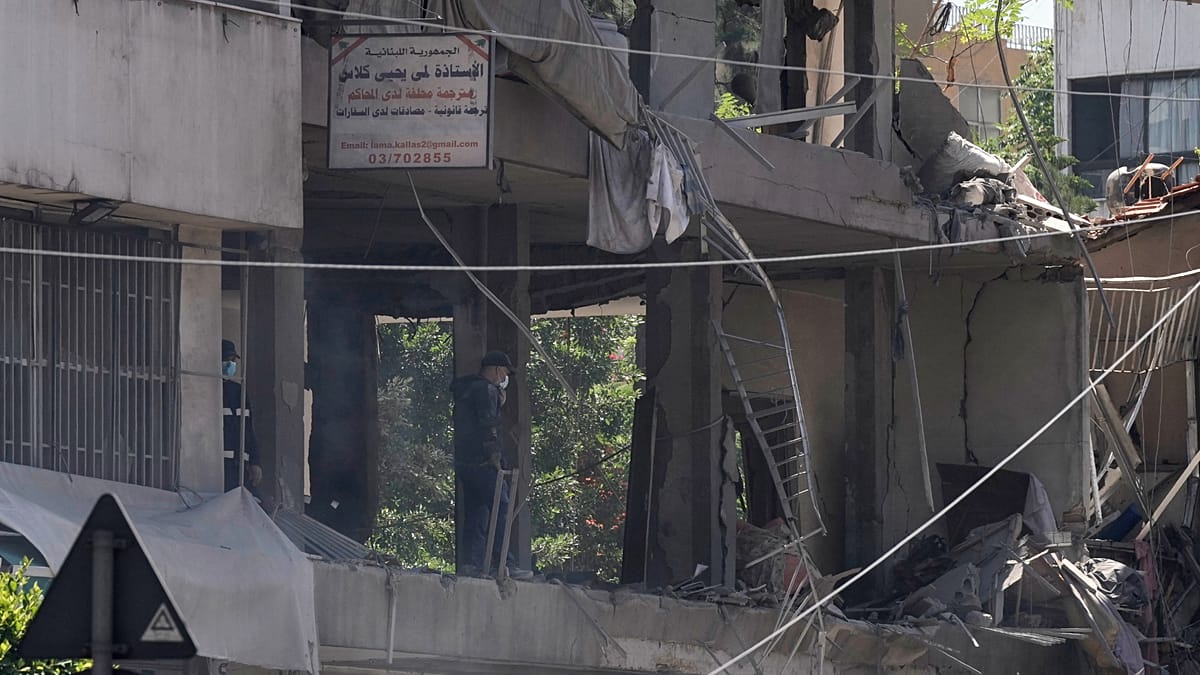


 4 sources
Morning Edition · Sunday, June 14, 2026Published at 9:57 AM EDT · New York
Israeli Strikes on Beirut Suburbs Test the Emerging Iran Truce
Israel says it hit Hezbollah targets in Dahiyeh after accusing the group of breaching a ceasefire, which Iran's parliament speaker called an attempt to collapse the talks.
Israeli aircraft struck the Ghobeiry area of Beirut's southern Dahiyeh district on Sunday, with Prime Minister Benjamin Netanyahu's office saying the strikes targeted Hezbollah infrastructure. The Israeli military said it acted after accusing the Iran-backed group of violating a ceasefire and issued evacuation warnings for parts of southern Lebanon. Lebanon's health ministry reported casualties, and a Hezbollah commander was among those reported killed.
The timing matters because Iran has long made an end to fighting in Lebanon a condition for any wider agreement with Washington. Iranian parliament speaker Mohammad Bagher Ghalibaf said the attack showed the United States either lacked the will or the ability to honor its commitments, warning the strikes could end the talks. Israeli officials, by their own account, described the operation as a way to deter Hezbollah rather than an effort to collapse the negotiations, though a diplomat involved in the discussions called it a clear attempt to do exactly that.
Across Israeli, Western, Iranian and Lebanese accounts, the disputed point is intent. The question is whether the strike was a routine enforcement of an existing truce or a deliberate move to make the United States-Iran deal harder to complete at the moment of signing.
Veracity: Corroborated
82/100- If true, who benefits
Israel deters Hezbollah and gains leverage at the moment of signing, while Iranian hardliners who oppose negotiating under pressure get a pretext to walk away.
- The nuance
The strike and casualties are confirmed across outlets, but the load-bearing dispute is intent, whether routine truce enforcement after Hezbollah projectiles or a deliberate move to collapse the US-Iran talks.
An open-source-intelligence read of how likely this story is true with its real nuance, not a judgment of any outlet. It assesses the claim, weighing independent and adversarial reporting. How we label confidence.
What this means
The Beirut strikes are the clearest near-term risk to the lower oil prices that markets have already reflected. If Israeli operations against Hezbollah continue, Tehran may refuse to sign, which would push crude prices back up after the draft accord had begun to lower them.
What to watch
Synthesized from: Euronews · The New York Times · TASS · The Hindu
Townsquare
Start a discussion in Townsquare.
More from this edition
- Draft US-Iran Accord Promises an Oil Sanctions Waiver, and Crude Prices Fall
- Ukrainian Drones Hit Russian Oil Sites as Both Sides Trade Claims
- Britain Makes Its First Solo Seizure of a Russian Shadow-Fleet Tanker
- Tokenized US Treasuries Pass 14 Billion Dollars as Wall Street and Crypto Converge
- Report Says China's Conventional Strike Threat to Australia Is Growing
- India Softens Its Portrayal of China, and Talk of a Eurasian Axis Returns
- Swiss Voters Reject a Plan to Cap the Population at 10 Million
- Modi Opens a European Tour in France With a Push on Deep Tech
Comments
0No comments yet.