← The Global Intelligence Brief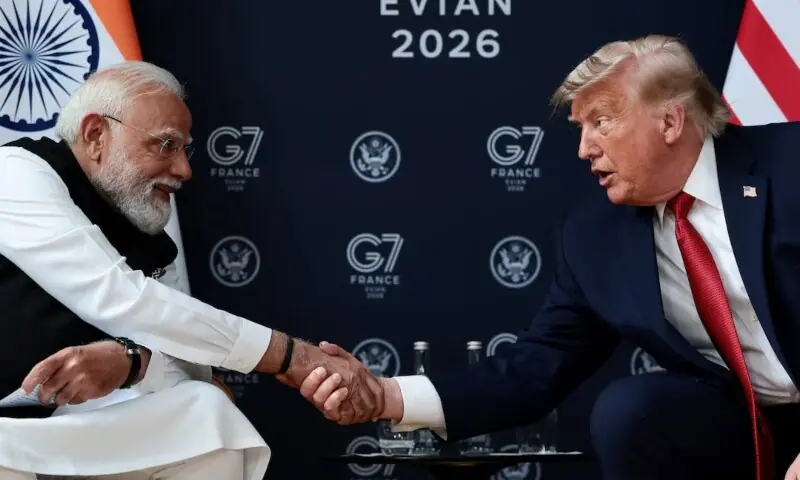
Morning Edition · Wednesday, June 24, 2026Published at 6:15 AM EDT · New York
A Road Named for Trump in an Indian Tech Hub Exposes Strained US-India Ties
A street honoring the US president in Hyderabad drew criticism from the ruling party, underscoring tensions sharpened by tariffs.
A road named after US President Donald Trump in the opposition-governed Indian technology hub of Hyderabad drew criticism from Prime Minister Narendra Modi's ruling Bharatiya Janata Party (BJP), which dismissed the move as hypocrisy. The local dispute would be minor on its own, but it comes against a backdrop of deteriorating relations between Washington and New Delhi during Trump's second term, marked by tariff disputes.
India has responded to the friction by deepening other partnerships. Foreign Minister Subrahmanyam Jaishankar met his South Korean counterpart in Seoul to advance cooperation on trade, investment, and finance, part of a pattern of New Delhi diversifying its economic and strategic relationships.
The episode shows how trade tensions have entered domestic politics in both countries, turning a street name into a stand-in for a larger argument about how India should position itself between major powers.
Veracity: Corroborated
82/100- If true, who benefits
The narrative of US-India drift and Indian factions favoring a hedge away from Washington, alongside domestic opponents of the governing parties on both sides.
- The nuance
The road, unveiled by the US ambassador, is mainly a local Congress-versus-Bharatiya Janata Party dispute, so its weight as a signal of bilateral drift is interpretive even though the underlying tariff friction is real.
An open-source-intelligence read of how likely this story is true with its real nuance, not a judgment of any outlet. It assesses the claim, weighing independent and adversarial reporting. How we label confidence.
What this means
The friction between the United States and India matters because the two had been building one of the more consequential economic and strategic partnerships of the decade. A drift driven by tariffs pushes India toward other partners and complicates Washington's effort to balance against China, with consequences for supply chains and capital flows that will take years to become clear.
What to watch
Townsquare
Start a discussion in Townsquare.
More from this edition
- Oil Falls to Multi-Month Lows as US-Iran Deal Moves Toward Implementation and Hormuz Reopens
- Venezuela Prepares to Disclose Roughly $240 Billion in Debt Before a Record Restructuring
- Rheinmetall Shares Fall More Than 15 Percent as Germany Scraps Its Largest Warship Program
- Europe's Crypto Market Faces a Reckoning as MiCA Rules Take Full Effect July 1
- Russia Extends Fuel Rationing and Freezes a Small-Business Tax Threshold as War-Economy Strains Deepen
- Gold and Silver Retreat as Markets Price In a Tighter Federal Reserve
- China Detains Two Japanese Nationals on Smuggling Charges, One Tied to Rare-Earth Exports
Comments
0No comments yet.