← The Global Intelligence Brief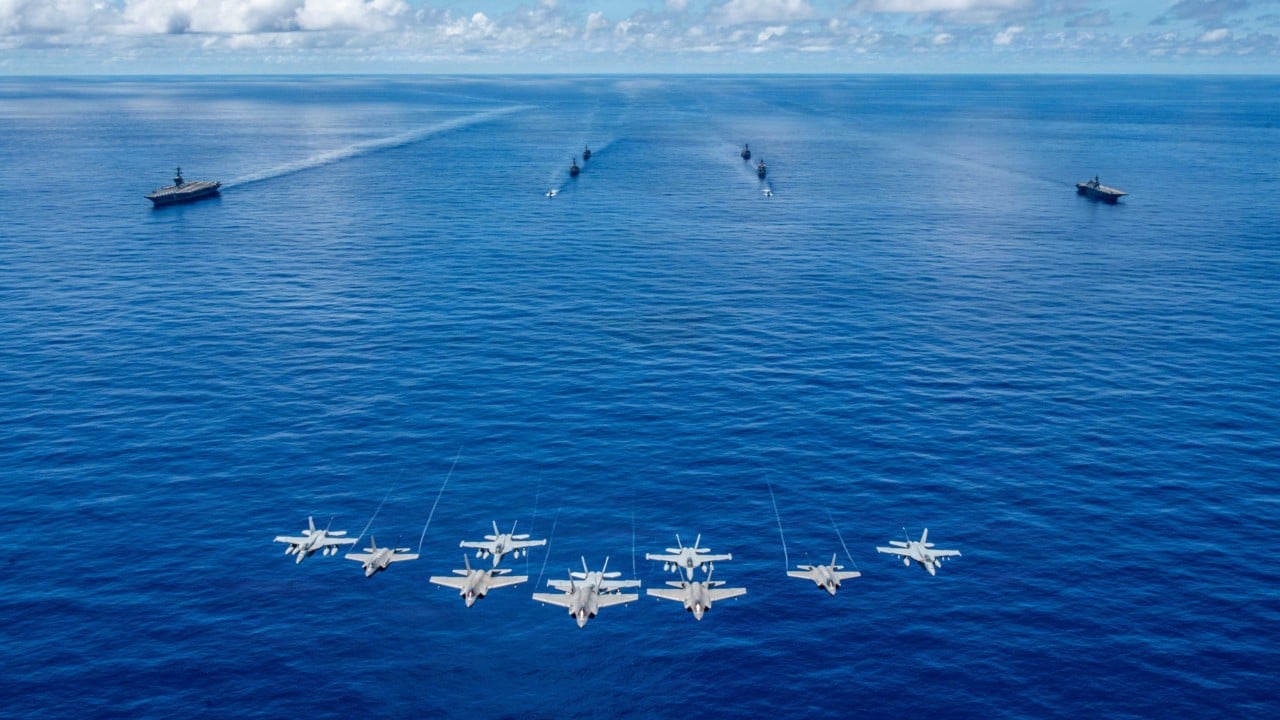

 2 sources
Morning Edition · Friday, June 26, 2026Published at 6:15 AM EDT · New York
US and Allies Stage Multi-Front Military Drills Around China
Japanese paratroopers exercised in the northern Philippines and regional navies gathered for the Rim of the Pacific (RIMPAC) naval exercise in Hawaii, signs of an accelerating Indo-Pacific buildup.
The United States and its partners conducted a series of military exercises near China this month, in what regional analysts described as a coordinated demonstration of capability. Japan quietly deployed members of its elite airborne brigade for parachute drills on Batan Island, in the Philippines' northernmost province, close to Taiwan, an exercise neither government promoted heavily.
In parallel, Indonesia sent 35 marines to Hawaii to join RIMPAC 2026, the large multinational naval exercise hosted by the United States. The simultaneous activity across multiple locations reflects a widening network of security cooperation among Washington's Indo-Pacific partners.
The drills come as maritime confrontations with China multiply and as Japan moves to expand its military and export weapons, including missiles. Each exercise is modest on its own, but together they mark a steady accumulation of military readiness and interoperability across the region.
Part of a tracked trend
Indo-Pacific Arms Race Accelerates
Over the next 3-6 months a sharpening regional arms race drives Japan and its neighbors to expand militaries and export weapons—Tokyo moving to sell missiles—as maritime confrontations with China multiply and Asian rearmament gathers pace.
Veracity: Corroborated
87/100- If true, who benefits
Washington and its Indo-Pacific partners building an interoperable network against China, and defense industries, while Beijing uses the same activity to support its encirclement narrative.
- The nuance
The characterization of the drills as a single coordinated demonstration is analysts' interpretation, and the Rim of the Pacific exercise is a long-standing biennial event rather than a new escalation.
An open-source-intelligence read of how likely this story is true with its real nuance, not a judgment of any outlet. It assesses the claim, weighing independent and adversarial reporting. How we label confidence.
What this means
The pattern of small, frequent, multi-country drills is how an arms race builds momentum before any single decisive event. For investors, a militarizing Indo-Pacific raises the long-term risk premium on the supply chains, shipping lanes and semiconductor production concentrated in the region, even if no conflict is imminent.
What to watch
Synthesized from: South China Morning Post · Antara
Townsquare
Start a discussion in Townsquare.
More from this edition
- Tech and AI Selloff Deepens as a Stronger Dollar Pressures Gold, Silver and Bitcoin
- Iran Fires Missiles at Kuwait and Bahrain in Retaliation for U.S. Strikes, in a Direct Military Exchange That Imperils the Hormuz Truce
- Volkswagen Weighs Up to 100,000 Job Cuts and Plant Closures in Deepest Overhaul of Its History
- Oil Stays Volatile After Tanker Is Struck Near the Strait of Hormuz
- Venezuela's Earthquake Toll Reaches 235 as Rescuers Search Collapsed Buildings
- Ukraine Launches One of Its Largest Drone Attacks as Zelensky Pressures Belarus
- Gazprom Deepens Gas Talks With China as Russia Promotes Non-Western Integration
Comments
0No comments yet.