← The Global Intelligence Brief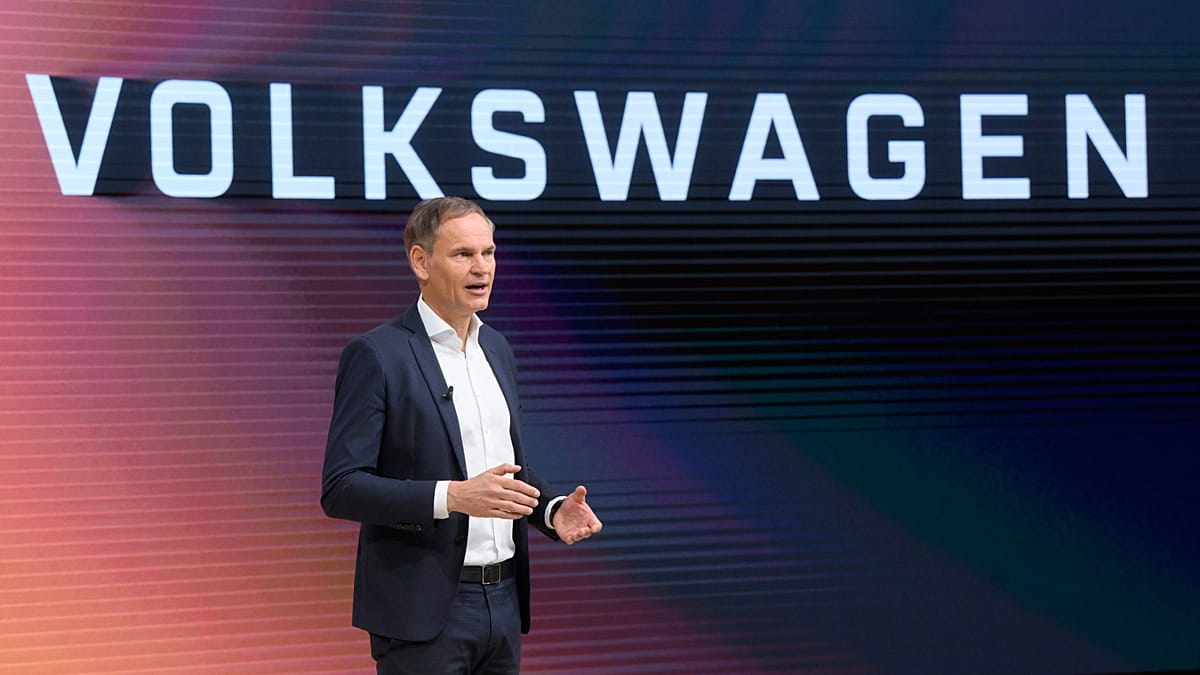


 3 sources
Morning Edition · Friday, June 26, 2026Published at 6:15 AM EDT · New York
Volkswagen Weighs Up to 100,000 Job Cuts and Plant Closures in Deepest Overhaul of Its History
Europe's largest carmaker is reported to be planning to close four plants and reduce investment as Chinese competition and the shift to electric vehicles reduce profitability.
Volkswagen is preparing what would be the largest restructuring in its 89-year history, according to multiple reports. Chief Executive Oliver Blume aims to cut up to 100,000 jobs and end production at four plants, twice the number of cuts previously expected, and to reduce planned investment by about 15 percent to just over 130 billion euros over five years. The targeted sites are said to include factories in Hanover, Zwickau and Emden, along with an Audi plant in Neckarsulm.
The reported scale of the cuts amounts to roughly 15 percent of the group's global workforce of about 667,000, close to 43 percent of which is in Germany. The Financial Times reported the restructuring follows the sale of Volkswagen's marine engines unit to the US private equity firm Bain and a broader plan to split off the core brand. Israeli business coverage framed the move as a response to competition from China, the transition to electric vehicles and pressure on margins.
Volkswagen's works council and the IG Metall union said they would resist the plan, warning that they would oppose it by every available means. The proposals would go beyond an existing program to cut 50,000 jobs and would test a 2024 agreement that ruled out German plant closures this decade.
What this means
Volkswagen is the clearest case yet of a European industrial champion confronting a cost structure suited to conditions that no longer apply: expensive energy, a slow and capital-intensive shift to electric vehicles, and Chinese competitors selling cheaper cars. The size of the proposed cuts signals that the adjustment is structural rather than cyclical, with consequences for German employment, supplier networks and the euro-area industrial economy.
What to watch
- Whether IG Metall and the works council can block or dilute the plan, which would determine how quickly European manufacturers can actually reduce excess capacity.
- The pace of Chinese electric-vehicle market share gains in Europe, the underlying pressure forcing the restructuring.
- Whether other German industrial groups announce similar cuts, which would mark a broader contraction in Europe's manufacturing base.
Observations to monitor, not financial advice.
Synthesized from: Financial Times · Euronews · Globes
Townsquare
Start a discussion in Townsquare.
More from this edition
- Tech and AI Selloff Deepens as a Stronger Dollar Pressures Gold, Silver and Bitcoin
- Iran Fires Missiles at Kuwait and Bahrain in Retaliation for U.S. Strikes, in a Direct Military Exchange That Imperils the Hormuz Truce
- Oil Stays Volatile After Tanker Is Struck Near the Strait of Hormuz
- Venezuela's Earthquake Toll Reaches 235 as Rescuers Search Collapsed Buildings
- Ukraine Launches One of Its Largest Drone Attacks as Zelensky Pressures Belarus
- US and Allies Stage Multi-Front Military Drills Around China
- Gazprom Deepens Gas Talks With China as Russia Promotes Non-Western Integration
Comments
0No comments yet.