← The Global Intelligence Brief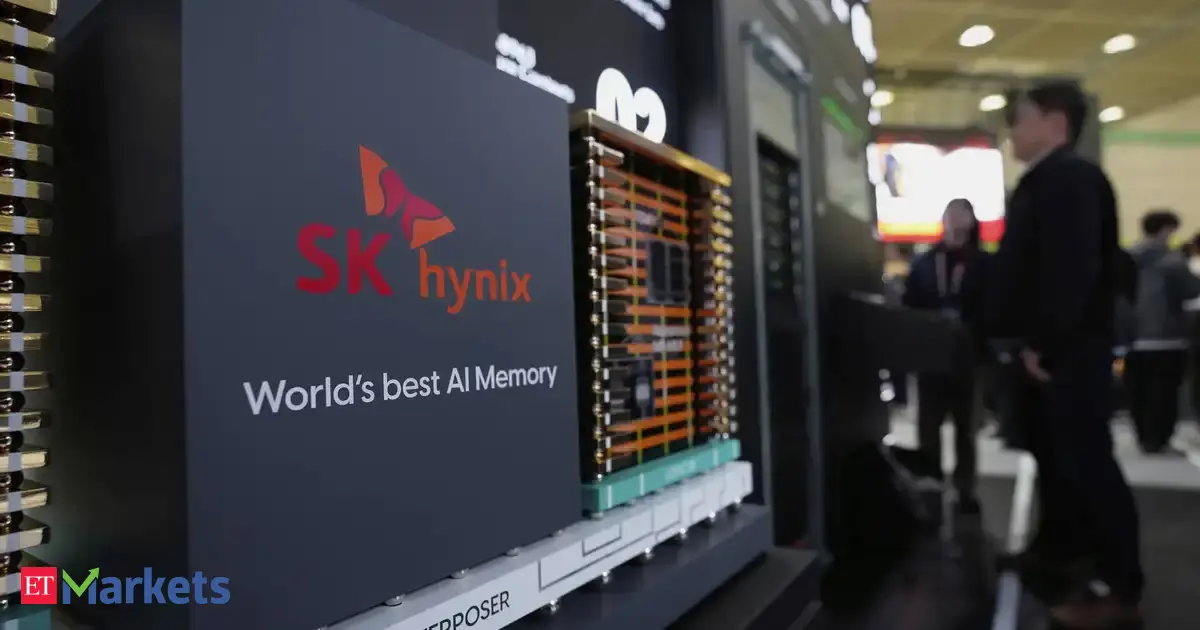


 3 sources
Morning Edition · Saturday, July 11, 2026Published at 1:33 AM EDT · New York
SK Hynix Raises 26.5 Billion Dollars in the Largest Foreign IPO in US History, Then Jumps 13 Percent
Demand for the memory-chip maker reached roughly seven times the shares on offer, a sign that investors are still funding the growth in artificial-intelligence hardware.
SK Hynix, the South Korean maker of the high-bandwidth memory chips installed alongside Nvidia's processors in artificial-intelligence (AI) servers, priced its American depositary receipts at 149 dollars and raised 26.5 billion dollars, the largest first-time US listing ever by a company based outside the United States. The figure surpassed the 25 billion dollars Alibaba raised in 2014.
The receipts closed at 168.01 dollars, up 13 percent on their first Nasdaq session. The company's chairman told CNBC that "demand is enormous," and Reuters reported the offering was oversubscribed roughly seven times. The Indian financial press framed the debut as proof that appetite for AI-linked semiconductor stocks has not faded despite recent declines in chip shares.
The proceeds are set aside for new factories and equipment, and US officials have pressed the company to build fabrication plants in the United States. That places SK Hynix in two competitions at once. One is the effort to supply memory for AI data centers. The other is the push by Washington and Seoul to move advanced chipmaking closer to the United States.
The size of the raise, drawn from public markets rather than private capital, is itself the signal. It tells frontier-technology firms considering listings that investors will still commit very large sums for exposure to the expansion of AI infrastructure.
What this means
The raise channels 26.5 billion dollars of public-market capital into one part of the AI supply chain, the memory that AI processors depend on, and the seven-times oversubscription resets the benchmark bankers will use to price the next frontier-technology listings. Chip and AI-infrastructure investors gain a new, liquid way to hold the memory segment. The risk falls on anyone expecting that AI capital spending has peaked, because the strength of demand here suggests the opposite for now.
What to watch
- Whether SK Hynix commits to US fabrication plants, which would show how far Washington's pressure can move advanced chipmaking and shift supply chains.
- The reception for the next major tech listings, since a weak follow-on debut after this success would signal that the initial public offering (IPO) window is narrower than SK Hynix's numbers suggest.
- High-bandwidth memory pricing and order books heading into the next earnings season, the clearest test of whether AI hardware demand is as durable as the offering implies.
Observations to monitor, not financial advice.
Synthesized from: The Economic Times · CNBC · TechCrunch
Townsquare
Start a discussion in Townsquare.
More from this edition
- Iran Declares Strait of Hormuz Closed and Strikes a US-Manned Base in Jordan as the Ceasefire Collapses
- Yen Falls to Its Weakest Since 1986 as a Reformist Fed Chair Keeps the Dollar Firm
- Gold and Silver Retreat as a Firmer Dollar and Hawkish Fed Pull Hard Assets Lower
- Russia Says It Struck Kyiv Defense Plants and Odesa Ports as the War's Attrition Grinds On
- EU Tells Meta That Facebook and Instagram's "Addictive" Design Breaches Its Digital Rulebook
- IEA Chief Calls Europe's Slow Electrification a "Major Mistake" That Left It Exposed
- China Recovers a Rocket Booster at Sea, Becoming the Second Nation to Bring One Back Under Control
Comments
0No comments yet.