← The Global Intelligence Brief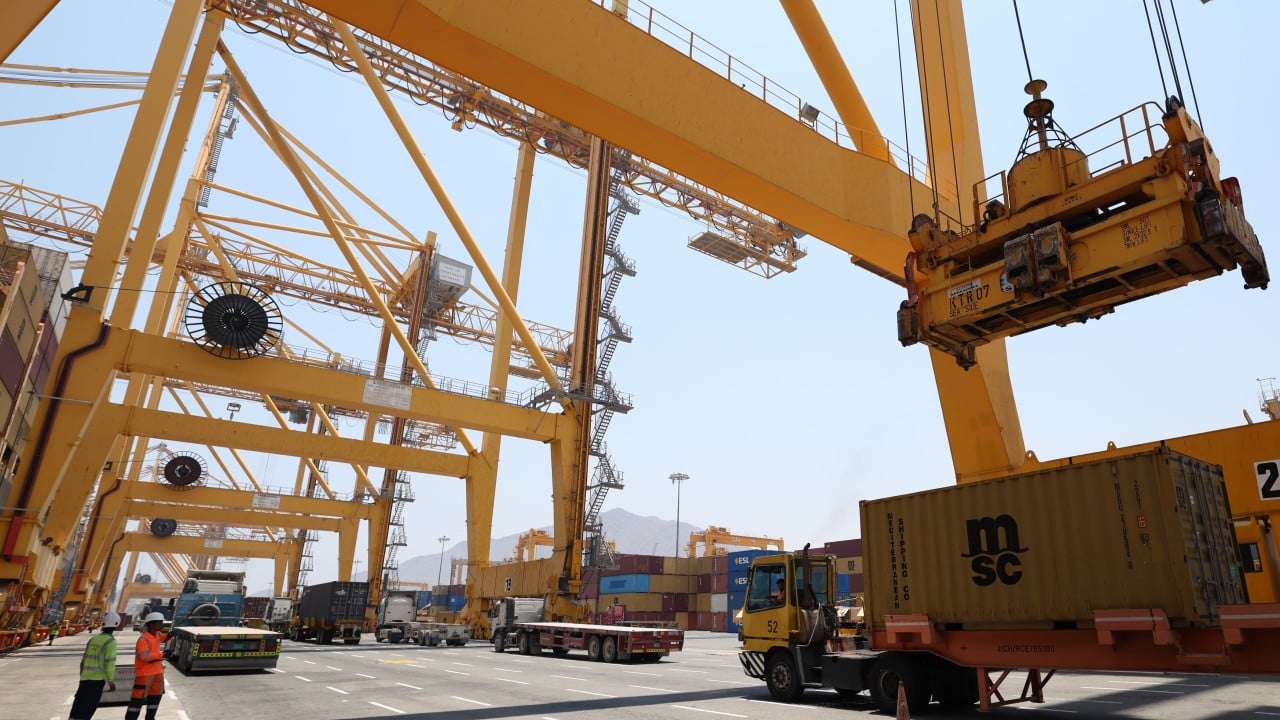

 2 sources
Morning Edition · Saturday, July 18, 2026Published at 1:16 AM EDT · New York
The UAE Wants to Bypass Hormuz, But Its Biggest Ports Sit Inside It
As Iran closes damaged roads in its southern Hormozgan province, the Emirates confronts how hard it is to route trade around the strait its economy depends on.
The United Arab Emirates has said it wants to cut its dependence on the Strait of Hormuz to "zero," but geography makes that ambition difficult to realize. Its two largest ports, Jebel Ali and Khalifa, sit squarely inside the waterway it hopes to route around, the South China Morning Post reported, and together they handle most of the country's maritime trade.
The urgency is not abstract. On the Iranian side of the strait, authorities temporarily closed sections of connecting roads in Hormozgan province after bridges and tunnels were damaged, the state agency IRNA reported, with clearing operations underway to reopen at least one route. The disruption shows how quickly the physical infrastructure around the strait can be degraded.
The Emirates has invested in pipelines and alternative ports, including a terminal at Fujairah on the Gulf of Oman that lies outside the strait, but the bulk of its container and re-export economy cannot easily be relocated. A trillion-dollar trade hub built on being at the center of Gulf shipping cannot quickly become one that operates apart from it.
The episode captures a wider dilemma for Gulf economies. The same chokepoint that made them wealthy now concentrates their vulnerability, and each escalation adds a durable premium to the cost of doing business through it.
Part of a tracked trend
Hormuz Chokepoint Repricing
Recurring Gulf conflict forces energy exporters and importers to build costly workarounds around the Strait of Hormuz, permanently raising the risk premium embedded in Gulf trade and infrastructure.
Veracity: Corroborated
80/100- If true, who benefits
Builders of ports and pipelines outside the strait, and Gulf of Oman terminal operators such as DP World, gain demand from the diversification drive.
- The nuance
The "zero dependency" goal is a stated ambition rather than a near-term reality, since Jebel Ali and Khalifa remain inside the strait and still handle most of the country's trade.
An open-source-intelligence read of how likely this story is true with its real nuance, not a judgment of any outlet. It assesses the claim, weighing independent and adversarial reporting. How we label confidence.
What this means
The war is forcing Gulf states to price the permanent cost of depending on a single chokepoint, and workarounds like bypass pipelines and alternative ports carry large capital bills that raise the long-run cost of Gulf trade even after any ceasefire. The Emirates and its port operators are exposed through re-export volumes and insurance costs, while builders of alternative infrastructure outside the strait gain new demand.
What to watch
Synthesized from: South China Morning Post · IRNA
Townsquare
Start a discussion in Townsquare.
More from this edition
- Oil Jumps to Near 88 Dollars as Tankers Reportedly Hit Mines Off Hormuz
- US Strikes on Iran Reach Seventh Night as Tehran Reports Hits on Civilian Sites
- Bank of Japan Expected to Hold Rate at 1 Percent While Raising Growth Forecast
- Equities Push to Records on Asian Chip Bets Even as Warnings Mount
- China Pitches an AI Governance Model to the Global South
- Ukrainian Drones Set Russian Oil Depot Ablaze as Moscow Strikes Ukrainian Ports
- Pakistan Raises Fuel Prices Sharply as Current Account Swings Back to Deficit
- Manila Protests Chinese Videos as Southeast Asian Ministers Gather
Comments
0No comments yet.