← The Global Intelligence Brief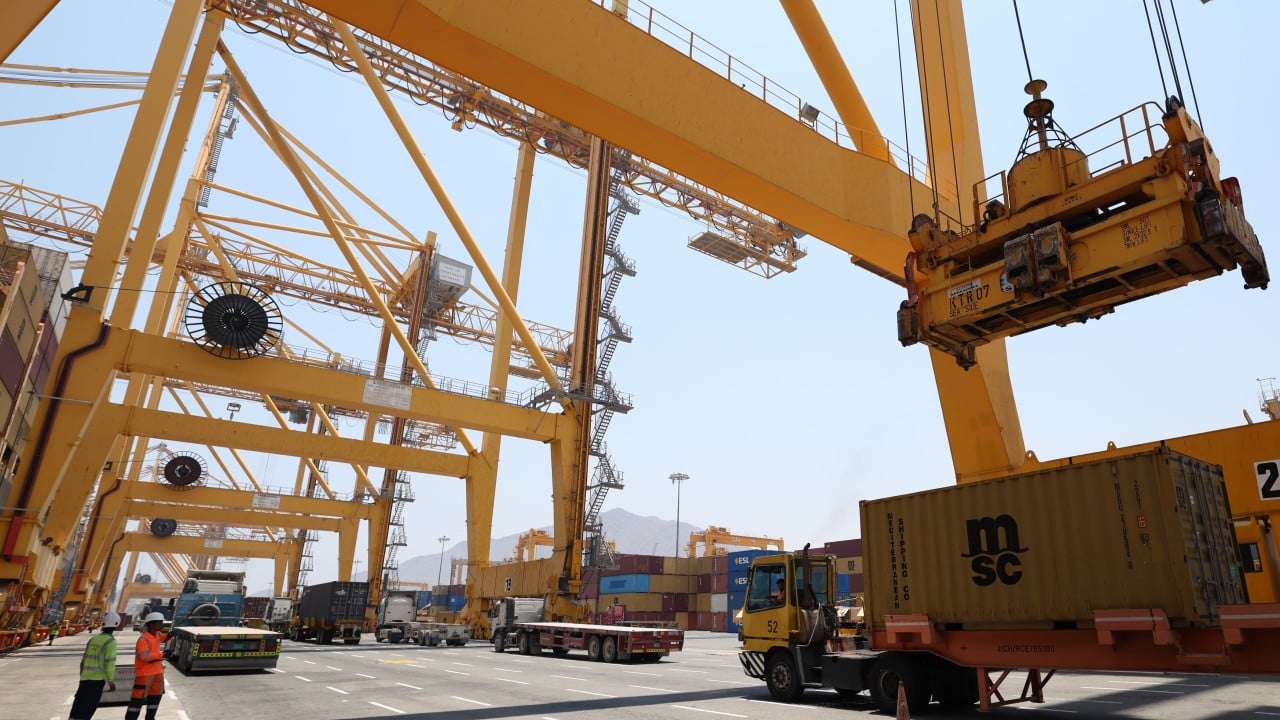

 2 sources
Morning Edition · Saturday, July 18, 2026Published at 1:29 AM EDT · New York
The UAE Wants to Cut Its Reliance on the Strait of Hormuz, but Its Main Ports Sit Inside It
Jebel Ali and Khalifa handle most of the country's trade from within the very waterway Abu Dhabi hopes to bypass as the Gulf war escalates.
The United Arab Emirates has set a goal of reducing its dependence on the Strait of Hormuz to zero, but geography makes that ambition difficult. The ports central to its economy, Jebel Ali and Khalifa, sit inside the waterway it hopes to avoid and together handle most of the country's trade, the South China Morning Post reported.
The urgency is not theoretical. The strait is again a site of active conflict, with Iran claiming tanker explosions near it and Washington disputing those claims as the war widens. Any serious disruption to the channel would severely damage Emirati commerce even as Abu Dhabi builds alternative routes on the Gulf of Oman coast.
The episode illustrates a structural vulnerability for the whole Gulf. Pipelines and outer-coast ports can move some crude and cargo around the strait, but most of the region's trade and oil exports still pass through a channel that a single conflict can threaten. That concentration is precisely why every escalation reprices energy and shipping risk so quickly.
Part of a tracked trend
Middle East War Premium Returns to Oil
Renewed US-Iran conflict reinstates a geopolitical risk premium in crude that reverses the earlier de-escalation slide, feeding energy-driven inflation and redistributing income toward oil producers each time brinkmanship flares.
Veracity: Corroborated
86/100- If true, who benefits
Outer-coast port and pipeline operators drawing new investment, while Gulf exporters and global crude buyers bear the standing chokepoint risk.
- The nuance
The "zero dependency" goal is a stated ambition, not an achieved capacity, and Jebel Ali and Khalifa still handle most of roughly one trillion dollars in trade from inside the strait, so alternative routes remain years from replacing it.
An open-source-intelligence read of how likely this story is true with its real nuance, not a judgment of any outlet. It assesses the claim, weighing independent and adversarial reporting. How we label confidence.
What this means
The mechanism is a chokepoint that cannot be engineered away in the short term. The United Arab Emirates and its Gulf neighbors have most of their export capacity and trade physically inside the Strait of Hormuz, so their revenue, and the world's marginal oil supply, depend on the waterway remaining open. Gulf exporters and their trade partners lose if the strait is disrupted, alternative-route operators and outer-coast ports gain investment, and the persistent concentration keeps a standing risk premium on energy and marine insurance.
What to watch
Synthesized from: South China Morning Post · Deutsche Welle
Townsquare
Start a discussion in Townsquare.
More from this edition
- Iran Suspends Islamabad Truce Framework as First US Combat Deaths Since March Confirmed in Jordan
- Gold Posts Its Largest Weekly Drop in Six Weeks Even as the Iran War Widens
- Bank of Japan Set to Hold Rates and Lift Growth Forecast as the Yen Stays Weak
- Wall Street Banks Ride Asian AI Spending to Record Revenue as Alphabet and Intel Earnings Loom
- Ukrainian Drones Hit the Moscow Region Overnight, Wounding Two Dozen at a Warehouse
- Incoming UK Leader Andy Burnham Faces an Early Decision on British Bases for the Iran Campaign
- Washington Presses the European Union to Roll Back Import Rules a Year After Its Tariff Deal
Comments
0No comments yet.