← The Global Intelligence Brief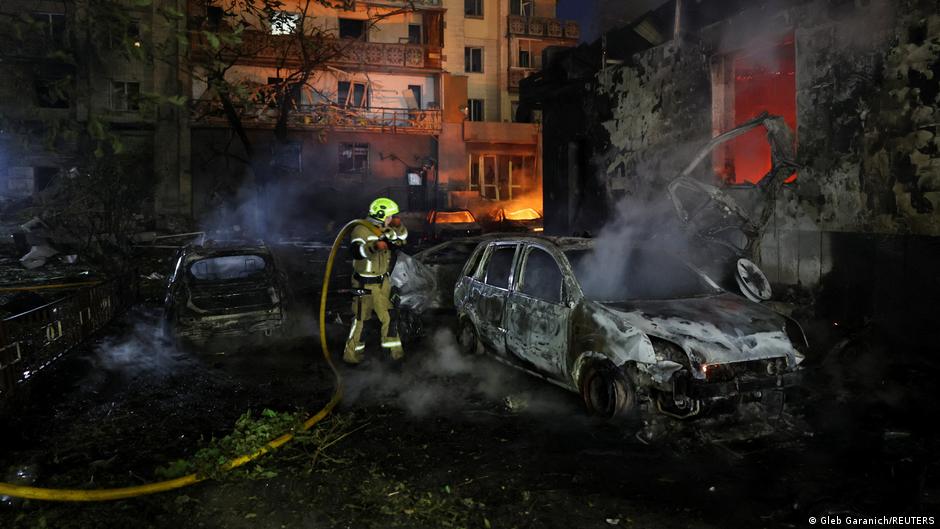


 3 sources
Morning Edition · Sunday, July 19, 2026UpdatedPublished at 7:01 AM EDT · New York
Russian Ballistic Missiles Strike Kyiv as Ukraine Presses Attacks on Russian Logistics
Ukraine described the barrage as the largest ballistic missile attack on Kyiv since the start of the war, killing at least one person and injuring at least 15, while Moscow reported its own strike on a logistics hub in Dnipropetrovsk.
Updated at 7:01 AM EDT
Kyiv attack reframed as the largest ballistic missile assault on the capital since the invasion began (about 40 missiles, including Zirkon hypersonic weapons, plus 125 drones); injured count rose from nine to at least 15.
Russian ballistic missiles struck Kyiv and the surrounding region early Sunday in what Ukrainian officials described as the largest ballistic missile attack on the capital since the start of the war, killing at least one person and injuring at least 15, with fires reported across the city, according to Deutsche Welle and Al Jazeera. Ukraine's air force said Russia fired roughly 25 ballistic missiles, 10 Zirkon hypersonic missiles and other projectiles alongside 125 drones, with most aimed at Kyiv. President Volodymyr Zelensky called it one of Russia's largest ballistic missile attacks on the capital. Emergency services worked through the night at multiple sites, including damaged residential buildings in several districts.
Russian state media presented the campaign from Moscow's side. RIA Novosti reported that Russian forces struck a logistics center in Dnipropetrovsk, and other Russian dispatches described air-defense units downing Ukrainian long-range drones. The two accounts describe the same war from opposing perspectives. Ukraine is striking Russian supply lines and energy infrastructure, and Russia is striking Ukrainian cities and rear-area logistics.
The exchange fits a pattern of reciprocal strikes on infrastructure that has become the defining feature of the conflict, with each side aiming at the other's ability to move fuel, weapons and power.
Part of a tracked trend
Ukraine's Deep Strikes on Russian Energy and Logistics
Ukraine sustains a campaign against Russian refineries and supply lines over the next 3-6 months, pressuring Moscow's oil revenue while Russia retaliates against Ukraine's grid.
Veracity: Corroborated
82/100- If true, who benefits
Each capital's account serves its war aims, Kyiv to sustain Western air-defense support and financing, Moscow to cast the strikes as hits on military logistics rather than on residential Kyiv.
- The nuance
The reciprocal-strike pattern and the July attacks on Kyiv are well documented, but the exact July 19 casualty count and whether Russia struck military logistics or civilian districts depend on which side's account is used.
An open-source-intelligence read of how likely this story is true with its real nuance, not a judgment of any outlet. It assesses the claim, weighing independent and adversarial reporting. How we label confidence.
What this means
The war's mutual targeting of energy and logistics is the mechanism that supports European gas and refined-product prices and sustains the risk of Russian export disruption. Ukraine's strikes pressure Moscow's oil revenue, while Russia's strikes on Ukrainian power raise reconstruction and wartime costs. European energy buyers and insurers are exposed through supply risk, and Russia's budget is exposed through any sustained loss of refining and export throughput.
What to watch
Synthesized from: Deutsche Welle · Al Jazeera · RIA Novosti
Townsquare
Start a discussion in Townsquare.
More from this edition
- United States Strikes Iran for Eighth Night After Attack in Jordan Kills Two American Soldiers
- China's Leaders Signal Fresh Stimulus Aimed at High Technology, Not Household Spending
- Japan's Defense Chief Says the Country Cannot Avoid a Nuclear Weapons Debate
- Singapore Weighs Hedge Fund Tax Cuts as Wealthy Europeans Turn to Hong Kong
- India's Technology Stocks Rebound as Investors Position Around Major Bank Earnings
- Mitsubishi Electric Explores Power-Chip Merger With Rohm and Toshiba
- Investors Turn Optimistic on a Long-Delayed Southeast Asian Power Grid
- Iraq and the United States Sign 48 Agreements During Prime Minister's Visit
Comments
0No comments yet.