← The Global Intelligence Brief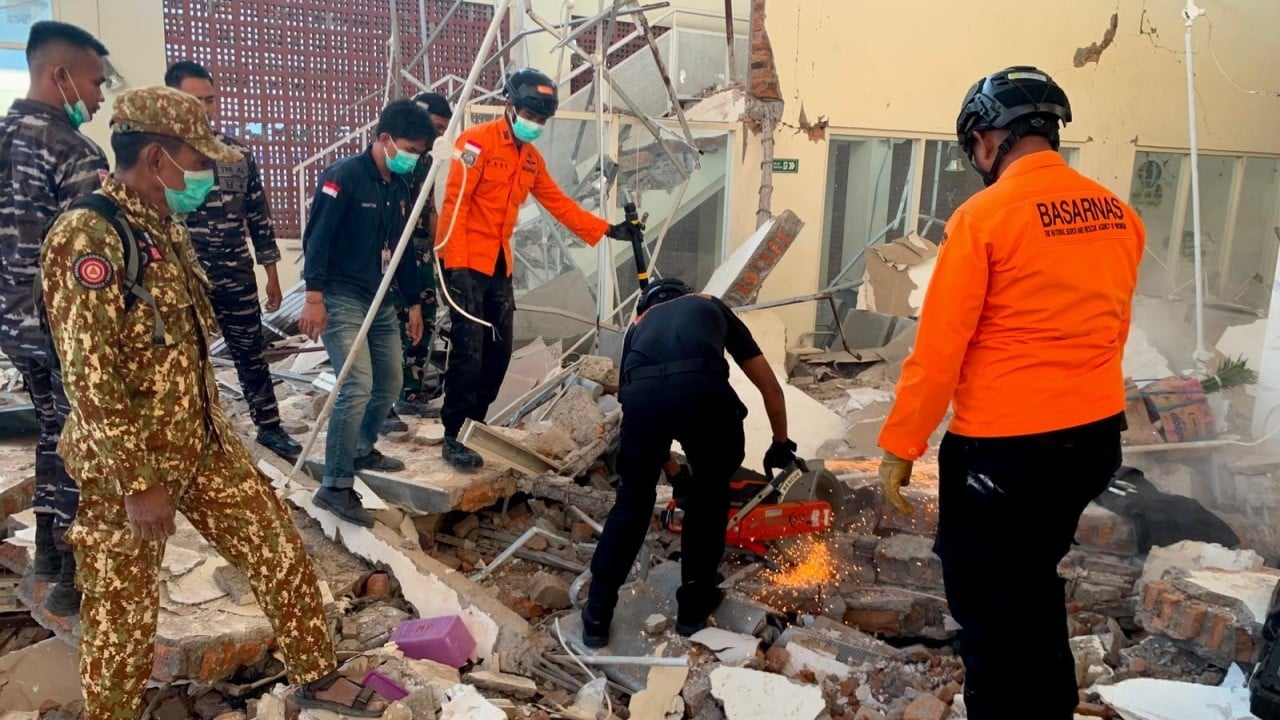


 4 sources
Morning Edition · Saturday, August 15, 2026UpdatedPublished at 7:45 AM EDT · New York
Magnitude 7.7 Earthquake Kills at Least Five in Eastern Indonesia and Triggers a Small Tsunami
The quake struck off Nagekeo district in East Nusa Tenggara, collapsed buildings across Flores and was felt strongly on Lombok, several hundred kilometres away.
Updated at 7:45 AM EDT
Death toll revised sharply upward, from "at least five" to "at least 20," with new details on injuries, trapped survivors and aftershocks; the tsunami warning has since been lifted.
A magnitude 7.7 earthquake struck off the coast of eastern Indonesia early on Saturday, collapsing buildings across the Flores region and killing at least 20 people, according to Al Jazeera's updated count, which rose through the day from an initial toll of two confirmed by Indonesia's state news agency Antara in Nagekeo district. Rescuers around the port town of Maumere, in East Nusa Tenggara province, found 20 dead, six injured and two people still trapped under rubble, Al Jazeera reported. Three aftershocks followed within half an hour, measuring magnitudes of 5.9, 5.6 and 6.1, and NBC News reported that about 500,000 people were exposed to very strong or severe shaking.
The quake also generated small tsunami waves, with recorded heights below one metre in several locations, consistent with Japan's Jiji Press report of a tsunami just under one metre. Indonesia's Meteorology, Climatology and Geophysics Agency (BMKG) issued a tsunami warning for affected coastlines and urged residents to move to higher ground, but lifted the warning later on Saturday as the immediate wave threat passed. Indonesia's National Search and Rescue Agency continued pulling survivors from building debris through the day, and residents on Lombok island, in West Nusa Tenggara province, several hundred kilometres away, reported strong shaking.
Indonesia sits on the Pacific seismic belt and experiences large quakes regularly, which is why its disaster agencies mobilised within hours. The economic exposure in East Nusa Tenggara is concentrated in fisheries, agriculture and tourism around Labuan Bajo rather than in industrial capacity or export terminals, so the immediate national economic effect remains limited even as the confirmed death toll has risen substantially since the quake struck.
The government response follows a pattern set by President Prabowo Subianto's administration of fast central mobilisation for disasters. Reconstruction spending in a province with limited local revenue falls almost entirely on the national budget, and that burden grows as the casualty and damage figures continue to be revised upward during the search-and-rescue phase.
Part of a tracked trend
Disasters as Political and Supply Shocks
Major natural disasters in commodity-producing states translate into political instability and supply disruptions that markets increasingly have to price, recurring as climate and geological shocks hit fragile economies.
What this means
The direct market effect of this quake is small because East Nusa Tenggara produces no significant export commodity, but the fiscal channel is real. Emergency response and reconstruction are funded from Jakarta at a time when the government is committing to large national programmes, and repeated disasters in outlying provinces compound that claim on the budget. Insurers with regional exposure and the tourism operators around Labuan Bajo take the concentrated losses.
What to watch
- The confirmed casualty figure and building damage assessment over the next 48 hours, which determines the scale of the reconstruction bill.
- Aftershock activity and any further tsunami warnings along the Flores coast, since a second large event would multiply the damage in already weakened structures.
- Whether Jakarta declares a national emergency, which would trigger central budget reallocation rather than provincial funding.
Observations to monitor, not financial advice.
Synthesized from: South China Morning Post · Antara · Jiji Press · TASS
Townsquare
Start a discussion in Townsquare.
More from this edition
- Trump Says He Will Declare the Strait of Hormuz American Territory as Iran Keeps the Blockade in Force
- Gold Holds Near $4,365 an Ounce and Silver Near $64 as War Premium Meets a Cautious Federal Reserve
- The Yen Slides Back Toward 160 as Traders Test Tokyo's Willingness to Intervene Again
- OpenAI Loses a Third Senior Executive in a Month as Sam Altman Pushes Toward a Listing
- Bitcoin Slips Below $63,000 While Gold Holds Near Records, Separating the Two Hard-Money Trades
- Iran Says It Has Made No Decision on Returning to Talks With Washington
- Reliance and Rolls-Royce Agree to Develop an Indian Combat Jet Engine, Bypassing American Suppliers
Comments
0No comments yet.