← The Global Intelligence Brief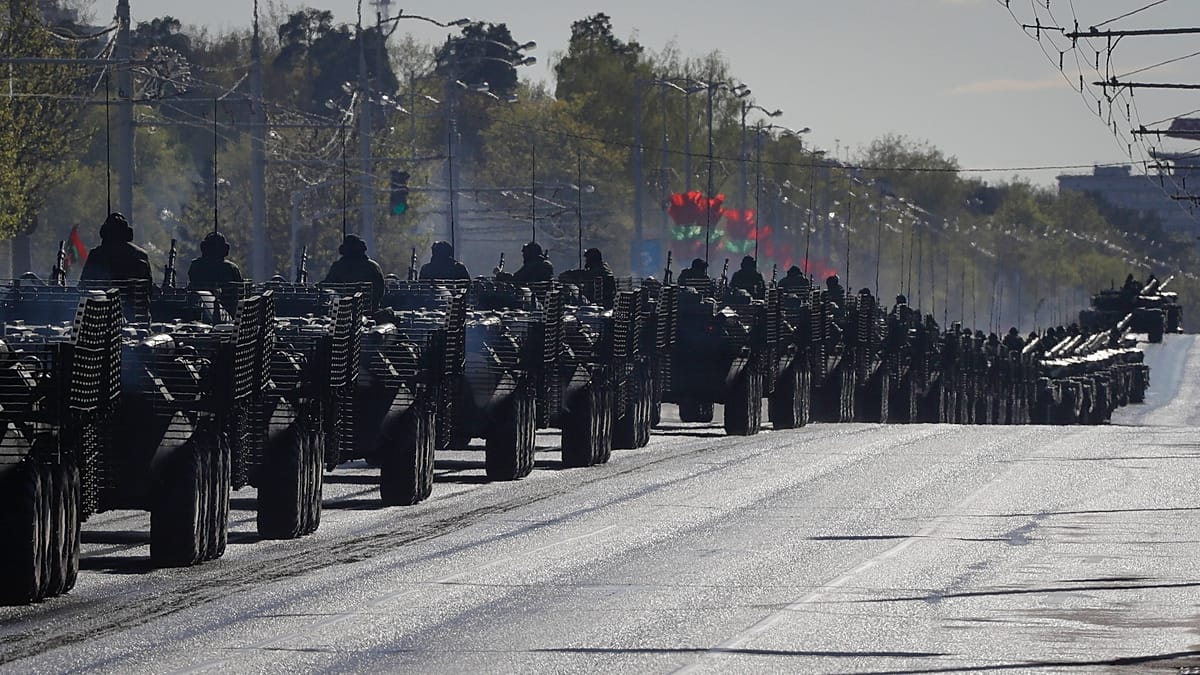


 3 sources
Morning Edition · Wednesday, September 16, 2026Published at 1:10 AM EDT · New York
Belarus Masses Troops Near the Polish and Lithuanian Borders for a Four-Day Exercise
Minsk calls the drills purely defensive, while Poland has moved to close border crossings and Lithuania has increased security along its frontier.
Belarus began command and staff exercises with its Western Operational Command on 15 September, concentrating forces near the borders with Poland and Lithuania. The Belarusian defence ministry describes the drills as "purely defensive" and says there is no cause for concern, according to Euronews. The exercises run to 18 September under the direction of Chief of the General Staff Pavel Muraveiko.
Ukrainian military reporting describes the content of the training as securing the border, enforcing martial law, countering saboteurs and irregular armed groups, and defending against light aircraft and drones, with tank battalions deployed and mobilization procedures rehearsed in the Grodno region adjoining Lithuania. Those tasks describe territorial defense rather than offensive operations, which is consistent with what Minsk says, though the location is what neighboring governments object to.
Warsaw and Vilnius have responded with physical measures. Poland moved to close its border with Belarus and Lithuania increased security along its frontier for the duration of the exercises, repeating a pattern established during previous drills. Border closures of this kind interrupt road freight between the European Union and Belarus, Russia and onward to Central Asia.
This year does not include Zapad, the large quadrennial Russian-Belarusian strategic exercise, which last took place in 2025 and has not been announced for this autumn, so the current activity is a national Belarusian exercise rather than a joint one with Russia. What matters is the pattern now established on the European Union's eastern border: an exercise on one side, border closures and troop reinforcement on the other, and a steady increase in the baseline cost of moving goods and insuring activity in the region.
Veracity: Corroborated
79/100- If true, who benefits
Warsaw and Vilnius gain support for higher defense budgets and for continued restrictions on transit trade, Minsk gains a grievance narrative about NATO encirclement, and Baltic and Polish logistics operators competing with the Belarus corridor gain rerouted volume.
- The nuance
The exercise itself is confirmed on both sides, including by Ukrainian military reporting on the Grodno mobilization drills, but the stated tasks of border defense and counter-sabotage are equally consistent with Minsk's defensive framing and with rehearsal for pressure on the Suwalki corridor, and the Polish closure is reported as announced rather than confirmed in effect, which matters because the 2025 closure during Zapad lasted thirteen days and one source frames this year's national Belarusian drills as Russia-led.
An open-source-intelligence read of how likely this story is true with its real nuance, not a judgment of any outlet. It assesses the claim, weighing independent and adversarial reporting. How we label confidence.
What this means
Synthesized from: Euronews · Kyiv Independent · Militarnyi
Townsquare
Start a discussion in Townsquare.
More from this edition
- Ten-Year Treasury Yield Touches 5.04% Hours Before the Federal Reserve Decides on Rates
- Senate Blocks Crypto Market-Structure Bill and Bitcoin Falls Toward $76,000
- Only Four Vessels Transited the Strait of Hormuz on Monday, and None Carried Oil or Gas
- Hong Kong Says It May Buy Gold With Its Exchange Fund as It Publishes a First Five-Year Plan
- Washington and Beijing Discuss Cutting Tariffs on $30 Billion of Goods Before a September 24 Summit
- Fuel Price Increases Set Off Protests From Syria to Guatemala
- Saudi-Led Coalition Says It Shot Down a Houthi Drone South of Mecca and Calls the Holy Cities a Red Line
Comments
0No comments yet.