← The Global Intelligence Brief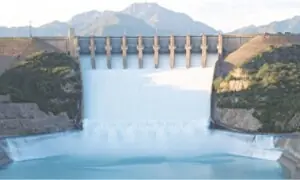


 3 sources
Morning Edition · Monday, September 28, 2026Published at 1:13 AM EDT · New York
Pakistan Expects a 25% Water Shortfall for Its Main Wheat Season
Reservoir carryover has fallen below 9.5 million acre-feet after a season in which the country already imported wheat to cover a shortfall of more than two million tonnes.
Pakistan is entering its Rabi season, the winter cropping period, with an expected water shortage of about 25%, according to Dawn, which reports reservoir carryover below 9.5 million acre-feet, the lowest since 2021. Wheat is the season's main crop. The Indus River System Authority's technical committee is due to finalize water availability and provincial shares, and Dawn notes that the three-tier distribution formula used to allocate water may revive disputes between provinces.
Pakistan starts this season from an already weak position. The previous Rabi season faced no water shortage, and the country still recorded an estimated wheat shortfall of more than two million tonnes, which forced the government to order imports of one million tonnes, including 750,000 tonnes in a first phase for November delivery. The shortage now forecast applies on top of that deficit, as regional agricultural coverage summarised. Islamabad has in past years set wheat production targets near 30 million tonnes, with the Federal Committee on Agriculture fixing the figure each autumn.
The economic consequence runs through the external account. Pakistan imports energy and, increasingly, grain, and it does so with limited foreign exchange reserves and an International Monetary Fund programme that constrains subsidy spending. A larger wheat import bill arriving at the same time as crude above $100 a barrel compounds the pressure on the rupee and on domestic food prices, which are the most politically sensitive component of the consumer price index in any low-income economy.
Water allocation is also a federal question. Disagreement among provinces over shares during a shortage year has historically sharpened political conflict, which is the channel through which a hydrological number becomes a governance problem.
Part of a tracked trend
Disasters as Political and Supply Shocks
Major natural disasters in commodity-producing states translate into political instability and supply disruptions that markets increasingly have to price, recurring as climate and geological shocks hit fragile economies.
Veracity: Corroborated
76/100- If true, who benefits
Wheat exporters and shipping intermediaries gain from Pakistani import tenders, provincial governments gain leverage in the allocation dispute, and Islamabad gains an early justification for import decisions it will have to defend under its International Monetary Fund programme.
- The nuance
The 25% figure is an anticipatory estimate reported by Dawn before the Indus River System Authority's technical committee finalises allocations, and such pre-season forecasts have been revised sharply in the past, including the previous season when the authority ultimately set an 8% shortage after heavy inflows, which also complicates the article's statement that the prior Rabi season faced no shortage.
An open-source-intelligence read of how likely this story is true with its real nuance, not a judgment of any outlet. It assesses the claim, weighing independent and adversarial reporting. How we label confidence.
What this means
The mechanism is a sequential shock to the balance of payments. Less irrigation water means a smaller wheat harvest, a larger import requirement in dollars, and upward pressure on food inflation, all while a higher oil price is already widening the import bill. The exposed parties are Pakistan's currency, its urban consumers, and a government that has little fiscal room under its International Monetary Fund arrangement to cushion prices. Provincial governments want their full allocation and the federal authority wants to avoid open conflict during a shortage year, and neither can increase the actual volume of water in storage. The precedent is Pakistan's 2022 and 2023 sequence of import-driven food inflation and currency pressure, which ended in emergency external financing. The likelier outcome within months is additional wheat import tenders and renewed provincial argument over allocation, conditional on winter rainfall failing to improve storage. Substantial early-winter precipitation across the Indus catchment would reduce the shortfall and make this read too pessimistic.
Synthesized from: Dawn · UA.NEWS · Profit by Pakistan Today
Townsquare
Start a discussion in Townsquare.
More from this edition
- Trump Rejects Iran's Hormuz Proposal and Keeps Further Strikes Open, Pushing Brent Above $106
- Washington and Beijing Publish Terms of Matched Tariff Cuts on $30 Billion of Goods Each Way
- Warsh's Rate Increase Draws Political Fire as Jobs and Inflation Data Land This Week
- Artificial-Intelligence Builders Are Rewriting the Corporate Bond Market to Fund Data Centres
- US Ambassador Says Trump Asked Xi Whether China Wanted to Buy American Weapons
- European Union States Weigh a Joint Response Mechanism for Attacks Below the Threshold of War
- Seoul Demands an Apology From Kyiv Over the Disclosure of North Korean Prisoner Transfers
Comments
0No comments yet.