← The Global Intelligence Brief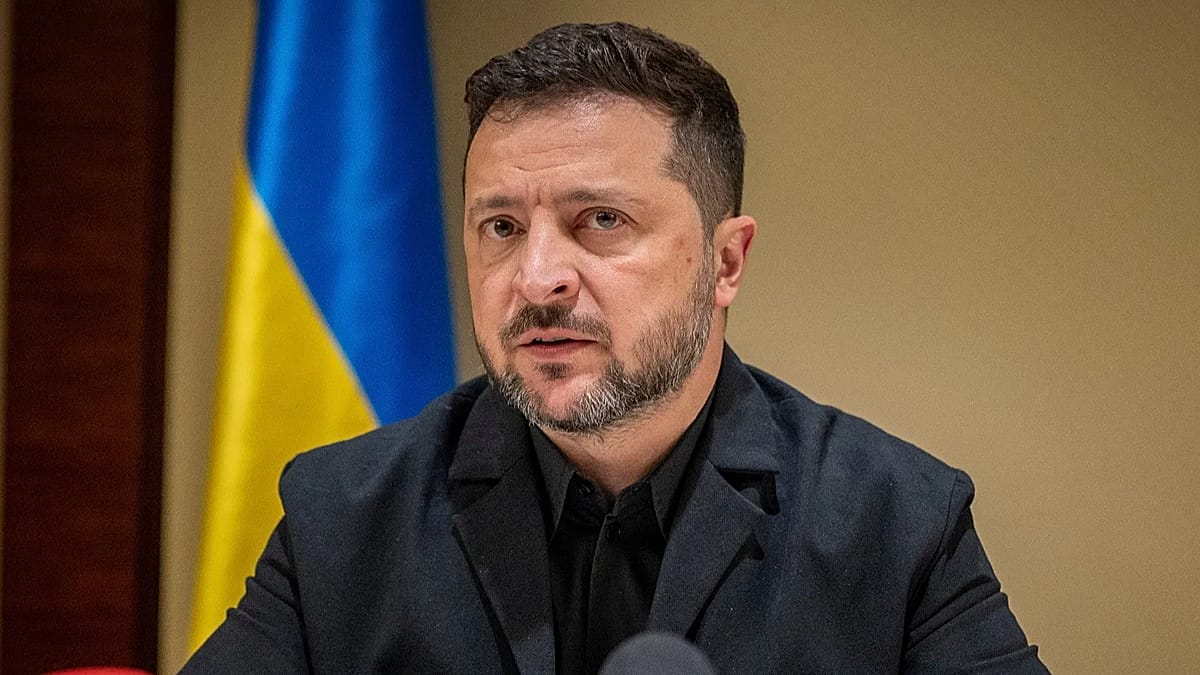


 4 sources
Morning Edition · Wednesday, October 14, 2026Published at 1:07 AM EDT · New York
Russian missile hits Kyiv's CHP-4 power plant, and Zelensky says allies gave no early warning for a second night
Trump says US intelligence still reaches Kyiv, while Britain says it will speed up deliveries of Lightweight Multirole Missiles to meet Ukraine's winter needs.
A Russian ballistic missile struck CHP-4, a combined heat and power plant in Kyiv, President Volodymyr Zelensky said, criticizing Western allies for giving no advance warning, Euronews reported. The strike came even though President Donald Trump has said an energy ceasefire is in effect. On October 10, Russia's Defense Ministry said its forces had struck Kyiv's TEC-5 and TEC-6 heat and power plants as part of attacks on 14 Ukrainian cities, Argumenty i Fakty reported.
Ukraine says it received no intelligence warning of incoming strikes for a second consecutive night, The New York Times reported. Asked about apparent US threats to cut off intelligence sharing, Trump said information was still flowing. The two accounts cannot both be fully accurate, and neither government has published evidence that would settle the question.
Russia is also targeting commercial logistics. A large distribution center in Khmelnytskyi belonging to Epicentr, a Ukrainian retail chain, was destroyed after Russian drones struck it 10 times in a single day, Ukrinform reported. Ukrinform is a Ukrainian state news agency.
Britain is moving in the opposite direction from Washington. The prime minister's office said it will speed up deliveries of Lightweight Multirole Missiles (LMM) to Kyiv "to meet Ukraine's most urgent winter requirements," Russia's TASS reported. Zelensky also spoke by phone with Canadian Prime Minister Mark Carney about contacts with the United States and upcoming diplomatic meetings, according to Ukrinform.
Part of a tracked trend
Strikes Move to Each Other's Home Fronts
Both Russia and Ukraine keep shifting long-range strikes toward transport, warehousing and civilian-adjacent targets far from the front, so aviation, logistics and insurance costs deep inside both economies keep rising and each mass-casualty incident pushes a negotiated pause further away.
Veracity: Plausible
74/100- If true, who benefits
If allies did withhold early warning, Washington gains leverage to force Kyiv into an energy ceasefire, Moscow gains easier strikes on Ukrainian generation, and European power exporters gain winter demand from Ukraine.
- The nuance
Both Zelensky's complaint and Trump's statement that "we are sharing intel" are on record, according to Euromaidan Press and Semafor, but the article omits that the US threat to cut intelligence was tied to Kyiv's continued strikes on Russian energy, and missing warnings against ballistic missiles can also reflect short flight times rather than a political decision.
An open-source-intelligence read of how likely this story is true with its real nuance, not a judgment of any outlet. It assesses the claim, weighing independent and adversarial reporting. How we label confidence.
What this means
Synthesized from: Euronews · The New York Times · Ukrinform · TASS
Townsquare
Start a discussion in Townsquare.
More from this edition
- Houthi missile sets fire to Saudi Aramco office building in Dhahran as Brent holds near $106
- Fed's Williams says no rate increases should be needed in 2027, against futures pricing, before US inflation data
- Trump says the US has "had it" with Iran and will decide "very soon," while Tehran tells Britain to prove its Fairford accusation
- Japanese banks and insurers buy domestic bonds again as 30-year yields stay above 4%
- IMF's Georgieva says growth alone will not reduce US debt of more than $40 trillion
- Russian officials report hundreds of drones aimed at Moscow overnight, and a strike in Balakovo kills one person
- Sitharaman says the Reserve Bank of India will keep limiting rupee swings without fixing a level
Comments
0No comments yet.