← The Global Intelligence Brief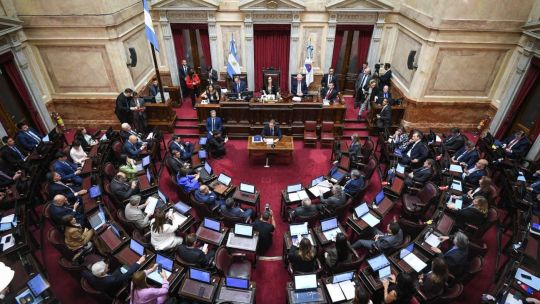
Morning Edition · Thursday, November 26, 2026Published at 12:12 AM EST · New York
Argentina's economy minister wants to use $5 billion from the China swap line to refinance debt
Luis Caputo says the January bond payments are covered, while supermarket sales fell 3% in September and the cabinet chief told senators the country's gold is held partly at the Bank for International Settlements.
Economy Minister Luis Caputo confirmed that the government has asked China to let it use the activated $5 billion tranche of the central bank's currency swap to refinance debt, Clarín reported. He said the government already has the funds to pay bondholders in January. Clarín wrote, in Spanish, that the aim is to show that debt payments are guaranteed. Bloomberg Línea reported in October that the roughly $19 billion swap was renewed in August. Argentine press has reported that officials worry about how Washington will react to using Chinese funds, according to El Economista.
Questions about reserves reached the Senate. Cabinet chief Diego Santilli said Argentina's gold reserves are "perfectly safe," with part held at the central bank and part at the Bank for International Settlements in Switzerland, the Buenos Aires Times reported. Opposition senators had renewed questions about where the gold is.
The domestic economy is weak. Supermarket sales fell 3% year on year in September, the ninth consecutive monthly decline, and the January-to-September contraction reached 2.9%, Clarín reported, citing the national statistics institute (INDEC). Former economy minister Martín Guzmán, who served under the previous Peronist government, told Ámbito that activity is stagnant, investment is falling and job creation is weak. He also criticized the government's financial dependence on the United States. Guzmán is a political opponent of President Javier Milei, and his assessment should be read that way.
Milei's government has cut fiscal deficits and slowed inflation, which is sound money at home. It still depends on foreign creditors, now including both Washington and Beijing, to roll over its dollar debt. Taking yuan funds from a Chinese swap to pay dollar bondholders turns a liquidity line into debt financing. It also exposes Argentina's bond payments to US-China rivalry.
Part of a tracked trend
Townsquare
Start a discussion in Townsquare.
More from this edition
- US core inflation rises to 3.3%, and futures now price a near-certain December Fed hike as gold dips below $3,500
- US proposes Section 301 tariffs on 14 economies over "excess capacity," with India facing 25%
- Brent crude closes above $90 after Iran says tankers hit mines in Hormuz
- Nvidia reinstates Jensen Huang 11 days after his resignation, with government and board investigations still open
- Bitcoin trades below $60,000 as long-time investors prepare for further losses
- Bank of Korea raises its base rate to 3.25% and lifts its 2027 growth forecast to 4.1%
- US-led consortium agrees to buy Lukoil's international business in a share swap that sends no cash to Russia
Comments
0No comments yet.