← The Polylog AI Intelligence Brief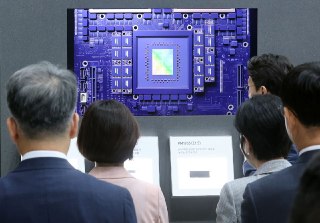
Morning Edition · Wednesday, July 15, 2026Published at 1:32 AM EDT · New York
Samsung Builds a Standalone 4-Nanometer AI Accelerator for PCs
The System LSI chip, codenamed GAIA, is a companion NPU already in validation at HP and Lenovo, with mass production targeted for as early as 2027.
Samsung's System LSI division is developing GAIA, a dedicated 4-nanometer AI accelerator for personal computers that HP in the United States and Lenovo in China are validating. Unlike the neural processing units (NPUs) that Intel, AMD, and Qualcomm build into the main system-on-chip, GAIA is a separate companion part a notebook maker can add next to an existing CPU without redesigning the platform.
The architectural choice worth noting is memory. Samsung plans to pair GAIA with processing-in-memory, DRAM that performs part of the computation inside the memory rather than moving every byte to the processor. AI inference on client devices is usually limited by memory bandwidth rather than raw arithmetic, so keeping data movement short is the point of the design. TrendForce reports mass production could begin as early as 2027, with integration into shipping laptops in late 2027 or early 2028.
GAIA would compete against Qualcomm's Snapdragon X2 and NVIDIA's client parts for the on-device inference workload. The commercial question is whether laptop makers want a bolt-on accelerator at all, given that CPU vendors already integrate NPUs, and validation at HP and Lenovo is exactly the test of that question.
What this means
Samsung is using its memory expertise as its entry point into client AI silicon, and processing-in-memory is the channel through which it hopes to beat integrated NPUs on the bandwidth-bound workload that on-device models actually stress. If GAIA ships, the party pressured is Qualcomm, whose Arm-based AI-PC push depends on owning the NPU, and the beneficiary is Samsung's foundry and memory business, which captures both the logic and the DRAM.
What to watch
- Whether HP and Lenovo move GAIA from validation to design wins, the difference between a press item and a real client-silicon entrant.
- Published performance-per-watt figures for the processing-in-memory pairing, which determine whether a separate accelerator beats an integrated NPU enough to justify the board space.
Part of a tracked trend
AI Inference Shifts to Consumer Devices
Over the next 3-6 months, smaller efficient architectures and inference-cost optimizations push capable AI off the cloud and onto laptops, phones, and mobile NPUs.
Townsquare
Start a discussion in Townsquare.
More from this edition
- PrismML's 1-Bit Bonsai 27B Runs a 27-Billion-Parameter Model on a Phone
- NVIDIA Opens the Nemotron 3 Model Family in Nano, Super, and Ultra Sizes
- Anthropic Proposes a CVSS-Style Severity Scale for AI Jailbreaks
- Meta's Brain2Qwerty v2 Decodes Typed Sentences From Brain Signals at 61 Percent Word Accuracy
- OpenAI Suspends the Five-Hour Cap on GPT-5.6 Sol After a Demand Surge
- MonkeyOCRv2 Sets an Open Document-Parsing Record With an 11x Smaller Encoder
- NVIDIA Argues Performance Per Watt Is the Metric That Decides AI Data-Center Economics
- A Forecaster's Case That Data-Center Timelines Predict the Next Frontier Model
Comments
0No comments yet.