← The Polylog AI Intelligence Brief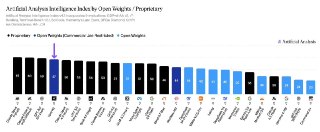
Morning Edition · Tuesday, July 28, 2026Published at 1:31 AM EDT · New York
Moonshot AI Releases Kimi K3, a 2.8-Trillion-Parameter Open-Weight Model That Tops Open Rankings
The Beijing lab's mixture-of-experts system trails only the closed frontier of Claude Fable 5 and GPT-5.6 Sol while beating Claude Opus 4.8 on coding and agent benchmarks, and its weights are a 1.4-terabyte free download.
Moonshot AI, the Beijing startup backed by Alibaba, has published the open weights for Kimi K3, a 2.8-trillion-parameter model it calls the largest ever released for download. The weights went live on Hugging Face on July 26, a day ahead of schedule. The design is a mixture-of-experts model with a context window of roughly one million tokens and an always-on reasoning mode. And, as VentureBeat reported, only about 32 billion parameters activate for each token, which holds the cost of running the model far below what its full size suggests.
Moonshot's own evaluations place K3 behind the closed frontier of Anthropic's Claude Fable 5 and OpenAI's GPT-5.6 Sol, but ahead of every other model it tested, including Claude Opus 4.8 and GPT-5.5, on coding and agentic suites. Tom's Hardware reported that K3 beat Claude Fable 5 on the Frontend Code Arena benchmark. A widely circulated AI Post summary put K3 at the top of the open-weight tier of Artificial Analysis's Intelligence Index with a score of 57, a figure that reflects a single aggregator rather than independent reproduction of each named benchmark.
The practical constraint is deployment size. The full model is roughly 1.4 terabytes even when compressed to a lower-precision format (MXFP4 quantization), which makes self-hosting impractical for most teams and pushes real usage toward hosted endpoints and cloud providers. The distance between a model that can be downloaded and one that can actually be run is now the central economic question for open weights at this scale.
Veracity: Corroborated
79/100- If true, who benefits
Moonshot and Beijing gain a credibility win for China's open-weight strategy and Global South AI adoption, while enterprises and cloud hosts serving downloadable Chinese weights gain a cheaper alternative to metered United States APIs.
Part of a tracked trend
Open-Weight Models Close the Gap With Closed Frontier Labs
Over the next 3-9 months, open-weight releases with downloadable weights, long context, and strong agentic/coding performance increasingly match closed frontier models on practical work, eroding the closed-lab moat.
Townsquare
Start a discussion in Townsquare.
More from this edition
- China Accuses Washington of 'AI Hegemonism' and Threatens Countermeasures Over Moonshot Probe
- Anthropic Says It Never Sought to Ban Open Weights, but Backs Distillation Crackdowns and Pre-Release Testing
- Anthropic Ships Claude Opus 5, Its Fourth Model in Two Months, With a Doubling on Software-Engineering Evals
- Microsoft Says United Kingdom Grid Connections Take Eight Years, Choking AI Data-Center Buildout
- Nvidia Puts Its Vera CPU to Work Designing the Next Generation of CPUs and GPUs
- Hassabis Says DeepMind Sold to Google Because Independence Would Have Cost Billions It Could Not Raise
- A 184-Million-Parameter Classifier Claims State-of-the-Art Prompt-Injection Detection at a Fraction of Llama Guard's Size
Comments
0No comments yet.