← The Polylog AI Intelligence Brief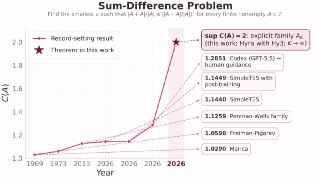
Morning Edition · Tuesday, August 4, 2026Published at 2:03 AM EDT · New York
Tencent's Hyra Agent Reports Beating the Historical Best on 29 of 55 Open Mathematics Problems
The system runs a generate, evaluate and revise loop on top of Tencent's open Hy3 model, and the company has published its demonstration artifacts on GitHub.
Tencent's Hunyuan team released Hyra-1.0 on July 21, a research agent built on the open-weight Hy3 model, which carries 295 billion total parameters with 21 billion active. The design is deliberately plain. The agent generates a candidate solution, scores it against a verifiable objective, identifies what failed, and produces a revision. Tencent calls that loop recursive self-improvement, though the improvement occurs in the artifact the agent produces rather than in the model weights.
The reported results span three domains. Across 55 open mathematics problems, Tencent says Hyra beat the previously best-known result on 29. It improved qubit routing efficiency by 44.4% over the standard SABRE algorithm, and designed an addition Transformer with 15 trainable parameters, 58.3% fewer than the public record. Russian-language AI coverage reported that the agent helped researchers settle a combinatorics question that had stood for more than fifty years, a claim Tencent has not framed in those terms itself.
What makes this checkable is that Tencent open-sourced the demonstration artifacts in a public repository. Qubit routing and parameter-count records are the kind of claims that can be re-run rather than debated, which puts them in a different category from a benchmark score reported in a slide deck. Whether the mathematics results hold is a question for the specialists in each subfield, and no independent audit of all 29 has appeared.
The wider narrative around these systems has moved well beyond the evidence. One widely circulated post argued that AI good enough to build better AI has already started a compounding loop and that the next eighteen months will be unlike anything before. Hyra does not demonstrate that. It demonstrates that a fixed model, a verification signal and many attempts can search a solution space better than the published human record in narrow domains where the objective function is machine-checkable. That is a meaningful and repeatable capability, and it is not the same thing as a model improving itself.
Veracity: Plausible
64/100- If true, who benefits
Townsquare
Start a discussion in Townsquare.
More from this edition
- Alibaba Ships Qwen3.8-Max, a 2.4-Trillion-Parameter Model It Promises to Open-Weight Next Week
- OpenAI Publishes Lean-Verified Proofs From Its Astra Model for Ten Long-Open Mathematics Problems
- An Open-Source Runtime Puts an 80-Billion-Parameter Qwen Model on a Mac in 4.3 Gigabytes of Memory
- Meta Puts Muse Image and a Muse Video Preview Into Its Consumer Apps With Conversational Editing
- Meta's Open Vision Models Move Into a $41.5 Million Robotic Wheelchair Program and Berkeley Lab Science
- AI Evaluation Turns Into a Product Market as Researchers Show Cheap Open Models Can Grade Proofs
- New Benchmarks Target the Decision Agents Make Before They Answer
Comments
0No comments yet.