← The Polylog AI Intelligence Brief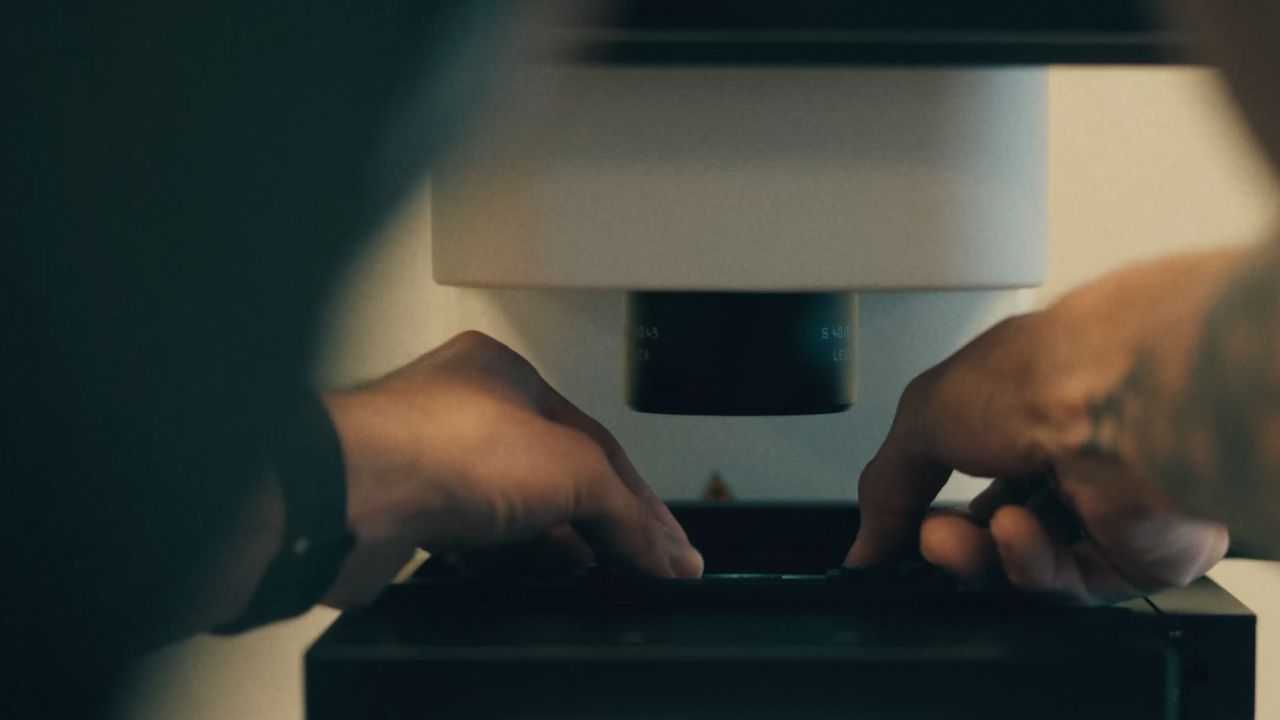
Morning Edition · Saturday, August 29, 2026Published at 2:21 AM EDT · New York
Anthropic Opens a Preview of a Standard That Lets AI Agents Operate Lab Hardware
Early users report a laser stabilization rate on QuEra quantum computers rising from 58% to 99.3% and an imaging experiment compressed from weeks to a day.
Anthropic has opened the first phase of a research preview for the Model Hardware Standard (MHS), a specification that lets AI agents discover and operate physical laboratory and manufacturing equipment. The preview is limited to an initial group of scientific research laboratories and advanced manufacturers. Anthropic says the standard works with any device that exposes a programmable interface, works with any model, and can be reached by any agent system through existing protocols, including the Model Context Protocol.
The pitch is speed of integration. Connecting a model to an instrument today takes days or weeks of custom engineering per device, and there is no shared way to describe what a machine can do or what it must never do. MHS defines that description once, so a microscope or a robotic arm can state its capabilities and its limits to whatever agent connects to it.
The results Anthropic published come from early partners, and the account is the company's own. Agents ran a drug-discovery experiment with real-time error handling at Genentech, compressed an imaging experiment from weeks to a single day at the Howard Hughes Medical Institute (HHMI) Janelia Research Campus, and improved laser stabilization on QuEra's quantum computers from 58% to 99.3%. None of these results has been reproduced by an outside party, and each comes from a single site running a single workload.
Anthropic says it intends to open source the standard later. That detail is the one worth tracking, because a specification only becomes infrastructure once instrument makers implement it on their own, without being asked.
Veracity: Corroborated
78/100- If true, who benefits
Anthropic sets the interface standard for agents touching physical instruments before any rival does, scientific instrument makers gain a reason to ship agent-readable controls, and specialist automation integrators lose the custom-connection revenue that the standard is designed to eliminate.
Part of a tracked trend
AI Moves Into Autonomous Scientific Discovery and Clinical Care
Over the next 3-9 months, AI systems move beyond text tasks into running real scientific experiments and managing clinical care, backed by peer-reviewed and benchmarked evidence of chemist- and physician-level performance.
Townsquare
Start a discussion in Townsquare.
More from this edition
- Z.ai Opens the Weights of GLM-5.3, Its Strongest Coding and Cyber Model
- OpenAI Will Cut Cursor Off From Its Models on November 12 After the SpaceX Takeover
- Anthropic Says Automated Researchers Fixed Alignment Failures on All Ten Benchmarks It Tried
- IBM Ships Granite 4.2 Reasoning Models From 3B to 30B Under Apache 2.0
- Meta Prices Its Muse Spark API Far Below OpenAI and Anthropic Output Rates
- Berkeley Lab Cuts Beamline Image Analysis From a Month to Minutes Using Meta's Open Vision Models
- Hugging Face Puts a $399 Bipedal Robot and Its Full Training Stack on Sale
Comments
0No comments yet.