← The Polylog AI Intelligence Brief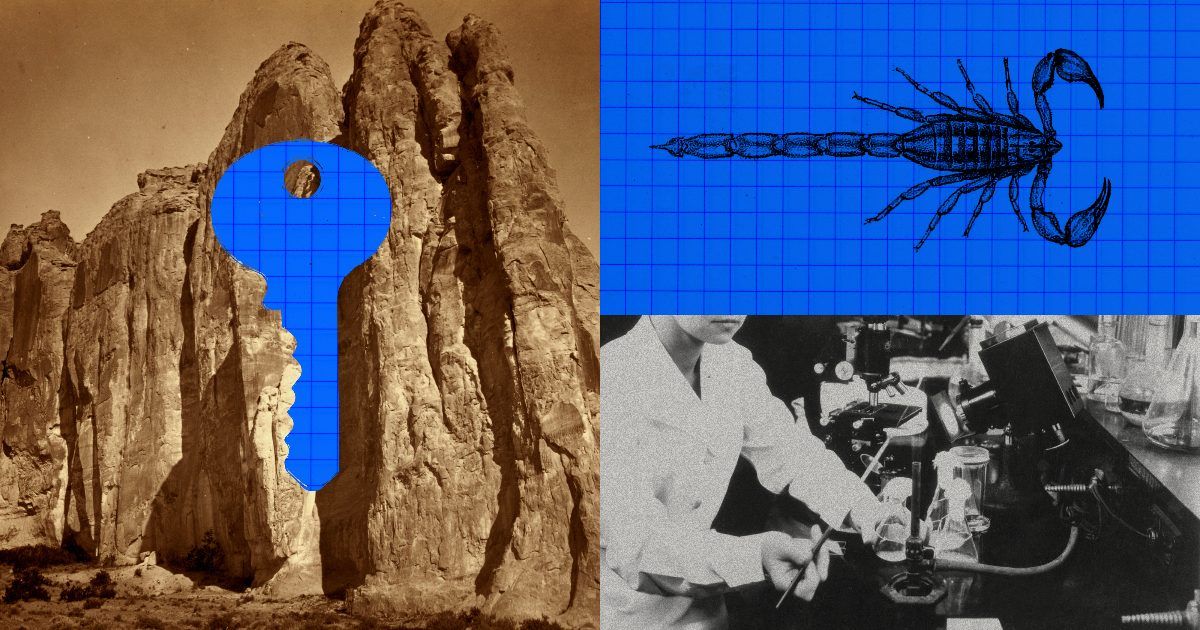
Morning Edition · Sunday, November 1, 2026Published at 1:20 AM EST · New York
OpenAI says a model refuted the Exponential Time Hypothesis, and the hypothesis's authors are now checking the proof
The claimed disproof passed a Lean formalization within a day, while Anthropic's separate report of 17 Claude-designed scorpion-toxin binders demonstrates binding but no neutralization.
On October 26 OpenAI said its internal reasoning models had produced three theoretical results in mathematics, theoretical computer science and mathematical physics. The most consequential is a claimed refutation of the Exponential Time Hypothesis (ETH), the 1999 conjecture that 3-SAT, a satisfiability problem central to computational complexity theory, has no subexponential-time algorithm. According to Washington Times reporting, the paper gives a deterministic algorithm that counts all satisfying assignments in subexponential time. The model produced a natural-language disproof on October 16, and the result was formalized in the Lean proof-checking language on October 17. OpenAI also reported a natural-language proof of Sogge's local smoothing conjecture in every spatial dimension of at least two.
The verification group includes two of the hypothesis's originators, Russell Impagliazzo and Ramamohan Paturi of UC San Diego, along with Ryan Williams of MIT. Paturi said his first reaction was surprise. StudyFinds notes that until the reviewers report, the Lean check is the only independent test the result has passed. Reviewers still need to confirm that the Lean statement matches the classical conjecture. The caution has a recent basis. On October 6 OpenAI released 722 manuscripts claiming partial results on problems including the Riemann hypothesis, and mathematicians objected to their validity and exposition. OpenAI later withdrew three of them.
Anthropic's result is narrower and comes with experimental data. An internal Claude research model worked largely autonomously for 64 hours across 12 protein design tools. It generated 318,484 minibinder candidates and computationally screened 553,052 protein-toxin pairs against five neurotoxins from scorpions found in Mexico, Brazil, North Africa and the Middle East, according to Interesting Engineering. Of 211 designs tested in the lab, 17 bound their targets, an 8% hit rate. Two binders against the toxin Cn2 reached single-digit nanomolar affinity, meaning they bound it tightly. Anthropic is releasing all 211 designs with their predicted structures and assay results. It explicitly does not claim an antivenom and ran no in-vitro or in-vivo neutralization tests.
Both reports come from the labs themselves, not from independent reproduction. The binder data can be checked now because Anthropic released the full set. The ETH claim cannot be settled until the named reviewers finish.
Part of a tracked trend
AI Moves Into Autonomous Scientific Discovery and Clinical Care
Over the next 3-9 months, AI systems move beyond text tasks into running real scientific experiments and managing clinical care, backed by peer-reviewed and benchmarked evidence of chemist- and physician-level performance.
Townsquare
Start a discussion in Townsquare.
More from this edition
- Anthropic's S-1 shows $16.3 billion in first-half revenue, an $80.7 billion net loss and noncancelable compute contracts with its own investors
- Chainalysis says an attacker used AI agents to breach it, a week after a refusal-stripped DeepSeek cyber model went on sale
- DeepSeek's V4.1-Flash paper cuts the global KV cache to 890 bytes per token for a 552-billion-parameter model
- Anthropic adds its hidden text watermark to Mythos 5, Opus 4.7, Opus 4.6 and Sonnet 4.6 on November 3
- Claude is blocking accounts verified with Russian passports, including those of Russians living in supported countries
- OpenAI rebuilds its Model Spec around five values and retires most of its detailed style rules
- Nvidia removes the RTX 5080 from its US store after the RTX 5090, as graphics memory shortages push street prices toward $2,000
Comments
0No comments yet.