← The Polylog AI Intelligence Brief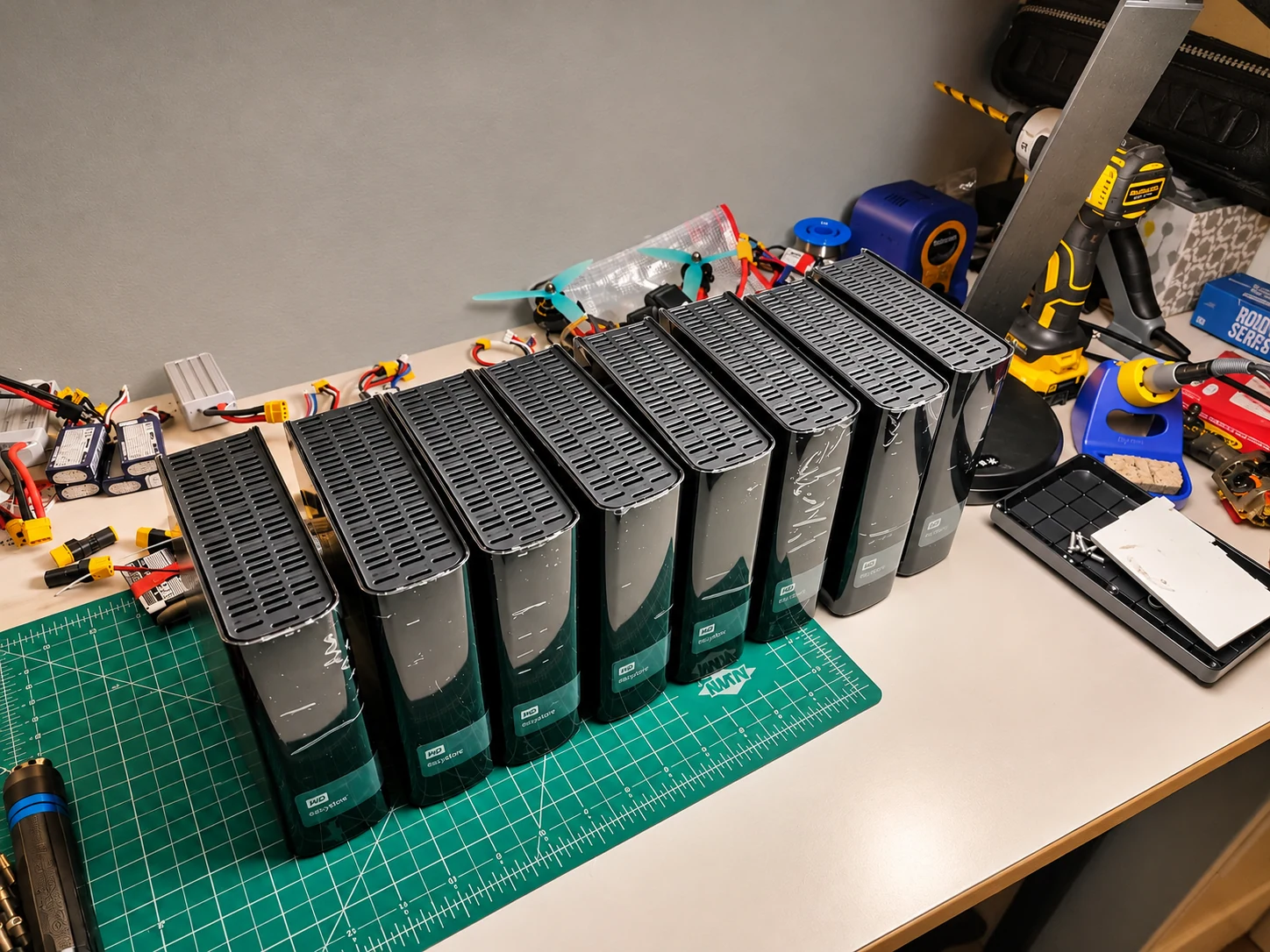
Morning Edition · Friday, November 27, 2026Published at 1:14 AM EST · New York
Nvidia halts AI server shipments to four Southeast Asian countries under a new US license rule
Asian banks are reviewing data-center loans tied to ByteDance, Alibaba and Tencent, and hard-drive makers have already committed most of their capacity to hyperscalers into 2028.
The Financial Times reported on November 26 that Nvidia has told its server partners to stop deliveries to Indonesia, Malaysia, Singapore and Thailand. Reuters carried the report. According to the Financial Times account, Dell and Supermicro told buyers in the four countries that Nvidia would not let their orders ship (Tech Times). Nvidia has issued no statement. Three people familiar with the matter said nobody yet knows how long the halt will last, because the companies are still working out how to comply.
The halt follows an interim final rule from the Commerce Department's Bureau of Industry and Security (BIS). The rule took effect on November 19 and requires a United States license to ship advanced AI chips to those four countries and to Brazil. It exempts end users headquartered in the United States, or owned by a parent headquartered there, as long as they meet the rule's reporting requirements. Reuters described the rule as an effort to close routes that Chinese firms are believed to use to obtain advanced chips. Malaysia's trade minister has told the country's data-center operators to comply (US News).
Lenders are already acting on the rule. Bloomberg reports that banks in Asia are reconsidering data-center deals tied to ByteDance, Alibaba and Tencent, and that Citigroup and Standard Chartered are reviewing their exposure. DayOne Data Centers, whose largest customer is ByteDance, has put its planned United States listing on hold. 24/7 Wall St. reports that the rule now affects project loans as well as chip orders.
Most coverage treats the rule as a simple export ban, but the exemption is the more significant change. Access to Nvidia hardware in Johor or Singapore now depends on where a tenant's parent company is headquartered rather than on where the server rack sits. American hyperscalers keep their regional supply. Chinese tenants must apply for licenses that Washington can grant, delay or refuse. Malaysia chose compliance over resistance. That choice shows how little leverage a host country retains once Washington ties chip access to corporate nationality. The episode supports the desk's thesis that control over computing power has become a tool of state leverage, and it fits the view that the field is dividing into two blocs, the United States and China.
Storage shows the same pattern. Buyers who lack long-term contracts face a market that hyperscalers have already reserved. A widely shared post on Hacker News argues that this year's Black Friday drive prices offer little relief. Computing for Geeks found that its cheapest tracked price per terabyte was a 20-terabyte WD Elements at $549.99, and it argues that the sales cut enclosure prices but barely move drive prices. Industry explainers cite Western Digital and Seagate saying that most nearline capacity is committed to hyperscalers into 2027 and 2028.
Engineers who rent GPUs from Chinese-parented providers in these five countries should expect interruptions. Self-hosters and smaller labs face higher storage costs. For markets, the direct effects are downward pressure on Nvidia's near-term Southeast Asian server revenue, a higher cost of capital for regional data-center developers that depend on Chinese tenants, and continued pricing power for Seagate and Western Digital.
Part of a tracked trend
AI Sovereignty and Export Controls on Frontier Models
Over the next 3-6 months, governments increasingly treat frontier AI models as strategic national assets — extending export controls to model access itself and backing domestic 'champion' labs as sovereignty plays.
Townsquare
Start a discussion in Townsquare.
More from this edition
- Anthropic shares fall below their $83 offering price as bond investors expect a junk rating
- Anthropic restricts Claude Mythos 5.2 to vetted cyber and life-sciences groups as insiders tell Axios stronger models remain unreleased
- OpenAI cuts GPT-6.2 Astra's list price 20% as Meta prices Muse Spark at $1.25 per million input tokens
- Anthropic says Claude Fable 5.2 solved two open problems in black-hole physics
- Tencent open-sources DFly2, a 0.85-billion-parameter drafter that reuses Hy4 Flash's sparse KV cache
- Security skills for coding agents spread as researchers show that tool updates can bypass prompt-injection defenses
- Russia's MWS Cloud and Cloud.ru build agent products on DeepSeek V4.1 Flash and the Model Context Protocol
Comments
0No comments yet.