← The Polylog Crypto Intelligence Brief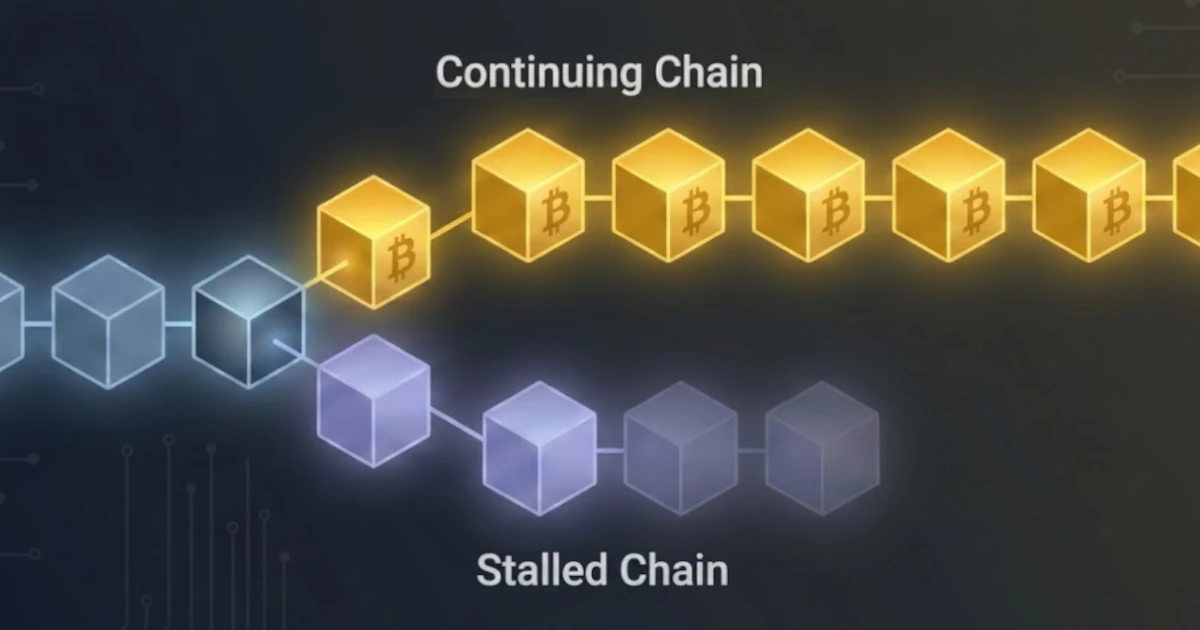
Morning Edition · Saturday, July 18, 2026Published at 1:32 AM EDT · New York
Bitcoin's BIP-110 Data-Limit Fork Nears August Deadline With Miner Support Below 1 Percent
Foundry opened a miner vote on the soft fork that would cap arbitrary data in transactions, while Ocean Mining's Jason Hughes said signaling remains too thin to activate.
Bitcoin's dispute over what its blockspace is for has reached a decision point. BIP-110, a proposed one-year soft fork that would cap the arbitrary data a transaction can carry, faces an August activation deadline, and the mining industry is split on whether to support it. Foundry Digital, one of the largest mining pools, said it will let its clients vote on whether to signal for the change.
The proposal, formally the Reduced Data Temporary Soft Fork, would limit the size of new transaction outputs and OP_RETURN fields to curb the embedding of images, tokens and other non-monetary data on the chain, a practice that grew with Ordinals inscriptions, BRC-20 tokens and Runes. Supporters argue the data burdens node operators and dilutes Bitcoin's purpose as money. Opponents, including Strategy's Michael Saylor, have called it counterproductive, since paying customers can still buy the blockspace.
Jason Hughes, vice president of development and engineering at Ocean Mining, argued the effort is on track to fail, noting node signaling of 7 to 15 percent and hashrate support under 1 percent, well short of what a soft fork needs. Activating a rule change that miners have not adopted risks a chain split, in which incompatible versions of Bitcoin diverge.
The episode is a live demonstration of Bitcoin's deliberately high bar for consensus change. No single party can impose a rule, and a proposal without broad miner and node support does not activate, whatever its merits. That friction is intentional, not a defect.
Veracity: Corroborated
90/100- If true, who benefits
Full-node operators and monetary-purist Bitcoiners if the fork fails and the status quo holds, and the Ordinals, BRC-20 and Runes projects whose business depends on cheap data embedding continuing.
- The nuance
Townsquare
Start a discussion in Townsquare.
More from this edition
- Privacy Chains Ship Programmable Confidentiality and Fight Over the Decryption Override
- Cardano's Input Output to Hand Core Software to Outside Teams Starting in August
- DeFi Losses Near $35 Million in a Week as Governance and Oracle Attacks Hit
- Prediction Markets Draw Regulators and a Decentralized Challenger at Once
- Robinhood's Push to Move Millions Onto DeFi Runs Into a Memecoin Reality
- Japan's SBI Consolidates Singapore's Coinhako in a Cross-Border Digital-Asset Buildout
- Fed Chair Warsh Says the Central Bank Will Not Rescue Failing Crypto Firms
Comments
0No comments yet.