← The Polylog Crypto Intelligence Brief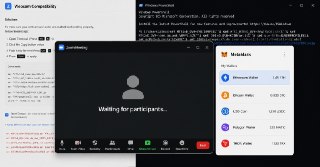
Morning Edition · Monday, July 27, 2026Published at 1:22 AM EDT · New York
North Korea's BlueNoroff Uses Fake Zoom and Teams Calls to Drain Crypto Wallets in Under Five Minutes
The group has reached more than 100 victims across over 20 countries, scanning browsers for wallets before deciding who receives its malware.
Researchers have documented a campaign by BlueNoroff, a subgroup of the North Korea-linked Lazarus Group, that uses routine video calls to steal cryptocurrency. As French-language outlet Goku Crypto News reported, the group targets crypto professionals using compromised Telegram accounts to send invitations to fake Zoom and Microsoft Teams meetings.
The method is deliberate. BlueNoroff registers domains that closely resemble legitimate meeting platforms, a technique known as typosquatting, and has created more than 80 such lookalike domains since late 2025. Before delivering any malware, the group's phishing kit scans a victim's browser for installed wallets, then decides which targets are worth infecting. Reports indicate the attackers now use AI-generated avatars and deepfake composites to make the fake meetings more convincing, and released five versions of the kit between May 31 and July 14.
The operation has reached more than 100 victims across over 20 countries, with 41% of targets in the United States, and researchers say some victims are compromised in under five minutes. This attack does not exploit a smart-contract bug. It compromises the device and the private keys stored there, a separate attack surface from the on-chain exploits that dominate loss tallies.
The root cause is social engineering combined with endpoint compromise. Once private keys are harvested, no protocol audit protects the holder.
Veracity: Corroborated
77/100- If true, who benefits
Cybersecurity vendors selling detection and response, and Western governments building the sanctions case against Pyongyang, gain from the North Korea attribution.
- The nuance
The link to North Korea rests on researcher inference from reused tooling and infrastructure rather than confirmation, and Pyongyang denies running such operations.
Townsquare
Start a discussion in Townsquare.
More from this edition
- Aztec Turns On Its Alpha V5 Privacy Network on Ethereum, Cutting Private Transactions to Under $0.05
- DeFi Loses Tens of Millions in July as Oracle and Governance Attacks Recur Across Chains
- BitMart to Shut Down After Nine Years, and Its BMX Token Falls About 58%
- Cardano's Hoskinson Says Bitcoin Could Lose Its Lead If Governance Fails a Quantum Test
- Ethereum Researchers Study Proprietary AMMs That Now Handle a Third of Solana's On-Chain Trading
- Miden Pitches Confidential Execution as a Prerequisite, Not a Feature, in Blockchain's Next Phase
- South Korea's POSCO International Puts Live Invoices On-Chain in Tokenization Test With LG CNS
Comments
0No comments yet.