← The Polylog Crypto Intelligence Brief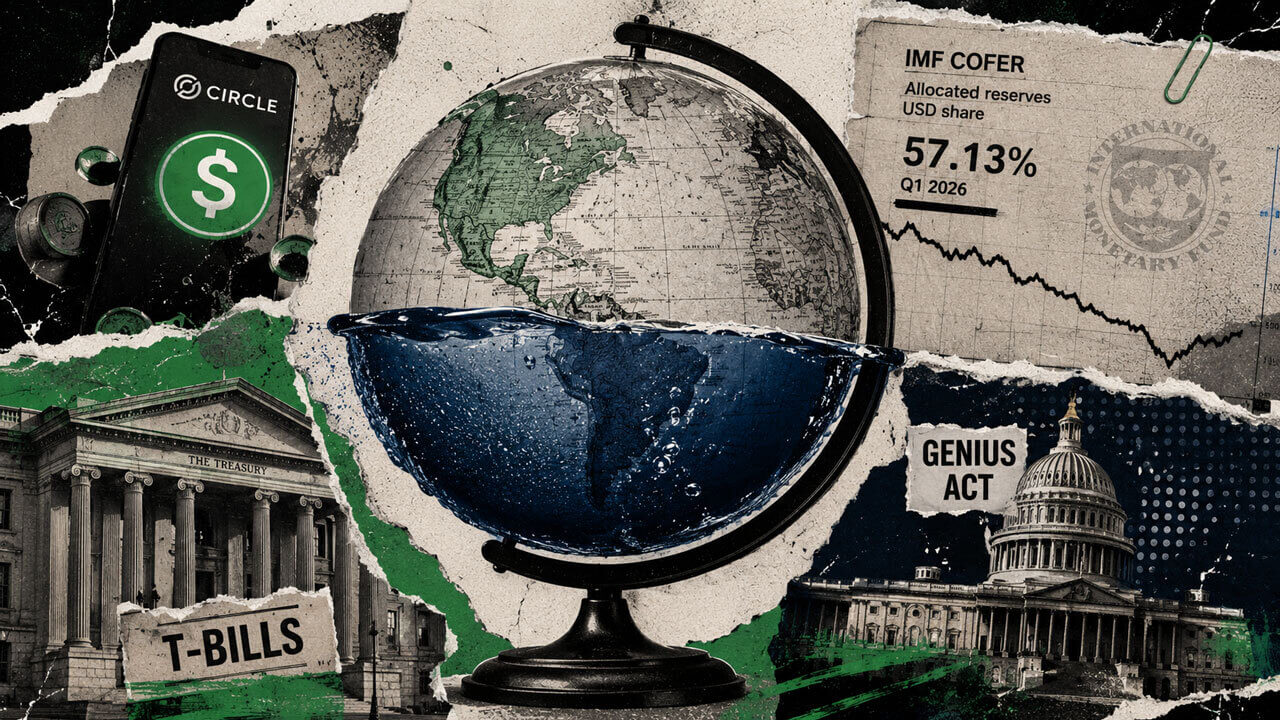
Morning Edition · Thursday, September 3, 2026Published at 1:55 AM EDT · New York
Twenty-One Banks Including Goldman Sachs, Citi and UBS Will Form a Company to Issue a Dollar Stablecoin
The group plans to incorporate late this year and launch the token in the first half of 2027, entering a market where Tether and Circle already account for roughly 83 percent of the 310 billion dollars in circulation.
Twenty-one financial institutions have agreed to create a joint company to issue a dollar-denominated stablecoin, with the token targeted for the first half of 2027. The list, reported across crypto media and confirmed in outlet after outlet, includes Goldman Sachs, Bank of America, Citi, Wells Fargo, Capital One, PNC, Scotiabank, TD Bank Group, Fidelity Investments and WisdomTree in North America, Santander, BBVA, Commerzbank, Crédit Agricole, Deutsche Bank, Lloyds, Rabobank and UBS in Europe, MUFG Bank in Japan, Sirius International Holding in the United Arab Emirates and Standard Bank in South Africa. A French-language summary circulating on Telegram said the venture would move to a euro version after the dollar token.
The stated use is cross-border payment and settlement for wholesale, institutional and retail clients. The participants say the design will comply with the United States GENIUS Act and the European Union's Markets in Crypto-Assets Regulation (MiCA), which is the structure's central purpose. A bank consortium does not need to compete on yield or on distribution. It needs to be the issuer that a compliance department can approve.
The competitive gap is large. Total stablecoin supply stands at 310.16 billion dollars, with Tether at 183.29 billion and USD Coin at 73.86 billion, according to DeFiLlama. The consortium is arriving eighteen months after competitors with established liquidity, and liquidity, not branding, determines which token gets used.
The reserve mechanism is the part that matters beyond crypto markets. As CryptoSlate argues, dollar tokens expand private demand for Treasury bills without any central bank deciding to hold them. Bank-issued stablecoins route that same demand through institutions that already hold reserve accounts.
Veracity: Corroborated
93/100- If true, who benefits
The 21 banks, which stand to reclaim settlement float and fee income currently earned by Tether and Circle, and the United States Treasury market, which gains another private buyer of short-dated bills.
Part of a tracked trend
Race to Bank and Distribute Stablecoin Reserves
Over 3-6 months, established financial and payments firms compete to custody stablecoin reserves and embed stablecoin rails into cross-border settlement, institutionalizing the plumbing beneath stablecoins.
Townsquare
Start a discussion in Townsquare.
More from this edition
- Aztec Discloses Critical Soundness Flaw in the Proving System Running Its Live Privacy Network
- A Deprecated Rain Card Contract on Solana Gave an Attacker Admin Control and 1.1 Million Dollars
- SEC Chair Paul Atkins Calls the Agency's Regulation Crypto Assets Proposal Its Most Historic Step Yet
- CrowdStrike and Police in Four Countries Dismantle a Botnet That Swapped Copied Crypto Addresses for Eight Years
- Ethereum Layer 2 Silicon Shuts Down With 9.75 Million Dollars Still on the Chain
- Miden Will Issue a Private, USDC-Backed Stablecoin Using Circle's xReserve Infrastructure
- Ethereum Researchers Test Whether EIP-8141 Can Remove the Relayers Privacy Apps Depend On
Comments
1Sep 3, 5:55 AM · edited
Aligning 21 principals on reserve policy, fee distribution, and token governance is a coordination problem that represents a credible delay risk for the H1 2027 launch independent of regulatory review.