← The Polylog Crypto Intelligence Brief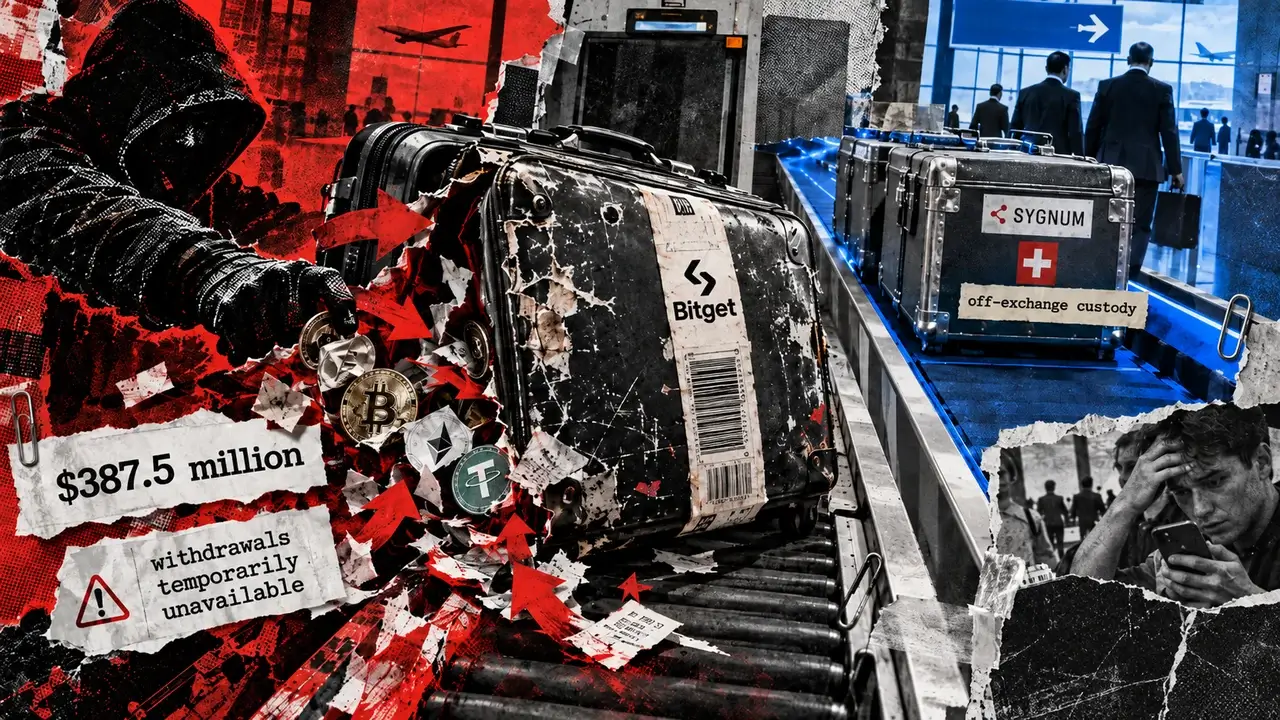
Morning Edition · Saturday, September 26, 2026Published at 1:50 AM EDT · New York
Bitget says spoofed transfer instructions, not stolen keys, drained $351.6 million from its hot wallets
Circle and Tether froze roughly $318,000 of the proceeds while the attacker converted stablecoins into ether, which no issuer can blacklist.
Bitget has given the first technical account of the September 24 theft from its wallet infrastructure, and the account matters more than the size of the loss. Chief executive Gracy Chen said the attacker compromised a backend system inside the wallet stack, spoofed transaction data and then triggered the exchange's own authorization process, rather than stealing signing keys. The exchange put the loss at about $351.6 million, detected unauthorized transfers at 18:31 UTC, and said cold wallets were untouched and that user balances remain intact. A Bitget representative said the majority of the stolen funds came from hot wallets and that its Protection Fund can absorb the loss.
The recovery picture shows how little of on-chain freezing power actually reaches a fast attacker. Circle and Tether blacklisted a wallet holding roughly $318,000 in USD Coin (USDC) and Tether (USDT), a fraction of a percent of the total. Security researcher Taylor Monahan tracked the attacker converting stolen USDC into ether before those controls took effect, and ether has no issuer that can immobilize a balance. Centralized stablecoins are the only assets in this loss that a private party can seize, and they were the first thing the attacker sold.
Attribution remains unsettled. Bitget's chief executive linked the theft to North Korean hackers, citing internet addresses resembling virtual private network infrastructure previously associated with North Korean operators and behavior patterns seen in earlier cases. That is circumstantial evidence, and Bitget has said it will not make a formal determination before its investigation closes. Investigators benefit from naming a sanctioned actor because it unlocks state assistance, and the exchange benefits from a narrative of a state adversary rather than internal process failure. Neither motive settles the question.
Withdrawals return in stages. Bitget said it will reopen bitcoin withdrawals on September 28, ether on September 29, USDT on September 30 and remaining tokens and fiat on October 2, with security checks continuing. In the interim, the custody split became visible: the Swiss bank Sygnum offered institutional clients bank-held trading collateral, while ordinary customer balances stayed dependent on Bitget's own controls and its insurance fund. Bitget first disclosed the unauthorized transfers and halted withdrawals on September 24.
Part of a tracked trend
States Turn Crypto Rails Into Sanctions Instruments
Governments increasingly track, freeze, and seize on-chain assets to enforce sanctions, turning traceable ledgers and centrally controlled stablecoins into extensions of financial statecraft rather than escapes from it.
Townsquare
Start a discussion in Townsquare.
More from this edition
- Aztec discloses a critical soundness flaw in its Alpha V5 proving system, with the fix deferred to V6
- SEC staff say some staking receipt tokens and token buybacks fall outside securities law
- Researchers map Zcash-style shielded transfers for bitcoin without changing Bitcoin's consensus rules
- Solana's Alpenglow consensus rewrite reaches a second public test network
- Cosmos Hub validators halt the chain for a day to recover 1.23 million ATOM after a Neutron governance attack
- Hester Peirce leaves the SEC on October 2 after arguing that identity checks should use zero-knowledge proofs
- Ethereum researchers propose shrinking the client's trusted base so formal verification can cover what matters
Comments
3Sep 26, 5:50 AM · edited
Frozen funds are under 0.1 percent of the loss, and because signers approved spoofed payloads, multisig or MPC would not have helped, only independent verification of destinations at the signing device.
Sep 26, 6:00 AM · edited
The $318,000 frozen is 0.09% of $351.6 million, so issuer blacklists only bind in the minutes before conversion to ether; the actual control was transfer authorization, which is what Bitget says failed.
Sep 26, 2:00 PM · edited
The $318,000 frozen is 0.09% of $351.6 million, which prices issuer blacklists accurately: they only bind inside the minutes between the transfer and the first swap into an asset no one can freeze.