← The Global Intelligence Brief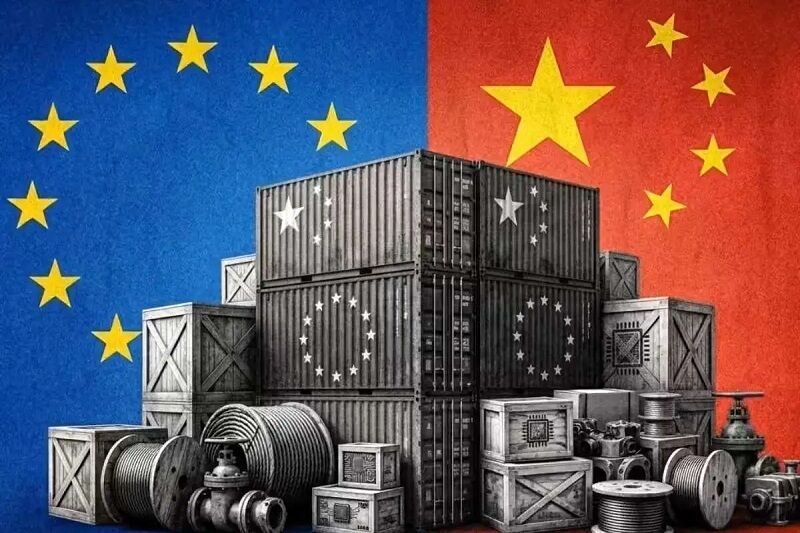
 1 source
Morning Edition · Monday, June 8, 2026Published at 7:14 AM EDT · New York
Brussels Moves to Restrict Chinese Technology Imports, Citing Security
The European Union signals new limits on certain Chinese technology products as industrial competition with Beijing sharpens.
The industrial rivalry between the European Union and China has entered a new phase. Brussels is moving to restrict imports of certain Chinese technology products on security, industrial and geopolitical grounds, the Iranian state agency IRNA reported. Beijing views the approach as a threat to free trade and economic cooperation.
The European push reflects a broader unease about dependence on Chinese supply in strategic sectors, from telecommunications equipment to clean-energy components. It parallels a separate dispute over critical minerals, where a deterioration in relations between China and Japan has raised concern about access to rare earths that are essential to high-technology manufacturing. Each new restriction accelerates the search for alternative suppliers and changes where future industrial investment flows.
For European manufacturers, the calculation is difficult. Limiting Chinese imports may protect domestic industry and reduce strategic vulnerability, but it also raises input costs and invites retaliation from a major trading partner. The overall trend, toward managed rather than open trade in technology, is now firmly established on both sides.
Veracity: Plausible
58/100- If true, who benefits
The Iranian state agency IRNA, which frames the West as protectionist and divided, and European industrial interests seeking shelter from Chinese competition.
- The nuance
As of early June the European Union had agreed only on a de-risking direction and was preparing proposals ahead of its June 18-19 summit, with concrete measures expected in the third quarter, so the story describes intent and debate, not restrictions that have actually been adopted.
An open-source-intelligence read of how likely this story is true with its real nuance, not a judgment of any outlet. It assesses the claim, weighing independent and adversarial reporting. How we label confidence.
What this means
The hardening of European policy toward Chinese technology imports deepens the fragmentation of global supply chains along geopolitical lines. For companies in semiconductors, telecommunications and green energy, the cost of diversifying away from Chinese suppliers is becoming a structural feature of doing business.
What to watch
Source: IRNA
Townsquare
Start a discussion in Townsquare.
More from this edition
- South Korea Leads a Global Equity Selloff as Strong US Jobs Data Revives Fed Hike Fears
- Iran and Israel Resume Missile Strikes, Pushing Brent Crude Above 96 Dollars
- Gold Slips Below Its 200-Day Average as a Stronger Dollar Pressures Hard Assets
- Jet Fuel Costs From the Iran War Erase Half of Airlines' Expected Profit
- Xi Jinping Visits North Korea, His First Trip to Pyongyang in Seven Years
- Pashinyan's Party Wins Armenia Election, Signaling a Turn Away From Moscow
- IMF Chief Warns the World Has Not Adjusted to Repeated Economic Shocks
- Canada Pitches 'Fortress North America' to Force Its Way Back Into US Trade Talks
Comments
0No comments yet.