← The Global Intelligence Brief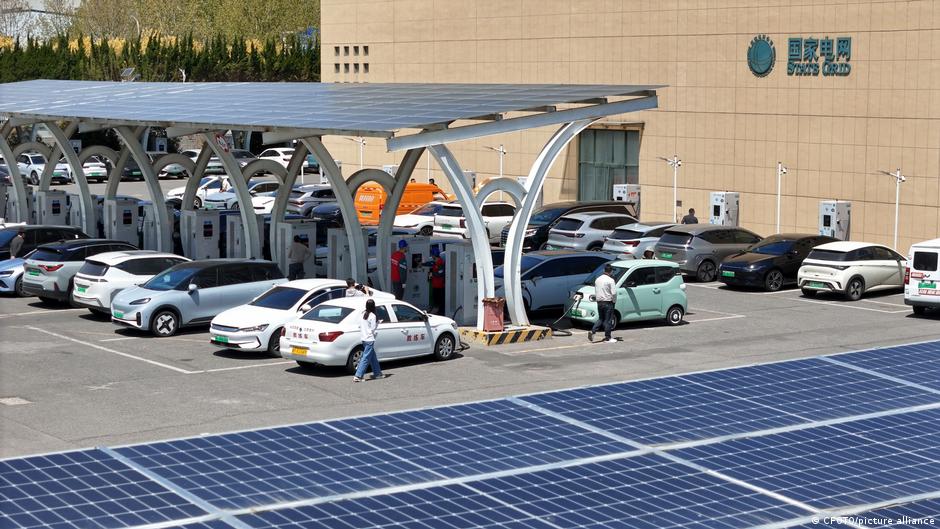
 1 source
Morning Edition · Tuesday, June 16, 2026Published at 6:11 AM EDT · New York
Electric Vehicle Sales Outrun Forecasts, With China Leading
Cheaper, longer-range models are accelerating a transition that is reshaping the global auto industry.
Electric vehicle sales are growing faster than forecasters predicted, with cars that are cheaper, more efficient and capable of traveling farther than before, Deutsche Welle reported. China is driving the transition, while Europe and other markets are closing the gap.
China's lead reflects years of state-directed investment across the supply chain, from battery materials to finished vehicles, and a domestic price competition that has lowered costs for buyers. That same dynamic is at the center of trade friction, as the United States and Europe weigh tariffs and restrictions intended to slow the inflow of low-cost Chinese vehicles and protect domestic manufacturers.
The result is a structural shift in one of the world's largest industries. Falling battery costs and rising range are removing the practical objections that limited earlier adoption, and the question for legacy automakers is less whether the transition happens than how much of it Chinese firms capture.
The episode also illustrates a broader pattern in the commercial split between Washington and Beijing. China's dominance in a strategically important industry is precisely what is pushing the United States and its allies toward tariffs and supply-chain restrictions, deepening the decoupling between the two largest economies.
Veracity: Corroborated
88/100- If true, who benefits
Chinese manufacturers, whose dominance the data confirms, and Western governments seeking to justify protective tariffs.
- The nuance
The growth and China's roughly 60 percent share are corroborated by the International Energy Agency, but "outrunning forecasts" understates that subsidy rollbacks are slowing the pace in several markets.
An open-source-intelligence read of how likely this story is true with its real nuance, not a judgment of any outlet. It assesses the claim, weighing independent and adversarial reporting. How we label confidence.
What this means
Electric vehicles are becoming a front line in the United States-China commercial split, where China's manufacturing lead collides with Western efforts to protect domestic industry through tariffs. Faster-than-expected adoption raises the economic stakes of that contest and weighs on oil demand over the longer term.
What to watch
Source: Deutsche Welle
Townsquare
Start a discussion in Townsquare.
More from this edition
- Bank of Japan Lifts Rate to 1 Percent, Its Highest Since 1995
- Brent Falls Toward 83 Dollars as US-Iran Deal Promises to Reopen Hormuz
- Nearly Half of Central Banks Plan to Add Gold as Dollar Confidence Slips
- Nvidia Raises 25 Billion Dollars in Bonds, Its First Sale Since 2021
- G7 Leaders Meet in France With Iran and Ukraine at the Center
- Trump Vows Push to End Ukraine War as Turkey Offers to Mediate
- Pakistan Emerges as a Player in the US-Iran Deal, Stirring Debate in India
- Somaliland Opens Embassy in Jerusalem After Israeli Recognition
Comments
0No comments yet.