← The Global Intelligence Brief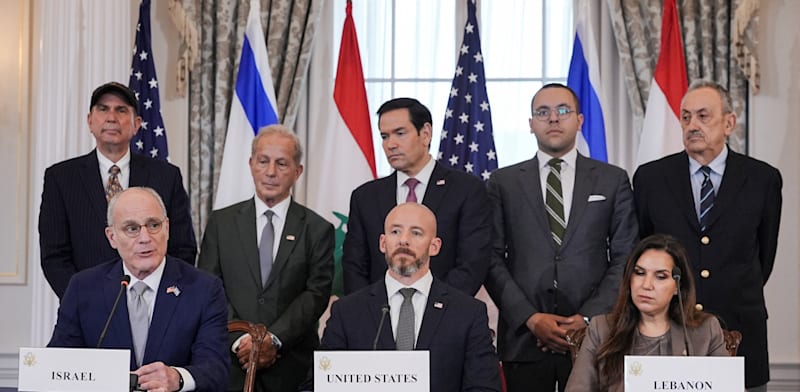


 3 sources
Morning Edition · Saturday, June 27, 2026UpdatedPublished at 5:03 PM EDT · New York
Israel and Lebanon Reach Phased Disengagement as US-Israel Ties Show Strain
A US-brokered framework signed in Washington ties an Israeli withdrawal from southern Lebanon to Hezbollah's disarmament, but the group has rejected the deal as a surrender.
Updated at 5:03 PM EDT
The draft became a signed trilateral framework agreement (Israel, Lebanon, US) on Friday, and Hezbollah rejected it as a surrender, calling it null and void.
Israel, Lebanon and the United States signed a trilateral framework agreement on Friday in Washington setting out a gradual Israeli military withdrawal from southern Lebanon, according to Globes and Outlook India. The Israeli pullback would be conditioned on the disarmament of Hezbollah and would proceed only after the Lebanese army assumes full responsibility over agreed pilot zones, with negotiations on a fuller peace agreement to follow.
Hezbollah rejected the agreement. The group's leader, Naim Qassem, called it "humiliating, shameful and a surrender of sovereignty" and rejected linking Israel's withdrawal to the group's disarmament, according to Al Jazeera. The group's supporters protested in Beirut after the announcement, and Israeli forces carried out attacks in southern Lebanon.
The diplomacy unfolds against domestic shifts in the United States. The New York Times reported that recent election results in New York, together with criticism of Israel's conduct in Gaza and the war with Iran, have led some Israelis to fear that the country's long-standing support from Washington may be eroding.
Inside the regional debate, criticism of Israeli Prime Minister Benjamin Netanyahu has grown. IRNA cited an Israeli analyst as arguing that Netanyahu's policies have left Israel more internationally isolated than at any time in its history, a characterization attributed to the analyst rather than asserted here.
Veracity: Corroborated
76/100- If true, who benefits
The United States and Israel gain a framework that ties any Israeli withdrawal to Hezbollah's disarmament, shifting the burden onto the Lebanese state.
- The nuance
Hezbollah, which is not a party to the deal, has publicly rejected it and refuses to disarm before an unconditional Israeli withdrawal, a rejection the article underplays.
An open-source-intelligence read of how likely this story is true with its real nuance, not a judgment of any outlet. It assesses the claim, weighing independent and adversarial reporting. How we label confidence.
What this means
A conditional, phased disengagement reduces the immediate risk of a wider Lebanon war, but its dependence on Hezbollah disarmament leaves it fragile. Combined with signs of softening US political support, the arrangement points to a gradual recalibration of Middle East security alignments that investors watch for its effect on regional risk and energy flows.
What to watch
Synthesized from: Globes · The New York Times · IRNA
Townsquare
Start a discussion in Townsquare.
More from this edition
- The AI Trade Faces a Reckoning as Bubble Fears Grow and Washington Tightens Its Grip
- Iran Strikes US Bases in Bahrain and Kuwait as US Launches Fresh Strikes on Iran
- Gold Climbs Toward $4,100 as Bitcoin Slides and Crude Sinks
- Fuel Queues Form Around Moscow as Russia's War Economy Strains
- Venezuela's Earthquake Toll Passes 900 as US Aid Reshapes a Fragile Recovery
- Burkina Faso Severs Ties With France in Deepening Sahel Break From the West
- EU Weighs Ending Protection for Military-Age Ukrainian Men
- China and Russia Fly More Than Ten Warplanes Into South Korea's Air Defense Zone
Comments
0No comments yet.