← The Global Intelligence Brief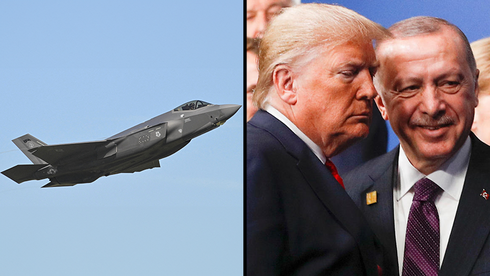

 2 sources
Morning Edition · Friday, July 3, 2026Published at 6:17 AM EDT · New York
Trump heads to Ankara with an F-35 overture as Turkey and Israel trade accusations
Washington has moved to bring Turkey back into the F-35 program even as Turkish and Israeli officials escalate their public dispute over regional influence.
US President Donald Trump is traveling to Ankara with what Israeli media described as a plan to return Turkey to the F-35 fighter jet program, a step Turkey's president, Recep Tayyip Erdogan, has long sought. Ynet reported that the US State Department had advanced the sale of jet engines, and that the two leaders would meet around a NATO summit, even as Israeli Prime Minister Benjamin Netanyahu works to limit Ankara's growing regional role.
The improvement in relations is taking place alongside sharp rhetoric. Turkey's foreign minister said Israel had "become a problem for the whole international community" and, in comments carried by BBC News Hindi, accused Israel of "looking for a new enemy," adding that Turkey had "no problem with confrontation" and would not be intimidated.
The two US allies are increasingly competing for influence across a region reshaped by the war on Iran and the fighting in Gaza and Lebanon. Washington's willingness to rearm Turkey, despite Israeli objections, points to a recalibration of American priorities as it seeks to keep a large NATO military aligned with its aims.
Turkey was removed from the F-35 program in 2019 after it purchased a Russian air-defense system, and its potential return would mark a significant shift in the alliance's posture toward Ankara.
Veracity: Corroborated
84/100- If true, who benefits
Turkey's defense sector and Erdogan, US arms manufacturers, and Trump seeking to keep a large NATO military aligned with Washington.
- The nuance
The F-35 return is under review rather than agreed, and the confirmed $700 million deal covers F110 engines for Turkey's domestic KAAN fighter, not the F-35 itself, amid congressional objections over the S-400.
An open-source-intelligence read of how likely this story is true with its real nuance, not a judgment of any outlet. It assesses the claim, weighing independent and adversarial reporting. How we label confidence.
What this means
Two of Washington's most important regional partners are now openly opposed to each other, and the United States is choosing to strengthen one of them militarily. How Washington manages that rivalry will influence the balance of power across the eastern Mediterranean and the Gulf, a region whose stability supports energy shipping and trade routes.
What to watch
Synthesized from: Ynet · BBC News Hindi
Townsquare
Start a discussion in Townsquare.
More from this edition
- Weak US jobs data pulls gold off its lows and cools bets on more Fed rate hikes
- Brent holds near a four-month low as Hormuz shipping recovers and Iran tensions ease
- Iran begins days of funeral ceremonies for assassinated former leader Khamenei
- China signals it will buy more European goods as Brussels hardens its trade stance
- Japan's largest labor group secures a third straight year of wage gains above 5%
- Deadly strikes hit both sides of the Ukraine war as civilian toll mounts
- Indonesia courts Belarus and the Pacific trade bloc in a widening balancing act
- Mali tightens state control over gold as prices trade near record levels
Comments
0No comments yet.