← The Global Intelligence Brief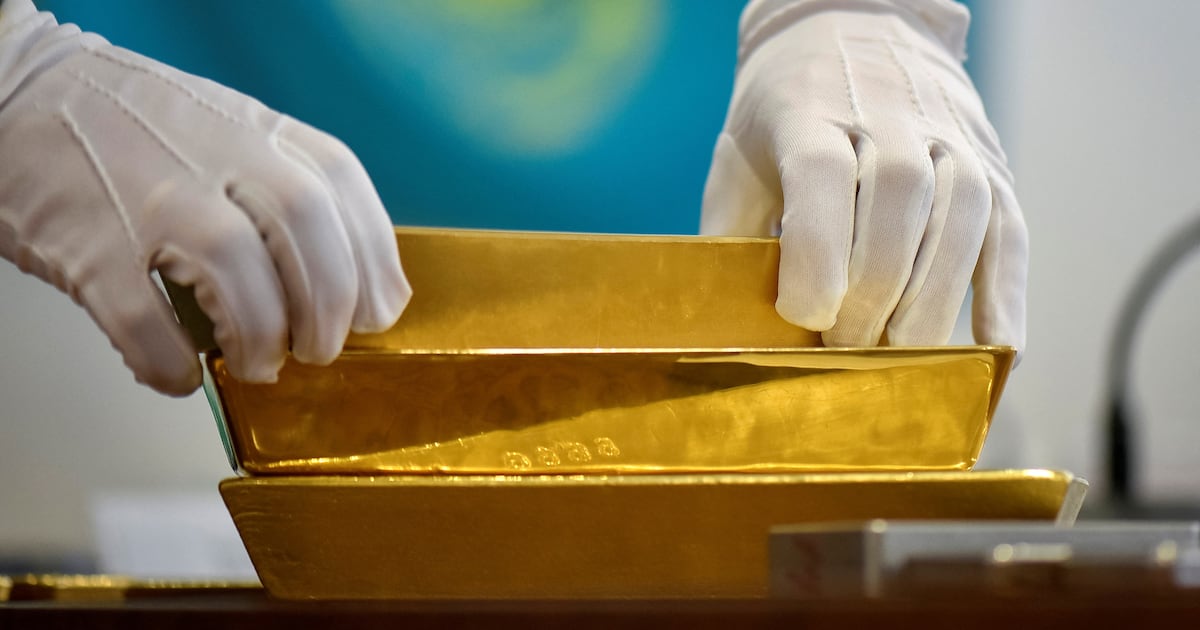


 3 sources
Morning Edition · Sunday, July 12, 2026Published at 1:12 AM EDT · New York
Gold Slips Toward $4,100 Even as the Gulf War Reignites
The energy-driven inflation scare has revived bets on Federal Reserve rate increases and firmed the dollar, weakening the metal's usual safe-haven demand.
A widening war in the Gulf would normally lift gold. This week it did the opposite. The metal eased to about $4,100 an ounce, down roughly 1.5 percent over five sessions, reporting from The National and Morgan Stanley describes. That is a notable distance below the roughly $5,595 an ounce gold reached on 28 January 2026, before the conflict escalated in late February.
The reason lies in real interest rates. Higher oil prices push up inflation expectations, and markets have responded by pricing in fewer Federal Reserve rate cuts, and in some scenarios rate increases, Morgan Stanley notes. Higher expected real yields raise the opportunity cost of holding a metal that pays no interest, and a firmer dollar makes gold more expensive for buyers outside the United States. Both forces have worked against the safe-haven demand that drove gold higher earlier in the crisis.
From a sound-money view, the episode is instructive rather than bearish. Gold is not falling because monetary discipline has returned. It is falling because the same energy shock that erodes purchasing power has forced central banks to keep policy tight, and tight policy temporarily outweighs the hedge. Central-bank buying and physical demand remain the structural source of demand supporting the price.
Part of a tracked trend
Renewed Fed Tightening Fears Rattle Global Markets
Over the next 3-6 months stronger US data revives expectations of Fed rate hikes, driving a firmer dollar, equity selloffs in export-heavy markets, and pressure on hard assets as the IMF warns of recurring economic shocks.
What this means
The move shows the two channels through which a war reaches hard assets can pull in opposite directions: the fear demand lifts gold, while the rates demand, working through the Federal Reserve's response to imported inflation, weighs on it. Holders of gold and other non-yielding assets lose in the near term when the rates channel dominates, while a firm dollar pressures emerging-market borrowers who owe in dollars. The direction from here depends on which force wins: a durable oil spike that forces the Fed to hike would keep gold capped, while a ceasefire that lets the Fed resume cutting would remove the headwind.
What to watch
- Federal Reserve officials' language on whether the oil shock is a one-time price-level move or a persistent inflation risk, because that judgment decides whether rate cuts return.
- The dollar index, since a stronger dollar is the mechanical drag on gold priced in other currencies.
- Central-bank gold purchase data, the structural demand that has underpinned prices independent of Western investor flows.
Observations to monitor, not financial advice.
Synthesized from: The National · Morgan Stanley · CNBC
Townsquare
Start a discussion in Townsquare.
More from this edition
- Iran Says It Struck 85 U.S. Military Sites in Bahrain and Kuwait in Direct Attack on American Forces
- China Forces Its Ratings Firms to Strip Inflated Triple-A Grades From Bonds
- Iran Tells Washington the Era of One-Sided Agreements Is Over
- Russia Says It Downed 349 Ukrainian Drones Overnight as Strikes Reach Deep Inside Its Territory
- Fourteen Governments Mark a Decade Since the South China Sea Ruling China Still Rejects
- The European Union Searches for Ways Around Its Own Budget Trap
- Brussels Prepares Fines for Big Technology Firms Over Consumer Protection Failures
- Taiwan's Volunteer Force Grows by 5,000, but the Military's Problem Is Keeping Them
Comments
0No comments yet.