← The Global Intelligence Brief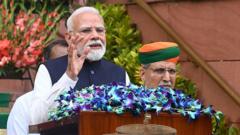

 2 sources
Morning Edition · Thursday, July 23, 2026Published at 1:33 AM EDT · New York
Modi Orders Fast-Track Courts for Exam-Paper Leaks as Youth Protests Spread
The prime minister addressed the anger for the first time without directly naming the student movement, as opposition figures said the response did not go far enough.
A series of youth protests over leaked examination papers has become a political challenge for the Indian government. Deutsche Welle reported that Prime Minister Narendra Modi announced fast-track courts to punish those involved in paper leaks, without directly commenting on the student demonstrations spreading across the country, in its coverage. Repeated leaks of competitive-exam papers have angered young people who see access to jobs and higher education undermined.
BBC News Hindi reported that Modi offered his view on young people's concerns for the first time, and that opposition figures, including Rahul Gandhi and a former state party leader, said the government's answer did not address the deeper problem, in its report. The two accounts agree on the announcement and differ on whether it addresses the deeper grievance.
The unrest reflects deep frustration in a country where a large, young population competes for a limited number of secure jobs.
What this means
Youth unrest over economic opportunity is a governance-legitimacy risk that underlies India's growth story. The exposed actor is the Modi government, which is negotiating a contentious US trade deal at the same time it manages domestic anger, narrowing its room to make unpopular economic concessions. The channel is political capital rather than markets directly, but sustained protest can slow reform, raise the cost of policy change and affect how investors judge stability. The concrete question is whether fast-track courts calm the movement or whether protests broaden into a wider grievance about jobs.
What to watch
- Whether the student protests grow or subside after Modi's announcement, since a broadening movement would constrain the government's policy choices.
- How the opposition mobilizes around the issue, because a unified challenge would raise the domestic political stakes for the government.
Observations to monitor, not financial advice.
Synthesized from: Deutsche Welle · BBC News Hindi
Townsquare
Start a discussion in Townsquare.
More from this edition
- Oil Climbs Past $94 as Houthis Strike Saudi Tankers and US Bombs Iran for a 12th Day
- US Strikes Iran for 12th Consecutive Day as Tehran Hits American Bases in Kuwait
- Oil Shock Revives Fed Rate-Hike Bets, Lifting Yields and Pressuring Global Stocks
- Bitcoin Falls Below $65,500 as Oil, Yields and a Regulatory Setback Weigh on Crypto
- Alphabet and Tesla Fall as AI Spending Surges, Reviving the Power-Supply Question
- Modi Faces Farmer Backlash as India Weighs a Trade Deal at the Center of Trump's Tariff Push
- Asian Governments Race to Shockproof Energy Supply as Hormuz Risk Deepens
Comments
0No comments yet.