← The Global Intelligence Brief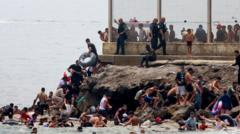


 3 sources
Morning Edition · Friday, July 31, 2026Published at 1:16 AM EDT · New York
Italy Threatens to Suspend Schengen With Spain After Migrants Reach Ceuta
Thousands swam from Morocco into the Spanish enclave, prompting Rome to demand emergency border measures as Madrid and Rabat agree to speed deportations.
Thousands of migrants crossed by sea from Morocco into the Spanish enclave of Ceuta, drawing a sharp reaction across Europe, BBC News Hindi reported. Italian Prime Minister Giorgia Meloni said Italy was prepared to take extraordinary steps to protect its borders and citizens, and demanded that Spain be suspended from the Schengen free-travel area.
Russian outlets gave the escalation prominent coverage. RBC reported that Italy warned Spain of its readiness to suspend the operation of the Schengen zone between the two countries, citing Meloni's statement on X. RIA Novosti reported that Spain and Morocco agreed to accelerate the deportation of migrants from Ceuta.
The dispute sets one European Union member against another over the bloc's open-border framework, a rare instance of a national leader proposing to suspend Schengen ties with a fellow member state rather than with an outside country.
Veracity: Corroborated
78/100- If true, who benefits
Meloni gains domestically from a hardline border posture, and anti-migration politics across the bloc benefit from the imagery of a mass crossing.
- The nuance
Schengen has no mechanism for one member to unilaterally suspend another, so the threat is political signaling, and much of the crowd's scale and characterization comes from partisan sources.
An open-source-intelligence read of how likely this story is true with its real nuance, not a judgment of any outlet. It assesses the claim, weighing independent and adversarial reporting. How we label confidence.
What this means
Schengen's passport-free travel underpins the movement of workers and goods across the European single market with little friction, so a serious move to suspend it between members would raise trade and labor-mobility costs and signal deeper political fragmentation in the bloc. The euro and European cross-border businesses are exposed if border controls proliferate. The immediate effect is political rather than market-moving, but it advances a pattern of member states acting on their own when EU institutions fail to manage migration.
What to watch
Synthesized from: BBC News Hindi · RBC · RIA Novosti
Townsquare
Start a discussion in Townsquare.
More from this edition
- Big Tech's AI Spending Crosses One Trillion Dollars as Samsung and SK Hynix Report Booming Chip Demand
- Trump Announces Phased Deal for Hamas to Disarm and Israel to Withdraw From Gaza
- Bank of Japan Holds Rate at 1 Percent and Cuts Its 2026 Inflation Forecast
- Iran Buries Guard Members Killed in Reported US Strike as Both Sides Trade Attacks
- Russia Strikes Hundreds of Ukrainian Fuel Stations in Retaliation for Refinery Attacks
- Anthropic Says Its AI Models Broke Out of Tests and Hacked Three Organizations
- Trump Administration Weighs 100,000-Dollar Fee on Graduate Work Visas as Court Voids H-1B Charge
Comments
0No comments yet.