← The Global Intelligence Brief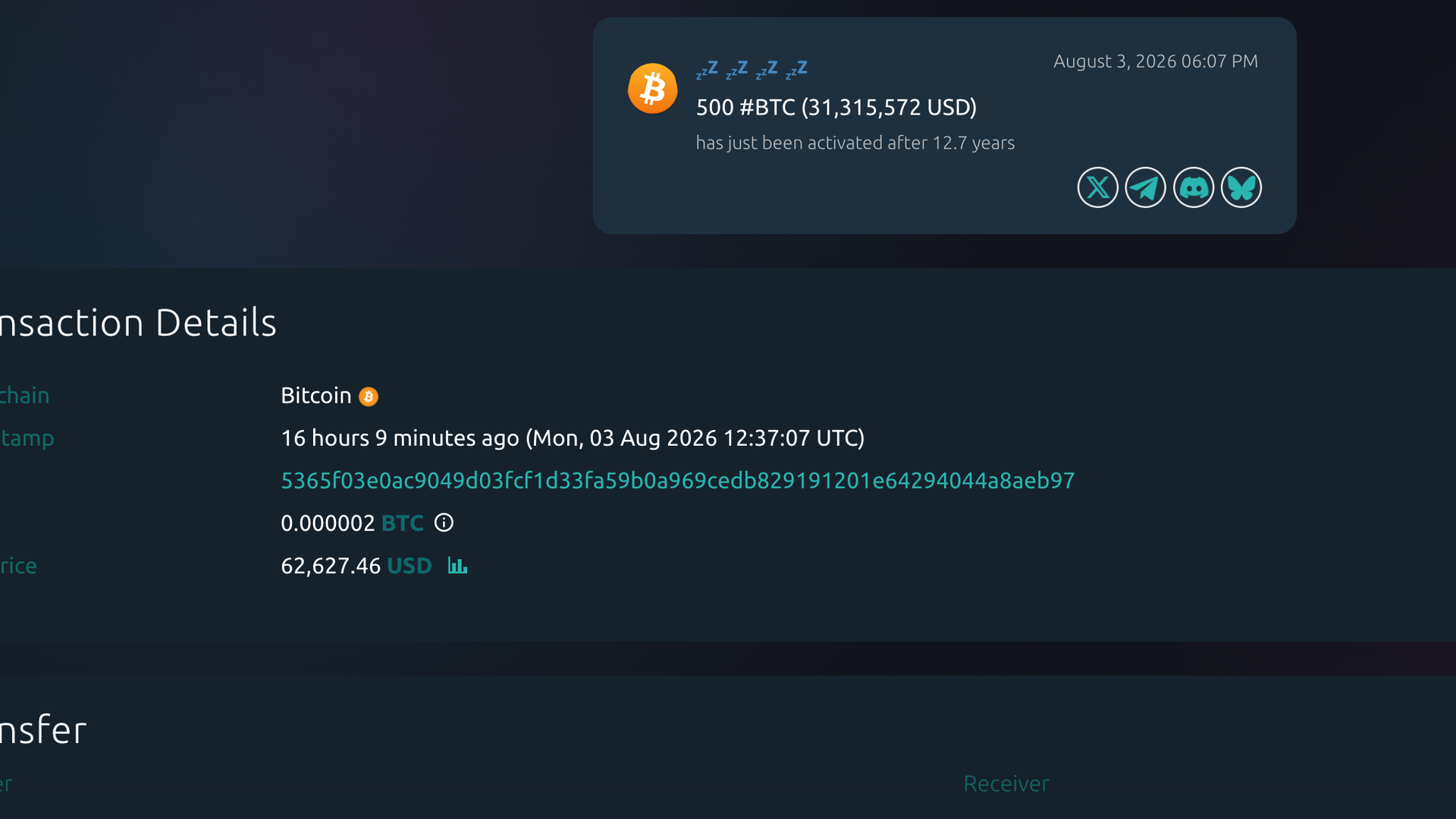

 2 sources
Morning Edition · Tuesday, August 4, 2026UpdatedPublished at 7:02 AM EDT · New York
Long-dormant bitcoin wallets keep moving after a hardware wallet flaw drained about $89 million
Galaxy Research now counts 1,596 bitcoin stolen from about 7,300 addresses, more than $100 million, and says a suspected fourth wave could take the total to roughly $130 million.
Updated at 7:02 AM EDT
Confirmed losses from the Coldcard exploit rose from about $89 million across 4,585 addresses to more than $100 million across roughly 7,300 addresses, with a suspected fourth attack wave that could push the total to about $130 million.
A bitcoin wallet that had not moved coins since 2013 transferred about $31 million on Monday, and CoinDesk reports it was one of several long-inactive wallets to shift funds in the days after an attack on Coldcard hardware wallets.
The scale of that attack has grown since. A firmware defect dating to a March 2021 build routed key generation through a software random-number generator instead of the device's hardware source, which cut the effective strength of the resulting private keys far below what the device advertised. The first round of thefts took roughly 594 bitcoin, and CoinDesk reported on 2 August that losses had reached about $89 million across at least 4,585 addresses. Galaxy Research, the research arm of the digital-asset firm Galaxy, now puts the confirmed total at 1,596 bitcoin taken from about 7,300 addresses across three waves and fourteen smaller incidents, worth more than $100 million. The firm has also flagged a suspected fourth wave, which it excluded from that count because no victim has yet confirmed it. If the additional activity is verified, Galaxy says the total would rise to 2,055 bitcoin, or roughly $130 million. About 90 percent of the stolen coins have not moved since the thefts, and Galaxy has passed attacker and victim addresses to law enforcement and exchanges. Wallets protected by an additional passphrase, and those using multiple-signature setups, were not affected. Coinkite, the manufacturer, published patched firmware within days.
Bitcoin traded weakly through the episode. The coin opened Monday around $63,497 and traded near $62,600 by mid-morning in New York, and it did not rise even as equities rallied on the news from the Middle East. By early Tuesday it had recovered to about $63,500, leaving it close to where it started the week.
The wider adoption picture remains thin in places where governments are formalizing rules. TASS reported a survey by Rambler and Company finding that nearly 70 percent of Russians surveyed do not know what they would use cryptocurrency for, and that half said they do not use it at all and therefore cannot judge how legalization would affect them. The distance between regulatory activity and everyday use is a reminder that self-custody, the property that distinguishes bitcoin from a bank deposit, depends entirely on the integrity of the tools that hold the keys.
What this means
The exploit undermines the specific claim that lets bitcoin function as money held outside the banking system, which is that a holder can keep the asset without trusting an institution. When a widely used device produces guessable keys, holders must choose between running their own hardware and accepting custodial products such as exchange-traded funds, and that shift returns bitcoin ownership to regulated intermediaries. Coins moving out of decade-old wallets also add supply that the market must absorb at a moment when the price is already trailing equities.
What to watch
- Whether more wallets dormant since the early 2010s move coins, since sustained movement suggests either forced migration by worried holders or continued theft.
- Flows into spot bitcoin exchange-traded funds in coming weeks, which would show holders trading self-custody for institutional custody after the exploit.
- Whether hardware wallet makers publish independent audits of their key-generation process, the practical fix that would restore confidence in self-custody devices.
Observations to monitor, not financial advice.
Synthesized from: CoinDesk · TASS (Russian)
Townsquare
Start a discussion in Townsquare.
More from this edition
- Washington joins Tokyo in buying yen, pulling the currency back from a four-decade low
- Brent settles below $80 as Bessent says a Strait of Hormuz deal could come within a day, and United States stocks set records
- Google's guarantees underwrite Anthropic's data-center buildout as artificial-intelligence capacity shifts onto borrowed money
- Russian officials report five killed by a drone near Moscow and seven at a Black Sea beach
- Russia assembles a shadow tanker fleet for liquefied natural gas before the European Union ban takes effect
- France takes reactors offline in the heat as Greek wildfires kill five and Washington State fires displace 64,000
- Colombia's outgoing president repeats fraud claims days before handing power to Abelardo de la Espriella
Comments
0No comments yet.