← The Global Intelligence Brief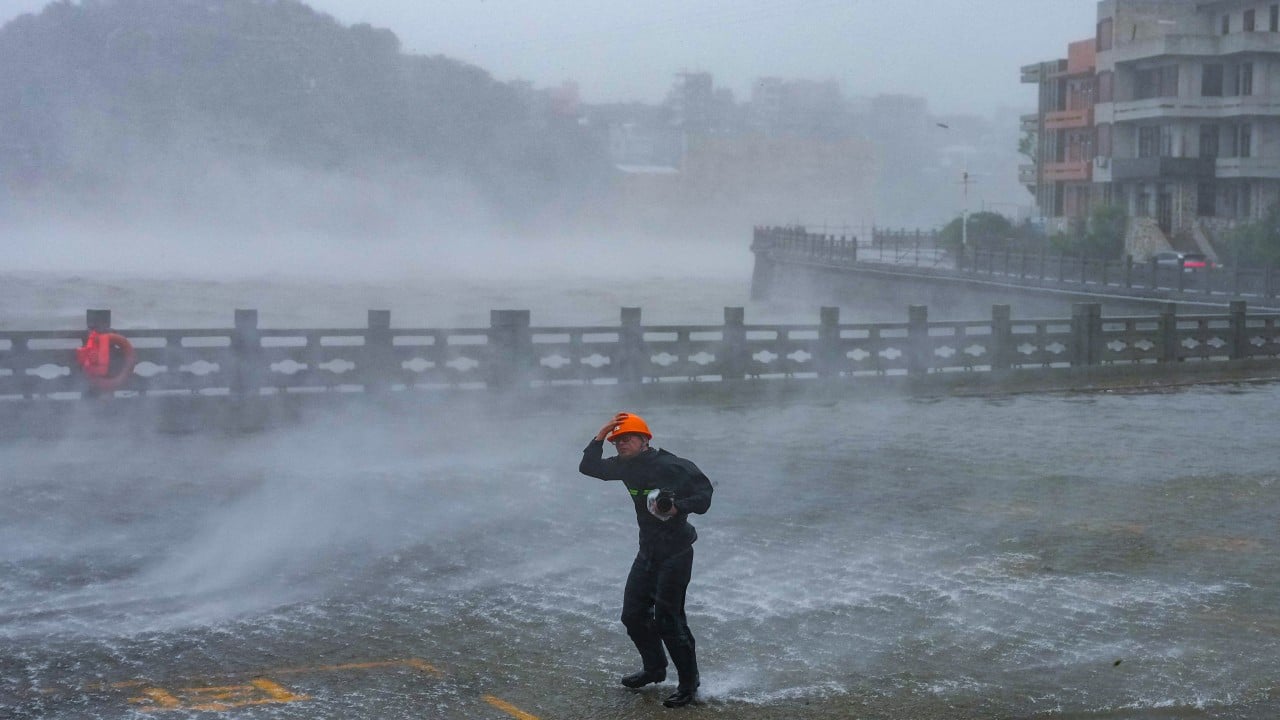
 3 sources
Morning Edition · Monday, August 10, 2026Published at 1:10 AM EDT · New York
Typhoon Dolphin Grounds Nearly 40 Percent of Shanghai Flights as Fires Spread in Indonesia
Two Malaysian states recorded unhealthy air on Monday as smoke drifted north, while a fire in Indonesia's Mount Bromo park burned 550 hectares before crews contained it.
Shanghai's airports cancelled close to 40 percent of Monday's flights after Typhoon Dolphin made landfall in eastern China on Sunday evening and continued moving north, according to a city government notice reported by the South China Morning Post. Heavy rain persisted through the morning. Shanghai handles a large share of China's air freight as well as passenger traffic, so a day of cancellations at Pudong and Hongqiao removes capacity from export supply chains as well as travel.
Further south, forest fires in Indonesia are producing transboundary smoke again. At least two Malaysian states, Sarawak and Selangor, registered unhealthy air readings on Monday as smoke moved north.
Indonesian authorities said a fire in Mount Bromo National Park in East Java that burned 550 hectares has been extinguished, though new hotspots have appeared near the caldera during what officials describe as an unusually dry season.
Both events are ordinary in isolation and cumulative in effect. A single typhoon costs a day of flights. A dry season that produces recurring fires costs Malaysia and Indonesia in school closures, hospital admissions, aviation visibility and tourism arrivals, year after year, with no insurance market that prices it well.
Part of a tracked trend
Disasters as Political and Supply Shocks
Major natural disasters in commodity-producing states translate into political instability and supply disruptions that markets increasingly have to price, recurring as climate and geological shocks hit fragile economies.
What this means
Air freight capacity out of Shanghai tightens whenever a storm closes the airports, which raises spot rates for electronics and pharmaceutical shippers that rely on scheduled belly capacity. In Southeast Asia the haze operates through tourism bookings, aviation delays and public health spending, costs that are borne by Malaysian and Indonesian budgets rather than by the plantations and smallholders whose burning produces the smoke.
What to watch
- How quickly Shanghai clears its flight backlog, the practical measure of whether this becomes a freight disruption or a one-day delay.
- Air quality readings in Kuala Lumpur and Singapore over the coming week, since a sustained deterioration usually triggers diplomatic friction between Jakarta and its neighbours.
- Whether Indonesia's fire hotspot count keeps rising into September, which would mark this dry season as worse than recent years.
Observations to monitor, not financial advice.
Synthesized from: South China Morning Post · South China Morning Post · South China Morning Post
Townsquare
Start a discussion in Townsquare.
More from this edition
- Brent Closes at $87.69 After Houthi Drone Strike on Saudi Refinery Compounds the Hormuz Closure
- Asian Shares Advance With Tokyo Leading as Traders Wait on United States Inflation Data
- Bitcoin Holds Above $65,000 While XRP Falls, and Gold Recovers Toward $4,360
- Washington Shifts From Strikes to Sanctions and Blockade in Its Campaign Against Iran
- China Opens a Regular Arctic Container Route to Europe as Chokepoint Risk Rises
- Investigation Says Uranium Left Congo Inside Cobalt Shipments Bound for China
- German Economy Minister Says the Rise of the AfD Could Deter Investors
- Copernicus Records Western Europe's Hottest June and July as Rivers Run Low
Comments
0No comments yet.