← The Global Intelligence Brief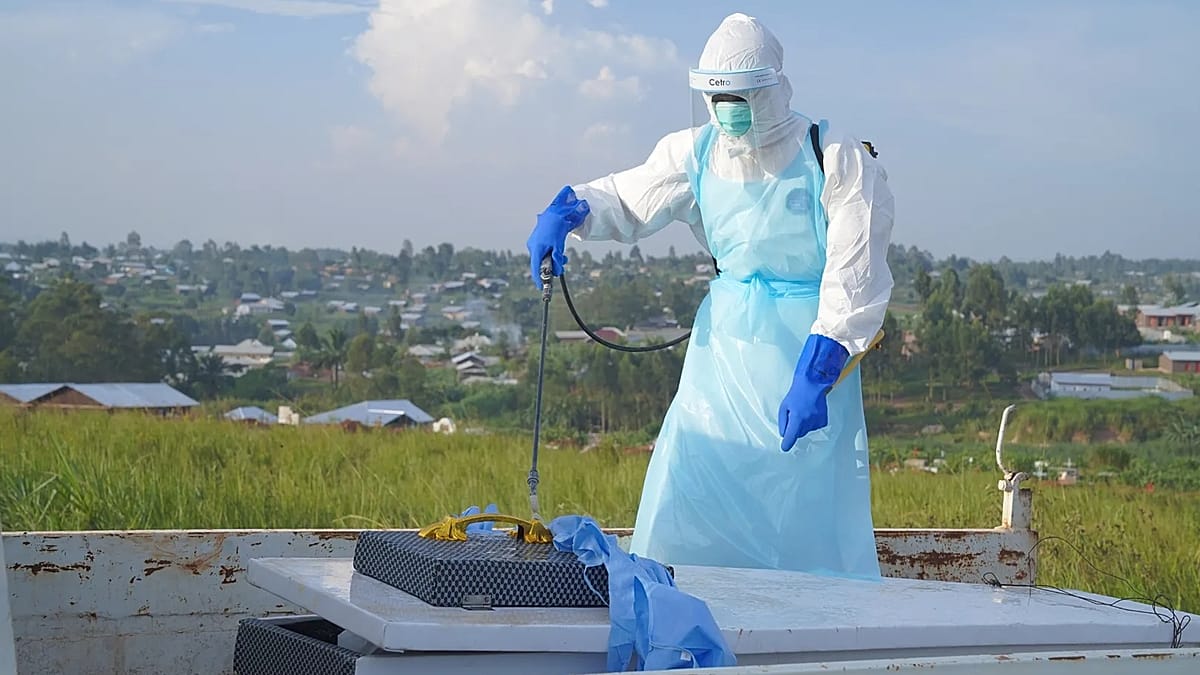
 1 source
Morning Edition · Thursday, August 13, 2026UpdatedPublished at 7:43 AM EDT · New York
The World Health Organization says Congo's Ebola outbreak is on track to surpass the deadliest on record
Tedros said the outbreak, which has now killed more than 2,000 people in under a month, is spreading at the fastest pace on record and could surpass the 2014-2016 West African epidemic that killed over 11,000.
Updated at 7:43 AM EDT
New WHO and UN figures give concrete counts, more than 4,300 cases and over 2,000 deaths, and describe this as the fastest-spreading Ebola outbreak on record; the original body had only the qualitative warning, without numbers.
The head of the World Health Organization (WHO), Tedros Adhanom Ghebreyesus, told reporters this week that the Ebola outbreak in the Democratic Republic of the Congo is growing fast enough to exceed the largest outbreak recorded. Euronews reported his remarks, in which he said that at its current pace the outbreak is on track to eclipse the West African epidemic of 2014 to 2016. The outbreak has now recorded more than 4,300 confirmed cases and over 2,000 deaths, according to Al Jazeera and the United Nations, both of which described it as the fastest-spreading Ebola outbreak on record.
That earlier epidemic, centred on Guinea, Liberia and Sierra Leone, killed more than 11,000 people and took roughly two years to bring under control. It also produced a documented economic contraction in all three countries through closed borders, halted mining operations and the withdrawal of foreign staff, effects that persisted well after case counts fell. The speed of the current outbreak illustrates Tedros's warning directly: deaths climbed from 1,000 to more than 2,000 in under a month, whereas the Democratic Republic of the Congo's 2018-2020 outbreak took roughly a year to cover the same span, the United Nations reported.
The Democratic Republic of the Congo supplies most of the world's cobalt and is a major copper producer, and its mining regions depend on the movement of workers, equipment and freight across long internal distances and through neighbouring countries. Whether the outbreak reaches those areas is the variable that determines whether this remains a health emergency or becomes a supply question. Neither the WHO statement reported by Euronews nor other coverage available at the time of writing has placed the outbreak in relation to the mining belt.
Congo has faced repeated Ebola outbreaks and has more institutional experience containing them than West Africa did in 2014. But the virus strain driving this outbreak, the Bundibugyo species, has no approved vaccine or specific treatment, unlike the Zaire species for which a licensed vaccine exists, and the WHO has urged trials of that vaccine against the current strain, Al Jazeera reported. The WHO's warning is that the speed of this outbreak is outpacing the country's containment capacity.
Veracity: Corroborated
82/100- If true, who benefits
The WHO gains urgency for an underfunded emergency appeal at a moment when donor health budgets are being cut, and vaccine and therapeutic developers gain from attention to a strain with no licensed countermeasure.
- The nuance
Tedros made the statement and it is carried widely, including by Al Jazeera, but it is a projection from the current growth rate rather than a recorded total, the outbreak stands at more than 2,000 deaths against the 11,000 of 2014 to 2016, and the article's premise that Congo holds licensed vaccines does not apply here because the Bundibugyo strain responsible has no approved vaccine or treatment, while the affected districts sit in the east near the Ugandan, Rwandan and South Sudanese borders, hundreds of kilometres from the southeastern copper and cobalt belt.
An open-source-intelligence read of how likely this story is true with its real nuance, not a judgment of any outlet. It assesses the claim, weighing independent and adversarial reporting. How we label confidence.
What this means
An outbreak that spreads into Congo's mining provinces would interrupt cobalt and copper flows through the same mechanism that halted iron-ore mining in West Africa in 2014, namely border closures, expatriate evacuations and freight restrictions rather than any direct effect on the mines themselves. Battery manufacturers and their customers hold the exposure, because cobalt has few substitutes and a highly concentrated source. The two outcomes worth separating are containment in the current provinces, which keeps this a humanitarian emergency, and spread toward the southeast, which would make it a commodity supply event.
Source: Euronews
Townsquare
Start a discussion in Townsquare.
More from this edition
- US inflation held at 3.4% in July, cutting the odds of a Federal Reserve rate increase in September
- Anthropic investors are pricing the artificial-intelligence developer at up to $2 trillion ahead of a Nasdaq listing
- Putin visits the disputed Kuril Islands for the first time, and Japan lodges a formal protest
- Japan tells Iran it will not accept transit fees for the Strait of Hormuz
- Oil from a sanctioned tanker carrying Russian crude has reached Oman's coastline
- Bank of America agrees to take up to 49.9% of Jio Credit for 182.7 billion rupees
- The United States and Japan plan the world's deepest undersea mine to break China's hold on heavy rare earths
Comments
0No comments yet.