← The Global Intelligence Brief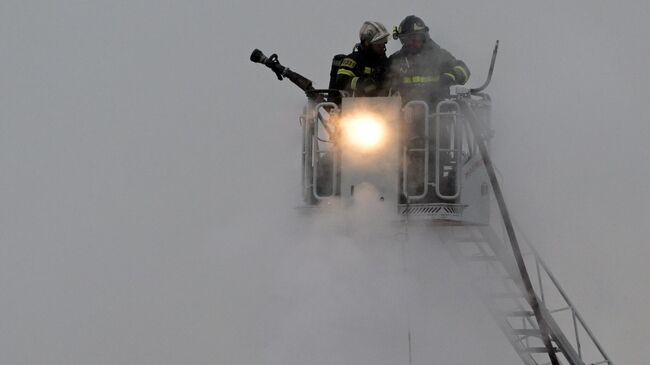


 4 sources
Morning Edition · Thursday, August 13, 2026UpdatedPublished at 7:43 AM EDT · New York
A drone strike set fire to the industrial zone at Salavat, one of Russia's largest petrochemical sites
Air defences also forced temporary flight restrictions at Ulyanovsk airport, which reopened within hours, while alerts were lifted in the Voronezh and Oryol regions.
Updated at 7:43 AM EDT
The Thursday strike halted the refinery's output and injured two workers, reversing the pattern of prior attacks where officials said production continued uninterrupted; a Wildberries logistics hub was also hit.
Russian air defences engaged drones over Bashkortostan early on Thursday, and the strikes started fires at the Gazprom Neftekhim Salavat refining complex and at a Wildberries logistics hub in the nearby Chishminsky district, Kommersant reported. Bashkortostan's regional head, Radiy Khabirov, said air defences shot down sixteen drones over Salavat and five more over Chishminsky, and that two people were injured and hospitalised, according to Reuters reporting carried by Ukrinform. RIA Novosti carried a similar account of a fire following the repelled attack. Salavat hosts one of Russia's largest refining and petrochemical complexes, located in the Volga-Urals region far from the Ukrainian border.
The site has been targeted before, and this strike broke from the pattern of those earlier attacks. After a strike in July, the head of Bashkortostan described that assault as the most substantial the plant had faced, and Interfax reported that the resulting fire was contained without a halt to production. This time, Reuters reported that the refinery shut down operations following the attack, the second stoppage in a month. The Ukrainian general staff and independent Russian outlets have previously reported strikes on plant territory with video of fires, while Russian officials had consistently said production was not interrupted, a claim Thursday's shutdown does not support.
Air travel was disrupted elsewhere too. Ulyanovsk airport suspended and then resumed arrivals and departures within a few hours, according to TASS and RIA Novosti. TASS also reported that drone alerts were cancelled in the Oryol and Voronezh regions. RIA separately reported an explosion in Kharkiv, in northeastern Ukraine, the same morning.
The pattern is now routine on both sides. Ukraine directs long-range drones at refining, petrochemical and logistics assets deep inside Russia. Russia strikes Ukrainian energy and urban infrastructure. Thursday's strike marks an escalation within that pattern: it caused casualties and, unlike the July attack, halted output at the plant, adding to the rising and permanent cost of operating aviation, insurance and industrial plants in both countries.
Part of a tracked trend
Ukraine's Deep Strikes on Russian Energy and Logistics
Ukraine sustains a campaign against Russian refineries and supply lines over the next 3-6 months, pressuring Moscow's oil revenue while Russia retaliates against Ukraine's grid.
Veracity: Corroborated
79/100- If true, who benefits
Ukraine's military gains from demonstrating reach 1,400 to 1,500 kilometres inside Russia, and Russian regional authorities gain from the falling-debris account, which concedes an incident while denying that the plant itself was hit.
- The nuance
A fire in the Salavat industrial zone after a drone attack is reported by both Russian and Ukrainian sources, but the load-bearing dispute is cause and damage: Bashkortostan's governor attributes the fire to debris from intercepted drones while Ukrainian channels report direct hits on plant territory, and earlier strikes on the same complex in July were followed by official assurances of uninterrupted production that no independent party has verified.
An open-source-intelligence read of how likely this story is true with its real nuance, not a judgment of any outlet. It assesses the claim, weighing independent and adversarial reporting. How we label confidence.
What this means
Repeated strikes on refineries and petrochemical plants raise Russia's cost of processing its own crude, which pushes more of its export volume toward unrefined barrels that fetch lower margins and require the discounted tanker trade to move. Russian refiners and the federal budget that depends on their tax take carry the loss. The airport closures compound it: every temporary suspension at a regional airport adds cost to Russian domestic aviation and to the insurance underwriting it, and those costs do not reverse when the alert is lifted.
Synthesized from: Kommersant · RIA Novosti · TASS · RIA Novosti
Townsquare
Start a discussion in Townsquare.
More from this edition
- US inflation held at 3.4% in July, cutting the odds of a Federal Reserve rate increase in September
- Anthropic investors are pricing the artificial-intelligence developer at up to $2 trillion ahead of a Nasdaq listing
- Putin visits the disputed Kuril Islands for the first time, and Japan lodges a formal protest
- Japan tells Iran it will not accept transit fees for the Strait of Hormuz
- Oil from a sanctioned tanker carrying Russian crude has reached Oman's coastline
- Bank of America agrees to take up to 49.9% of Jio Credit for 182.7 billion rupees
- The United States and Japan plan the world's deepest undersea mine to break China's hold on heavy rare earths
Comments
0No comments yet.