← The Global Intelligence Brief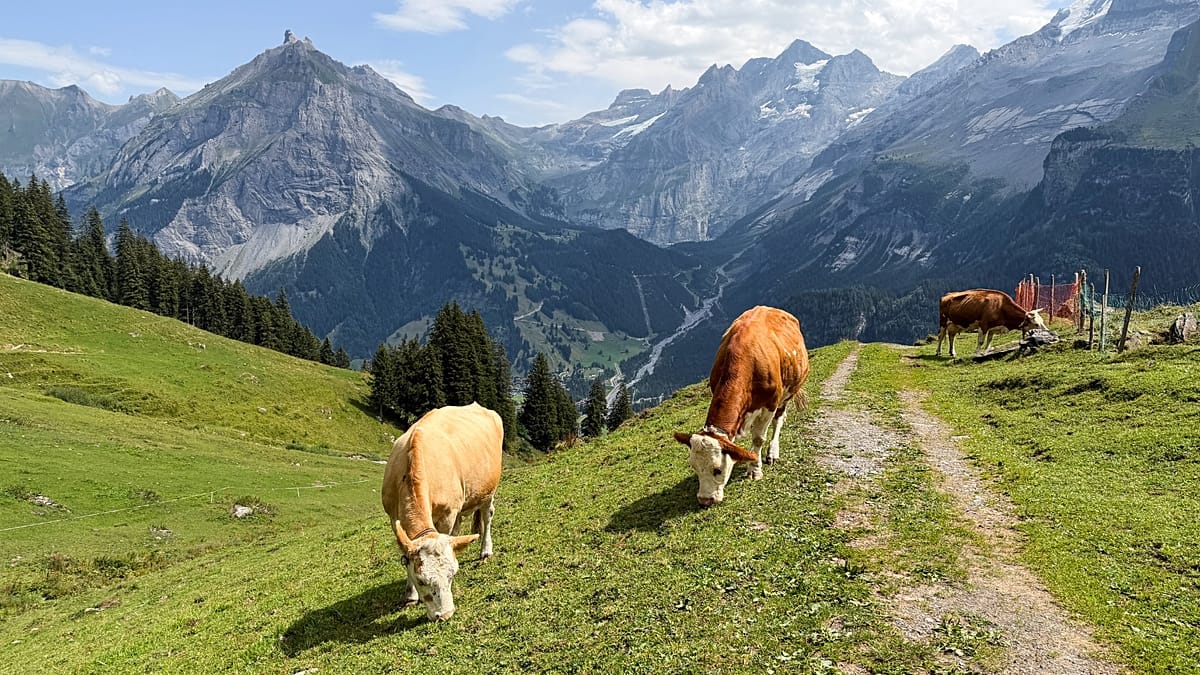


 3 sources
Morning Edition · Friday, August 21, 2026Published at 1:19 AM EDT · New York
A Thawing Alpine Slope and a Third Heat Wave Show Europe's Climate Costs Arriving as Infrastructure Bills
Scientists monitoring the Spitze Stei rock formation above the Swiss village of Kandersteg say melting permafrost is destabilizing the slope, and climatologists warn that hot nights carry the largest health toll.
The Swiss village of Kandersteg sits below the Spitze Stei rock formation, which scientists monitor continuously because a collapse would send a large volume of rock down toward the valley. Researchers cited by Euronews say rising temperatures are melting glaciers and thawing the permafrost that has held Alpine slopes together, which makes those slopes progressively less stable. Kandersteg has installed monitoring equipment and evacuation procedures. Both are permanent operating costs for a village of a few thousand people.
The heat itself continues. A Russian climatologist told RIA Novosti that the most dangerous feature of European heat waves is not the daytime peak but the failure of night temperatures to fall, because the human body does not recover and cardiovascular strain accumulates. In Israel, Ynet's forecast described extreme heat loads across most of the country on Friday, with a slight easing on Saturday and a return to seasonal temperatures on Sunday.
These are not separate items. Thawing permafrost, unstable slopes and repeated heat episodes all convert into the same thing on a balance sheet: monitoring systems, cooling capacity, rerouted rail and road links, and insurance that reprices annually. Switzerland's Alpine transport corridors carry a substantial share of north-south European freight, and each stabilization or diversion project adds to the cost of moving goods across the continent.
What this means
European infrastructure spending is shifting from expansion toward maintenance and protection, which absorbs public capital without adding capacity. Alpine rail and road corridors carry freight between northern and southern Europe, so slope stabilization work and closures raise transport costs for manufacturers on both sides. Reinsurers repricing Alpine and heat-related risk gain premium income, while municipalities and rail operators carry the spending, and electricity demand for cooling adds a recurring summer peak to grids already managing an industrial load.
What to watch
- Whether Swiss authorities order precautionary evacuations or rail closures around Kandersteg, the point where geological monitoring becomes an economic cost.
- European electricity peak demand during heat episodes, which shows how much cooling load grids now have to serve in summer.
- Reinsurance renewal pricing for European climate and geological risk, the clearest market signal of how these events are being capitalized.
Observations to monitor, not financial advice.
Synthesized from: Euronews · RIA Novosti · Ynet
Townsquare
Start a discussion in Townsquare.
More from this edition
- Treasury's Bigger Bond Buybacks Fail to Hold Down Long-Term Yields
- Washington Promises Its Harshest Iran Sanctions Yet as Brent Crude Settles Near $94
- Gold Holds Above $4,500 and Silver Tops $68 as Investors Doubt the Long End of the Bond Market
- Panama Canal Cuts Daily Transits and Pirates Seize an Arms Ship off Somalia
- China Expands Patrols East of Taiwan While Russia Test-Fires Missiles Near Islands Japan Claims
- Ukraine Asks Musk to Unlock Starlink for Strikes 200 Kilometers Inside Russia
- Hong Kong Court Convicts Two Tiananmen Vigil Organizers of Inciting Subversion
- North Korea's Economy Is Growing on the Proceeds of Supplying Russia's War
Comments
0No comments yet.