← The Global Intelligence Brief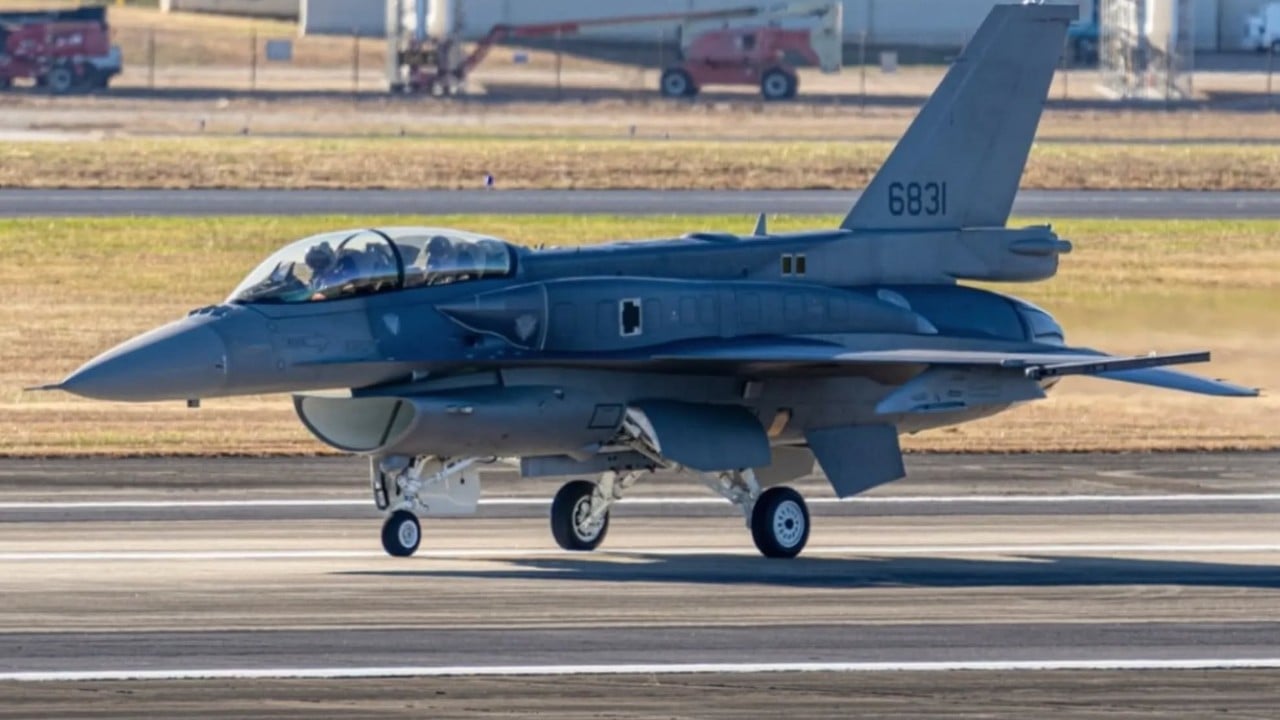

 2 sources
Morning Edition · Wednesday, September 9, 2026Published at 1:13 AM EDT · New York
Taiwan's First Two F-16 Block 70 Fighters Remain in Hawaii Two Weeks After Their Expected Arrival
The delay lands as the senior American representative in Taipei warns publicly that a conflict over Taiwan would be disastrous.
The first two F-16 Block 70 fighters that Taipei bought from the United States have not reached Taiwan. They were expected at Chihhang Air Base in late August and have instead spent more than two weeks in Hawaii for reasons that have not been explained, the South China Morning Post reported.
Separately, the senior American representative in Taipei said a conflict over Taiwan would be disastrous, Al Jazeera reported, noting that the United States remains Taiwan's principal arms supplier and international backer despite the absence of formal diplomatic relations.
The two items describe the same underlying condition from opposite ends. Washington's declaratory commitment to Taiwan is firm, and its physical delivery of hardware is slow. Taiwan's air force has waited years for these aircraft, and the backlog in American arms deliveries to Taipei has been a persistent complaint in Taiwanese defense debates. Nobody has said whether the Hawaii stop is technical, procedural or political, and the silence itself is notable.
Deterrence depends on capability that exists, not capability that has been ordered. Every month a delivery slips, the gap between commitment and capability widens, and both Taipei and Beijing draw conclusions from it.
Part of a tracked trend
Indo-Pacific Arms Race Accelerates
Over the next 3-6 months a sharpening regional arms race drives Japan and its neighbors to expand militaries and export weapons—Tokyo moving to sell missiles—as maritime confrontations with China multiply and Asian rearmament gathers pace.
Veracity: Corroborated
90/100- If true, who benefits
Advocates of Taiwanese domestic arms production and of alternative Korean, Japanese and European suppliers gain from every documented slip in American deliveries, and Beijing gains a demonstration that the commitment outpaces the hardware.
- The nuance
The delay is well documented, and the Taipei Times reported the two jets taxied for departure and returned to the apron, but the most likely explanations are the ferry flight's technical and tanker-support requirements and the Lockheed Martin production problems that already pushed the wider Block 70 schedule into 2027, not a political signal.
An open-source-intelligence read of how likely this story is true with its real nuance, not a judgment of any outlet. It assesses the claim, weighing independent and adversarial reporting. How we label confidence.
What this means
Taiwan makes the majority of the world's advanced logic chips, so any shift in the perceived probability of conflict there transmits directly into semiconductor supply assumptions and into the cost of insuring shipping through the Taiwan Strait. Delivery delays on American hardware push Taipei and other regional buyers toward domestic production and alternative suppliers, which is a durable revenue shift for South Korean, Japanese and European defense manufacturers. The immediate exposure sits with Taiwanese industrial firms and the global electronics buyers who depend on them.
Synthesized from: South China Morning Post · Al Jazeera
Townsquare
Start a discussion in Townsquare.
More from this edition
- Brent Crude Approaches $100 After US Destroys Five Iranian Tankers and Iran Strikes Back
- European Central Bank Set to Raise Rates Thursday With Inflation Driven Almost Entirely by Energy
- Washington Bans Canadian Dairy, Motorcycles and Most Alcohol as Trade War Widens
- Bessent Tells Traders He Has Inside Information When the Treasury Buys Yen
- Iran's War With Washington Widens to Jordan as Third Countries Absorb the Fighting
- US Intelligence Agencies Accuse Six Chinese AI Firms of Systematically Copying American Models
- Alphabet and Amazon Bonds Account for a Quarter of Swiss Franc Corporate Issuance This Year
Comments
0No comments yet.