← The Global Intelligence Brief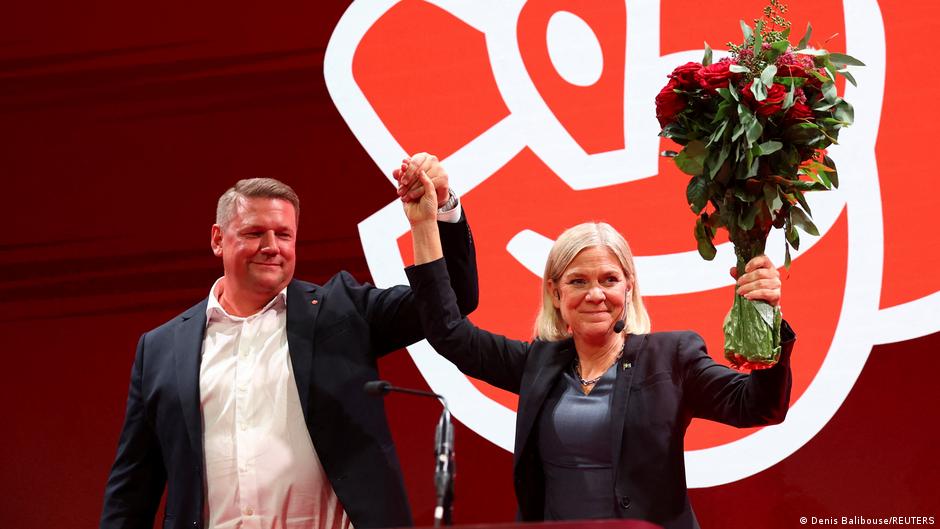


 4 sources
Morning Edition · Monday, September 14, 2026Published at 1:15 AM EDT · New York
Sweden's Centre-Left Leads by One Seat as Far-Right Vote Falls for the First Time
Counting will continue for days on overseas ballots, and the Sweden Democrats lost support, taking 17.6 percent against 20.5 percent in 2022.
Sweden's general election produced a result too close to call. Deutsche Welle reports that the centre-left opposition bloc led by former prime minister Magdalena Andersson is narrowly ahead of the governing right-wing bloc under Prime Minister Ulf Kristersson, with a one-seat advantage in the 349-seat parliament once roughly 90 percent of votes were counted.
Reported margins vary by source and by the hour of counting. Al Jazeera put the centre-left lead at three seats during the count, while the Israeli outlet Ynet reported a projection of 176 seats against 173. Overseas ballots will not be fully counted for several days, and the final allocation could still change.
The clearest number is the one that surprised forecasters. The Sweden Democrats, the anti-immigration party that has supported the current government without joining it and had hoped to enter the cabinet for the first time, took 17.6 percent of the vote, down from 20.5 percent in 2022. The decline breaks a run of gains for the party in recent elections.
Sweden is a small, open economy with an outsized banking sector and a currency that reacts quickly to political uncertainty. A government formed on a one-seat margin will struggle to legislate on defence spending, energy policy, and European Union budget contributions, the three areas where Nordic policy has been shifting fastest.
Part of a tracked trend
Europe's Populist Realignment
Anti-establishment parties keep converting energy costs, migration and stagnant real wages into governing power at successively higher levels of European politics, making national policy on defense, energy and European Union integration harder to sustain.
Veracity: Corroborated
93/100- If true, who benefits
A narrative that the European populist advance has a ceiling benefits centre-left parties across the European Union and reassures investors who price coalition stability, while the Sweden Democrats and their allies have an interest in framing the loss as a counting artefact.
- The nuance
The vote shares are official and the Sweden Democrats did fall to 17.6 percent from 20.5 percent, but the Swedish Election Authority count was still incomplete, the reported centre-left lead moved between one and three seats during the night, and part of the Sweden Democrats' lost support went to Ulf Kristersson's Moderates rather than out of the right-wing bloc.
An open-source-intelligence read of how likely this story is true with its real nuance, not a judgment of any outlet. It assesses the claim, weighing independent and adversarial reporting. How we label confidence.
What this means
A parliament split by one or two seats means Swedish fiscal and defence commitments become contingent on individual legislators, which raises the uncertainty premium on the krona and on Swedish government debt until a governing agreement is reached. The Sweden Democrats losing votes also matters beyond Sweden, because it is the first national test showing that the rise of anti-establishment parties in Europe is not automatic. Parties elsewhere that have been treated by investors as an inevitable trend now have a counterexample to explain.
Synthesized from: Deutsche Welle · Ynet · Al Jazeera · France 24
Townsquare
Start a discussion in Townsquare.
More from this edition
- Fed Chair Warsh Heads Into a Rate Decision That Puts Him Against Trump
- Saudi Arabia's East-West Pipeline Shutdown Pushes Brent Toward $108
- SoftBank Falls 13 Percent After AI Lab Chiefs Call for Slower Development
- BRICS Agrees to Settle More Trade in Its Own Currencies and Link Payment Systems
- Bank of Japan Approaches a Rate Decision Squeezed Between Tokyo and Washington
- Gold Near $4,344 While Bitcoin Holds Around $77,500 as the Two Move Together
- UK Long-Term Borrowing Costs Near 1998 Levels Before the October 28 Budget
- Russian Drone Strikes Ukrainian Train Minutes After European Security Advisers Passed
Comments
0No comments yet.