← The Global Intelligence Brief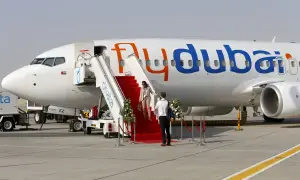


 4 sources
Morning Edition · Friday, October 2, 2026UpdatedPublished at 7:42 AM EDT · New York
United Arab Emirates Opens Investigation Into Possible Terrorism Link in flydubai Cockpit Attack
Israeli carriers had a day of reversals over their landing permissions in Dubai: El Al cancelled Friday's rescue flights after the United Arab Emirates revoked approval, while Israir and Arkia received clearance and flew, as President Trump warned Iran would be hit "very hard" if investigators confirm a link to the attack.
Updated at 7:42 AM EDT
The UAE revoked and then partially restored Israeli carriers' landing permissions through Friday, splitting El Al's cancelled flights from Israir and Arkia's completed ones, and Trump explicitly warned Iran would be hit "very hard" if linked to the attack.
The United Arab Emirates said it is investigating a possible link to terrorism in what Emirati authorities describe as an attempt by a co-pilot to crash a flydubai aircraft bound for Israel, according to Dawn. The aircraft, carrying 174 passengers, made an emergency landing at Tabuk in Saudi Arabia on Wednesday after a fight in the cockpit. The captain, an Indian national, was stabbed and, according to passenger accounts compiled by CNN, managed to open the cockpit door so that passengers and off-duty pilots could restrain the attacker.
Accounts of motive differ. The United Arab Emirates said it will lead the inquiry, including into any links to terrorism, The New York Times reported. Prime Minister Benjamin Netanyahu of Israel said the attacker had undergone "Islamist radical indoctrination" without providing details. President Trump went further on Thursday, telling reporters "based on what I'm hearing, the answer is yes" when asked if Iran was linked to the attack, and warning that Iran would "be hit very hard" if that connection is confirmed, according to Euronews. Trump did not explain the basis for his suspicion. The BBC's Hindi service reported that the co-pilot was an Omani national and that Netanyahu was asked how such a crew member came to be assigned to a flight to Israel. No investigating authority has published findings tying the attack to Iran or to any other state.
The commercial consequences swung twice within a single day. Israel's transport ministry said early on Friday that the dispute over Israeli carriers' permissions in Dubai had been resolved and that flights would depart with delays for "completion of preparations and coordination." Hours later, following further negotiations, the United Arab Emirates revoked that approval again, and El Al said it had cancelled its two planned rescue flights, LY974 and LY972, according to Aviation A2Z. Israir and Arkia, by contrast, said they had received final clearance from Emirati authorities and operated repatriation flights from Dubai on Friday, carrying some of the roughly 10,000 Israelis who had been waiting to return home, with passengers told they could not bring trolley bags or suitcases into the cabin. El Al said separately that it is planning to resume scheduled service to Dubai, at least two flights a day, starting in November, subject to approval from Israeli and Emirati security authorities, after a hiatus on the route that began when the war between Israel and Iran escalated earlier this year.
The route itself is what both governments risk losing. Direct service between Israel and the United Arab Emirates was one of the most visible commercial results of the 2020 normalisation agreements, and Friday's reversals show it is now subject to case-by-case security review that can change within hours on either side.
Veracity: Corroborated
76/100- If true, who benefits
Israel's government gains from an account centred on Islamist radicalisation that shifts responsibility to Gulf crew screening, Abu Dhabi gains by leading the inquiry and controlling the official finding, and the cost falls on flydubai, El Al and Arkia through security expense and lost load factors on a politically symbolic route.
- The nuance
That the Omani co-pilot attacked and stabbed the captain is established by Saudi Arabia's preliminary finding, which states only that the captain was assaulted by his co-pilot, while the two contested elements, an intent to crash the aircraft and Prime Minister Benjamin Netanyahu's assertion of radical indoctrination, have not been substantiated by any investigating authority, and no evidence of organised direction has been published.
An open-source-intelligence read of how likely this story is true with its real nuance, not a judgment of any outlet. It assesses the claim, weighing independent and adversarial reporting. How we label confidence.
What this means
The mechanism is crew vetting and route insurance. Airlines that fly between Israel and the Gulf now face higher security screening costs, slower crew assignment and the possibility that insurers treat the sector as elevated risk, which falls on flydubai, El Al and Arkia through load factors and on the two governments through the prestige of the normalisation agreements. Abu Dhabi wants to determine the official account of events by leading the investigation, since the alternative is an Israeli account that implicates Emirati crew screening. The likelier outcome within weeks is a resumption of service under stricter crew rules rather than a suspension of the route, because both governments have invested political capital in the air link. A finding that the co-pilot acted with organised support, rather than alone, would change that and could suspend Israel-Gulf flights for longer.
Synthesized from: Dawn · The New York Times · BBC News Hindi · Ynet
Townsquare
Start a discussion in Townsquare.
More from this edition
- Washington Presses Europe to Release 120 Million Barrels of Diesel as Brent Closes Above $100
- Explosions Hit Addis Ababa as Ethiopian Opposition Alliance Claims First Drone Strikes on the Capital
- Thirty-Year Treasury Yield Touches 5.68%, a 24-Year High, Before Retreating
- Gold Holds Near $4,177 While Bitcoin Slips Under $84,000 as Yields Rise
- Trump Rejects Iran's Hormuz Offer as Tehran Keeps Striking Ships in the Strait
- Kyiv Says It Intercepted Russian Plans to Cut Major Cities From Power, Heat and Water
- Apollo Backs a $15 Billion Artificial-Intelligence Build in Japan as Credit Becomes the Sector's Constraint
Comments
0No comments yet.