← The Global Intelligence Brief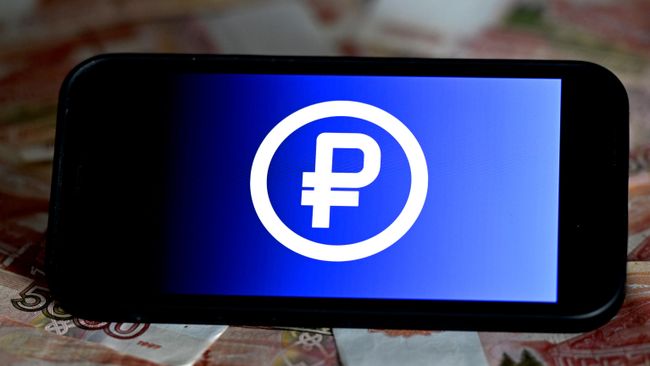

 2 sources
Morning Edition · Saturday, October 10, 2026Published at 1:16 AM EDT · New York
Bessent Says the US Will Freeze $1 Billion in Iranian Crypto as Russians Open 220,000 Digital-Ruble Accounts
Bitcoin held near $82,600 and gained less on Friday than gold or silver, while both governments extended their control over digital money.
US Treasury Secretary Scott Bessent said the United States will seize $1 billion of Iran's cryptocurrency this week and said "we know where it is," Bitcoin Magazine reported. The report said it was not clear which digital asset he meant. Bessent has used the same figure before. In May he said the US had already "grabbed" about $1 billion in Iranian crypto under its pressure campaign called Operation Economic Fury. Those earlier seizures included a $344 million freeze of Tether tokens. The Treasury has not said whether the new amount is a new set of seizures or a restatement of the earlier ones.
The earlier seizures mostly affected stablecoins and wallets held through intermediaries. A token issuer can freeze its own tokens, and exchanges can be ordered to lock wallets. Bitcoin held by its owner on a self-held key is much harder to seize. That difference determines what Washington can actually freeze.
In Moscow the state is building its own system. RIA Novosti reported on Saturday that banks have released first results from the mass launch of the digital ruble, which began on September 1 for the largest banks and retailers. Russians opened about 220,000 digital-ruble accounts in the first month, Profinance reported. According to TKS, the Bank of Russia had expected 60,000 by year-end. Kommersant reported that each bank spent 100 million to 300 million rubles to connect to the system.
Bitcoin traded near $82,600 early on Saturday, up about 0.5% over 24 hours. Gold rose 1.3% and silver 2.2% on Friday.
Part of a tracked trend
States Take Control of Digital Money
Governments keep extending their power to monitor, freeze and issue digital money through stablecoin issuers, exchanges and central-bank digital currencies, so financial privacy moves toward self-held assets and the price of censorship-resistant custody rises.
Veracity: Plausible
50/100- If true, who benefits
The Treasury gains a public record of enforcement that may deter sanctions evasion. Stablecoin issuers that obey freeze orders gain standing with US regulators, and Iranian networks lose access to dollar tokens.
An open-source-intelligence read of how likely this story is true with its real nuance, not a judgment of any outlet. It assesses the claim, weighing independent and adversarial reporting. How we label confidence.
What this means
Both governments are tightening control over digital money. The United States is using its power over dollar stablecoin issuers and regulated exchanges. Russia is building a central-bank ledger that records every transaction. For sanctioned states, the lesson is that dollar-backed stablecoins are about as easy for Washington to freeze as bank accounts. That reduces their use in sanctions evasion and pushes such users toward self-held bitcoin or non-dollar settlement. For ordinary holders, the risk lies in where assets are held: exchanges and token issuers can freeze funds on government orders. The digital ruble's early take-up was helped by banks that had to connect. Uptake that exceeds the forecast does not make the system voluntary in practice once retailers must accept it. Bitcoin's smaller gain than the metals on Friday fits its recent behavior as a risk asset. The desk's read is that US seizure announcements will keep focusing on stablecoins and exchange-held wallets over the coming months, and that Tether-linked flows connected to Iran and Russia will shrink. The read is wrong if the Treasury shows a seizure of self-held bitcoin, which would mean the self-custody protection no longer works against a determined state.
Synthesized from: Bitcoin Magazine · RIA Novosti
Townsquare
Start a discussion in Townsquare.
More from this edition
- Eritrean Troops Enter Tigray Towns as Ethiopia Tells the UN Security Council It Faces an "All-Out Invasion"
- Trump Says Putin Will Ship Millions of Tonnes of Diesel to US and World Markets as Treasury Pauses Sanctions
- Ten-Year Treasury Yield Ends Week at 5.24% as Bessent Skips the IMF and World Bank Meetings in Bangkok
- Riyadh Airport Attacked and Evacuated for the Third Time in a Week, With at Least 225 Flights Canceled
- Ukraine Hits Fuel Terminal at Russia's Novoshakhtinsk Refinery Hours After the Diesel Deal as Russia Targets Bridges in Kyiv
- Hurricane Isaias Shuts About 71% of US Gulf Oil Output as Delta Cuts Its Forecast Over Fuel Costs
- Reserve Bank of India Tightens Currency Derivative Rules Days After Its First Rate Increase Since 2023
Comments
0No comments yet.