← The Global Intelligence Brief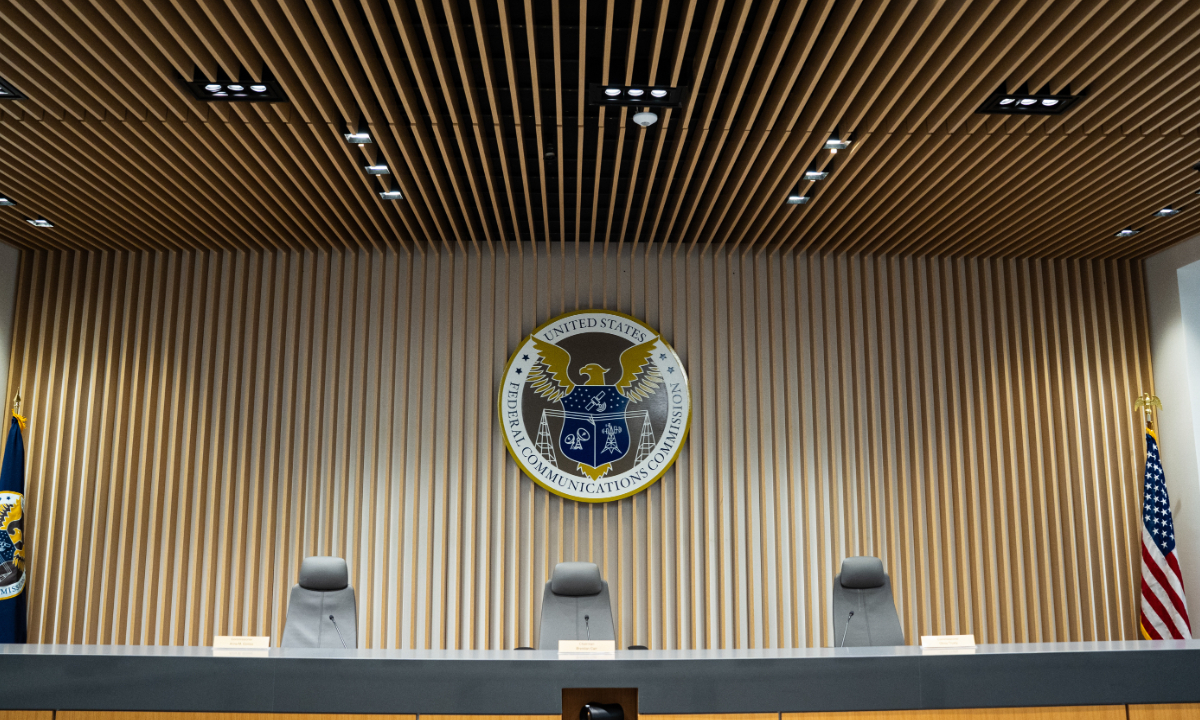

 2 sources
Morning Edition · Saturday, October 10, 2026Published at 1:16 AM EDT · New York
US Federal Communications Commission Moves to Bar All Chinese Labs From Testing Electronics Sold in America
The Federal Communications Commission will vote on October 29 on a rule taking effect in December 2028, which would affect most of the testing that now happens in China.
The US Federal Communications Commission (FCC) will vote on October 29 on a proposal to bar all laboratories in China from testing smartphones, cameras, computers and other electronic devices for the US market, Reuters reported via Devdiscourse. The rule would apply to test labs and certification bodies in countries that do not grant US labs equal treatment. It would take effect in December 2028. In 2025 the FCC barred only labs owned or controlled by the Chinese state, but the agency says a large majority of China-based labs still test US electronics. FCC Chair Brendan Carr said in 2025 that 82% of electronics were tested in China.
Chinese state media focused on the cost to industry. Global Times quoted analysts as saying the plan could disrupt global electronics supply chains and raise costs. China's Ministry of Commerce responded to an earlier round of FCC restrictions in May. In its Chinese-language statement, the ministry accused the agency of "abandoning the principle of technological neutrality" and "overstretching the concept of national security." It also warned that China would "take necessary measures" if Washington went ahead. US technology companies have also opposed the ban.
On the same day, Beijing published new guidelines on developing "new quality productive forces," Xinhua reported. That is Beijing's term for its push into advanced manufacturing and technology. China is responding to US measures by building more of its own capacity.
Part of a tracked trend
China Builds a Parallel Technology Stack
United States export controls push China to develop its own chips, computing hardware and artificial-intelligence systems, accelerating a split of global technology into competing spheres that reshapes supply chains and standards.
Veracity: Corroborated
90/100- If true, who benefits
Test labs in the United States and allied countries gain certification business, and Washington gains a reciprocity rule it can apply to other states. Chinese labs and US importers of low-margin electronics bear the cost.
- The nuance
Reuters reporting confirms the vote and the December 2028 start date. The Federal Communications Commission (FCC) bases the rule on reciprocity, because China does not accept US labs, as much as on security. The 82% figure comes from FCC Chair Brendan Carr, and any exemptions stay unknown until the October 29 text.
An open-source-intelligence read of how likely this story is true with its real nuance, not a judgment of any outlet. It assesses the claim, weighing independent and adversarial reporting. How we label confidence.
What this means
The measure works through certification. A device cannot be sold legally in the United States without FCC authorization, so moving testing out of China forces brands to pay for new lab capacity in the United States or allied countries, or to redesign their approval process. Device makers and contract manufacturers in China bear the cost first, along with US importers of low-margin electronics. Test-lab operators in the United States, Europe, Japan and Taiwan gain business. The two-year delay shows that the FCC knows labs outside China cannot handle the volume yet. The consensus treats this as a symbolic trade action. It also builds a lasting rule for which countries' testing the United States accepts, and other governments can copy it. The desk's read is that the vote passes, that Beijing responds with its own certification or data-security limits on US firms within months, and that test capacity in Southeast Asia and India expands before 2028. The read is wrong if the FCC delays the vote or adds broad exemptions under pressure from US industry.
Synthesized from: Global Times · Xinhua
Townsquare
Start a discussion in Townsquare.
More from this edition
- Eritrean Troops Enter Tigray Towns as Ethiopia Tells the UN Security Council It Faces an "All-Out Invasion"
- Trump Says Putin Will Ship Millions of Tonnes of Diesel to US and World Markets as Treasury Pauses Sanctions
- Ten-Year Treasury Yield Ends Week at 5.24% as Bessent Skips the IMF and World Bank Meetings in Bangkok
- Riyadh Airport Attacked and Evacuated for the Third Time in a Week, With at Least 225 Flights Canceled
- Ukraine Hits Fuel Terminal at Russia's Novoshakhtinsk Refinery Hours After the Diesel Deal as Russia Targets Bridges in Kyiv
- Hurricane Isaias Shuts About 71% of US Gulf Oil Output as Delta Cuts Its Forecast Over Fuel Costs
- Reserve Bank of India Tightens Currency Derivative Rules Days After Its First Rate Increase Since 2023
Comments
0No comments yet.