← The Global Intelligence Brief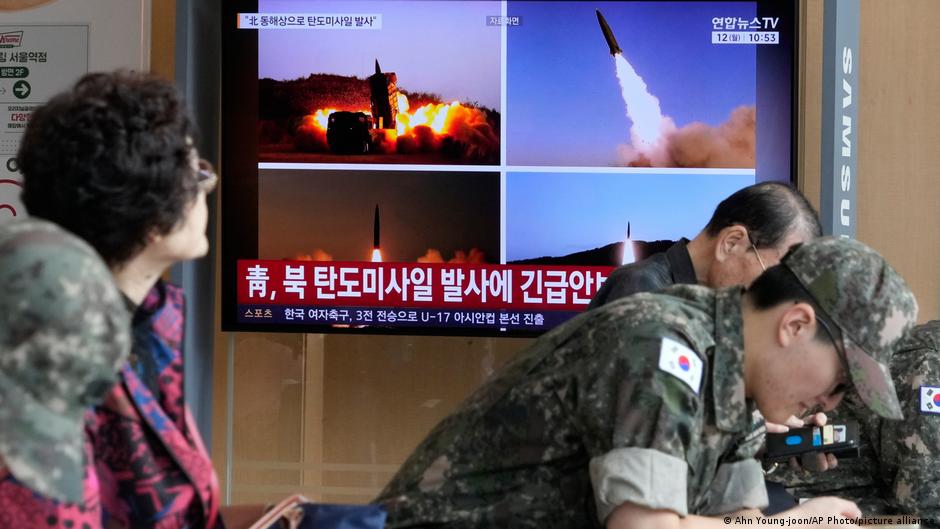


 3 sources
Morning Edition · Monday, October 12, 2026Published at 1:11 AM EDT · New York
North Korea fires several ballistic missiles after South Korea tests a hypersonic missile
South Korea's military says the missiles flew more than 900 kilometers, in Pyongyang's fourth launch this month.
North Korea fired several ballistic missiles on Monday into the sea between the Korean Peninsula and Japan, which Japan calls the Sea of Japan and Korea calls the East Sea. Japan's Jiji Press, citing South Korea's military, reported that the missiles flew more than 900 kilometers.
It was North Korea's fourth missile launch in October, according to Deutsche Welle. South Korea's military called it a "show of force" in response to Seoul's own successful test of a hypersonic missile, Al Jazeera reported. Earlier in the month, North Korea's state news agency, the Korean Central News Agency (KCNA), said a drill of its "hypersonic strategic weapon system" hit a target 1,000 kilometers away. Seoul tracked that missile for more than 700 kilometers and did not confirm the claim.
The sequence matters more than any single launch. South Korea is now testing weapons in the same category as Pyongyang's, and North Korea answers each South Korean test with launches of its own. Japan is expanding its military at the same time.
Part of a tracked trend
Indo-Pacific Arms Race Accelerates
Over the next 3-6 months a sharpening regional arms race drives Japan and its neighbors to expand militaries and export weapons—Tokyo moving to sell missiles—as maritime confrontations with China multiply and Asian rearmament gathers pace.
Veracity: Corroborated
85/100- If true, who benefits
If each South Korean test now draws a North Korean launch, missile and air-defense makers in South Korea, Japan and the United States gain new orders, and taxpayers in Seoul and Tokyo pay for larger defense budgets.
- The nuance
Korean reporting confirms the 900-kilometer range and the four launches in a month, but the claim that the launches answered Seoul's hypersonic test comes from South Korea's Joint Chiefs of Staff, not from Pyongyang. The reporting reviewed does not include a stated motive from North Korea's state news agency, the Korean Central News Agency (KCNA).
An open-source-intelligence read of how likely this story is true with its real nuance, not a judgment of any outlet. It assesses the claim, weighing independent and adversarial reporting. How we label confidence.
What this means
Seoul's hypersonic test shows a US ally building strike weapons of its own rather than relying solely on US forces. North Korea's quick response shows that each new capability on one side now draws a matching response from the other. Asian defense manufacturers and their order books benefit, while governments in Seoul and Tokyo face higher military budgets even as they carry heavy public debt. Markets usually treat North Korean launches as routine. The structural change here is that South Korea, not only Pyongyang, is now driving the testing cycle. The more likely outcome is more paired tests and more spending commitments from Seoul and Tokyo over the next several months, without direct conflict. This forecast depends on China restraining North Korea from conducting a nuclear test. It would be proven wrong by a resumption of direct talks between Washington and Pyongyang that pauses the launches.
Synthesized from: Jiji Press · Deutsche Welle · Al Jazeera
Townsquare
Start a discussion in Townsquare.
More from this edition
- Oil falls to about $103 after Trump declares a Russia-Ukraine "energy ceasefire" that covers only refineries
- Washington threatens to block arms for Ukraine unless Kyiv stops striking Russian refineries
- Dollar holds near its highest level in a year and a half before US inflation data forecast to show a 3.6% annual rise
- Seven senators, four of them Republicans, say Trump's Russian diesel deal breaks a 2022 import ban
- IMF opens its Bangkok meetings warning that global public debt will exceed 100% of output before 2030
- Houthi strike on Riyadh's airport kills a Pakistani resident a day after a deadlier attack halted flights
- Bitcoin holds above $84,000 as oil falls, despite more than $600 million of fund outflows last week
Comments
0No comments yet.