← The Global Intelligence Brief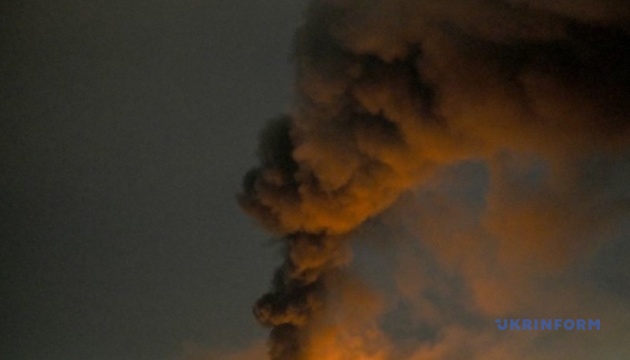


 4 sources
Morning Edition · Thursday, October 22, 2026Published at 1:18 AM EDT · New York
Moscow says 630 drones flew toward the capital region overnight as Ukraine reports strikes on Serpukhov and Lipetsk
Russia hit a transport facility in Kyiv's Darnytskyi district during the same night of long-range attacks.
Moscow Mayor Sergei Sobyanin said 630 drones flew toward the Moscow region between 20:30 on October 21 and 04:00 on October 22. He said air defences destroyed most of them far from the city and that two people were injured, according to the Russian independent channel Ostorozhno Novosti. Interfax and Izvestia cited Sobyanin as saying 163 drones were neutralized as they approached the capital. The injuries were in the Voronovo area of New Moscow.
Ukrainian accounts say the drones reached their targets. The Kyiv Independent, citing monitoring channels, reported a strike on a weapons plant in Serpukhov in Moscow Oblast. Russian regional media named the target as the 75th Arsenal, a Defence Ministry facility. Neither government has confirmed damage there. Ukrainian channels also reported that drones hit a multi-storey building in Lipetsk and caused several explosions around the city. Claims from both sides during the war are the least reliable kind of evidence, and the scale of damage remains unverified.
Russia struck back at Ukraine's logistics. Ukraine's state agency Ukrinform reported a strike on a transport infrastructure facility in Kyiv's Darnytskyi district. Each side now regularly hits rail, storage and transport sites far behind the front line.
The economic effect is spreading beyond the two countries. The US Department of Energy linked its decision this week to lend heating oil from its reserve partly to diesel shortages driven by the wars in Iran and Ukraine.
Part of a tracked trend
Strikes Move to Each Other's Home Fronts
Both Russia and Ukraine keep shifting long-range strikes toward transport, warehousing and civilian-adjacent targets far from the front, so aviation, logistics and insurance costs deep inside both economies keep rising and each mass-casualty incident pushes a negotiated pause further away.
Veracity: Plausible
70/100- If true, who benefits
Kyiv shows it can reach the Moscow region before any talks on pausing air strikes. Moscow can point to high interception figures as evidence that its air defences work.
- The nuance
The 630-drone figure is the Moscow mayor's own count, repeated by Interfax and Izvestia, and no one can verify it independently. Russian officials report interceptions, not hits. The strike on the Serpukhov arsenal rests on monitoring channels, with no satellite or official confirmation of damage.
An open-source-intelligence read of how likely this story is true with its real nuance, not a judgment of any outlet. It assesses the claim, weighing independent and adversarial reporting. How we label confidence.
What this means
A raid of 630 drones aimed at the capital region forces Russia to keep air defences around Moscow instead of at the front. It also brings repeated airport closures and higher insurance and security costs to the Russian economy's core. Ukraine pays through attacks on its rail and urban logistics. Defence-industrial sites such as an arsenal in Serpukhov are legitimate military targets under each side's doctrine. Strikes on them also lower the chance of a pause in the air war, which some Western capitals and Moscow have been discussing. Consensus treats these exchanges as background noise. Their growing scale suggests each side is preparing for a long war of attrition against the other's economy, not a ceasefire this winter. The likelier outcome over the next month is larger Russian strikes on Ukrainian energy and transport as heating season begins, and continued Ukrainian raids on the Moscow region. A US-brokered moratorium on air strikes, announced and observed for a full week, would show this assessment is wrong.
Synthesized from: Polylog editors · Kyiv Independent · Kyiv Independent · Ukrinform
Townsquare
Start a discussion in Townsquare.
More from this edition
- Brent crude rises to $110 as Washington orders diplomats out of Saudi Arabia
- US and Israel have plans for a short strike campaign on Iran after the November 3 midterms, The New York Times reports
- France's 10-year borrowing cost briefly tops 5% for the first time since 2002 as protests spread
- Egypt moves toward defending Saudi Arabia as Houthi drones reach Saudi cities
- Lula's campaign asks Brazil's electoral court to annul Flávio Bolsonaro's ticket days before the runoff
- Japan says yttrium supplies have stalled under Chinese export controls
- Reserve Bank of India rules out near-term rate cuts while Asian central banks lean toward tightening
Comments
0No comments yet.